Climate Change and Geopolitics: Greenland's Rising Importance Amid Melting Ice and Resource Competition


Greenland, situated between Russia and the United States, has become a focal point of international attention. As global temperatures rise, the Arctic region is beginning to open up, making this area increasingly significant.
The importance of Greenland, which is owned by Denmark (a NATO partner), has been further amplified by US President Donald Trump's explicit declaration that he intends to acquire it, whether through purchase or by force.
The climate crisis is causing the ice sheet in Greenland to shrink, and the Arctic sea ice is also melting. This is leading to the opening of new maritime routes and the discovery of valuable resources.
Meanwhile, Trump's rhetoric has intensified. Following statements initially dismissed as jokes, the gradually melting Greenland is slowly transforming into a critical geopolitical flashpoint. We can examine the maps below to understand how Greenland is changing.
- Melting Sea Ice
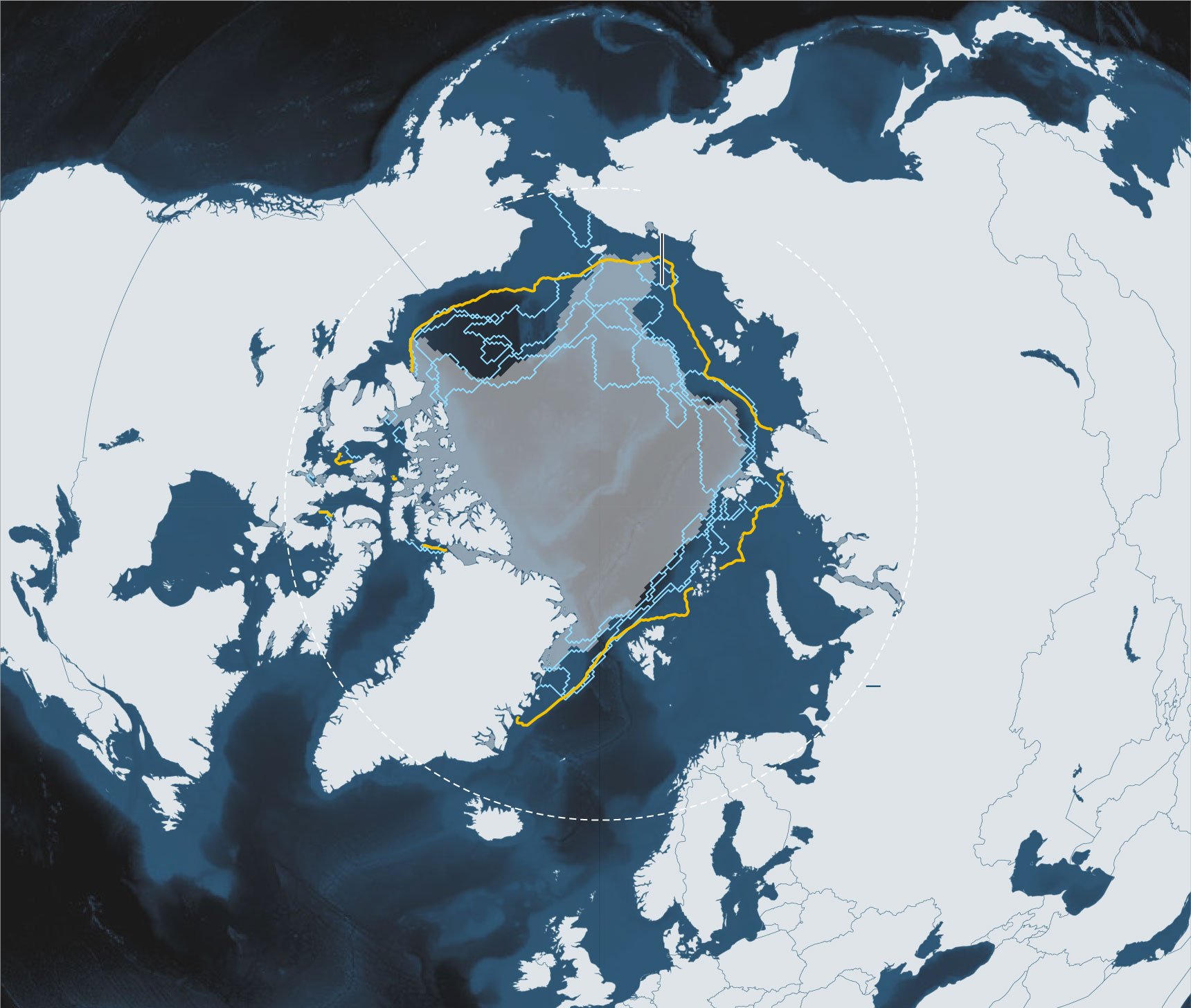
Five years ago, the area covered by sea ice in the Arctic region was approximately 4.6 million square kilometers, an area roughly equivalent to the European Union.
However, according to data from the 'National Snow and Ice Data Center,' this represents a 27% reduction compared to the average of 6.4 million square kilometers recorded between 1981 and 2010. The area of sea ice lost during this period is nearly equivalent to the size of Libya.
The decrease in ice in the Arctic means that there will be no ice along the Russian and Canadian coastlines during the rainy season. As the ice melts and the oceanic area in the North Pole increases, the previously inaccessible Arctic region is becoming reachable.
- Arctic Waterways Becoming Accessible
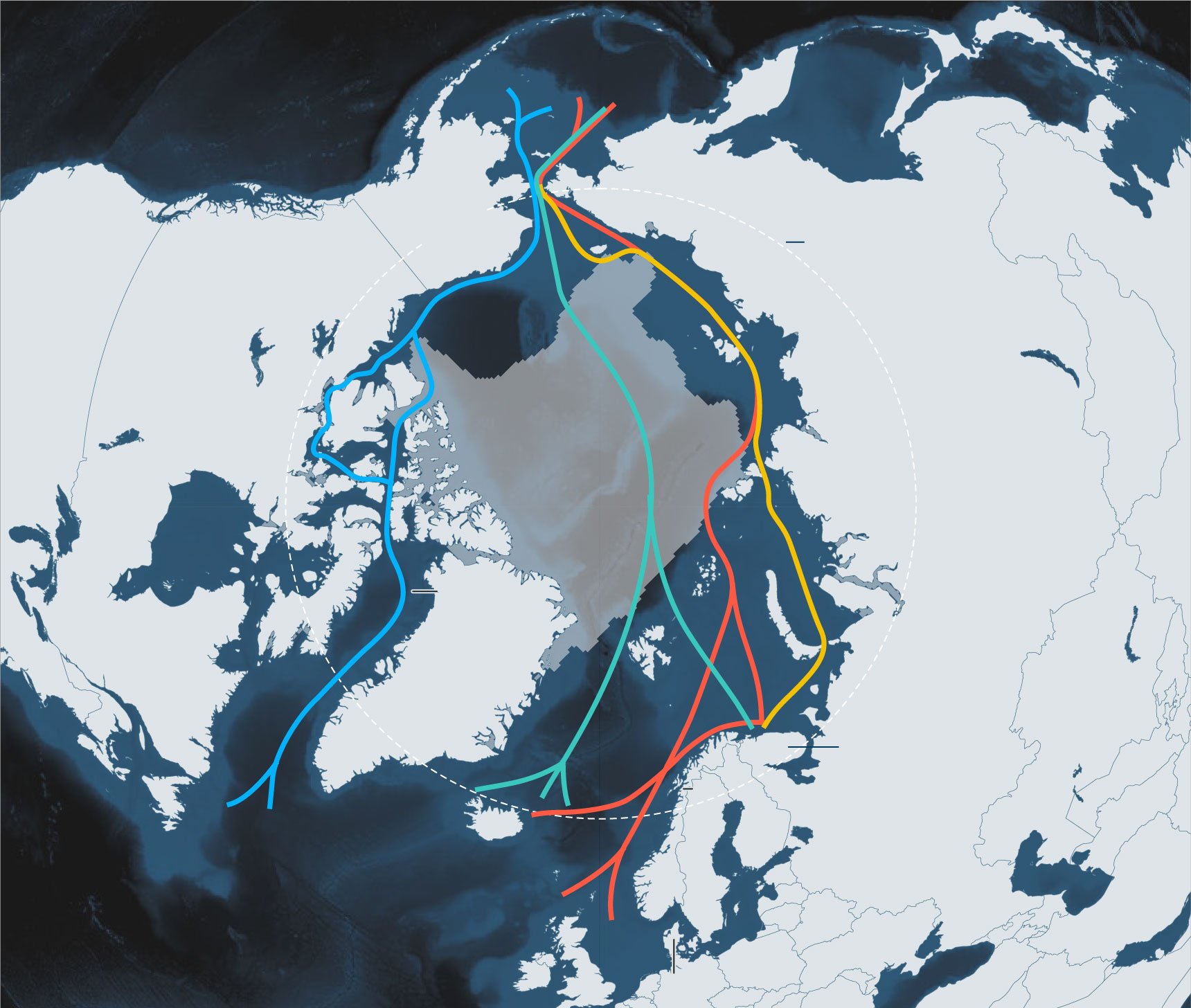
New waterways are opening up there. As polar seas remain open for long periods for navigation, they are developing into commercial corridors.
The most developed of these new routes is the Northern Sea Route, which overlaps with the North-East Passage. It runs along Russia's Arctic coast, stretching from Europe to Asia. This route is central to Russia's ambitions.
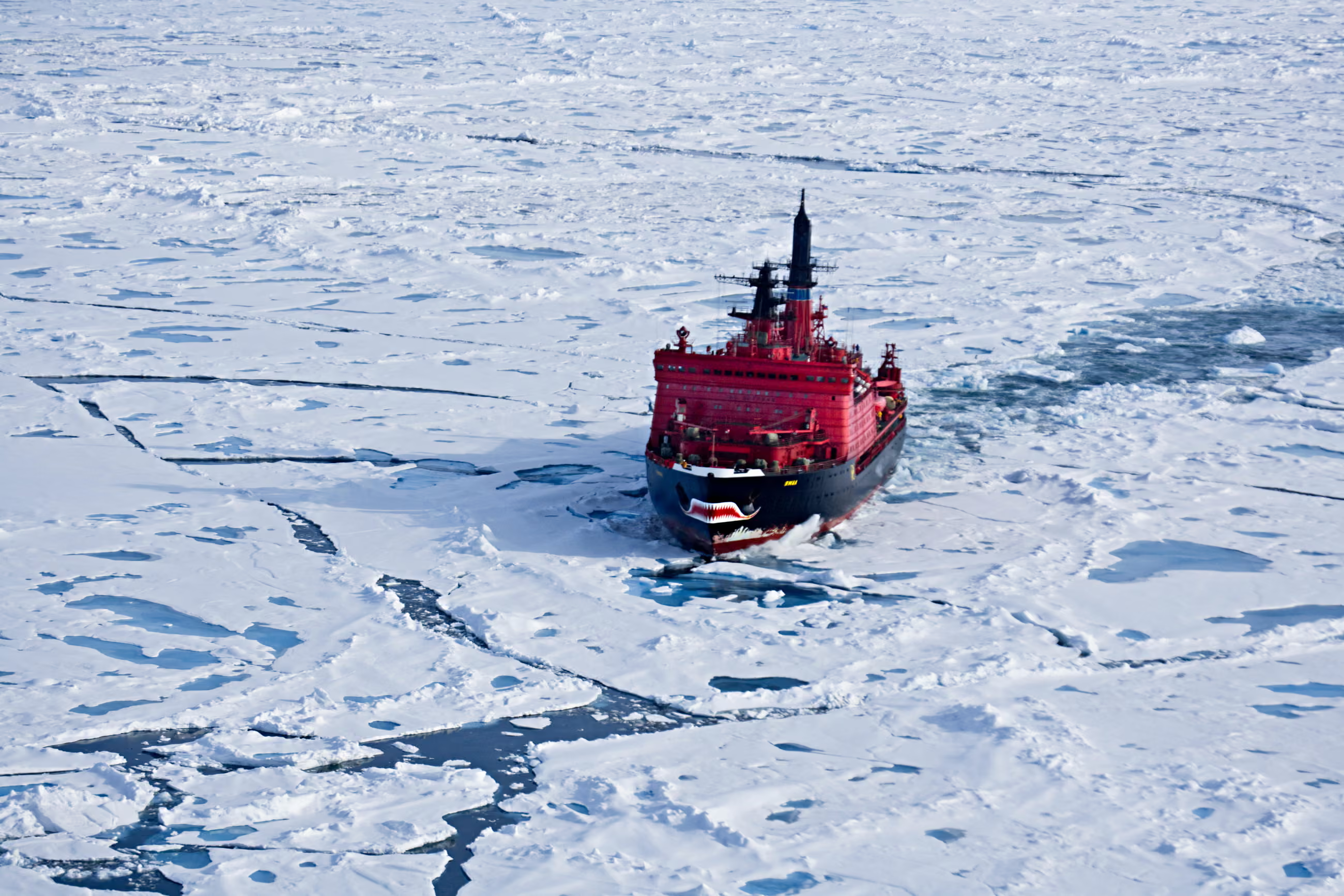
Further west, this waterway connects with Canada's Arctic archipelago. Furthermore, the Central Arctic Route, which crosses the North Pole, is gradually emerging as a long-term plan.
This waterway is set to alter the global trade map. The routes opening in the Arctic offer an alternative to the Suez Canal, potentially halving the distance and travel time between Europe and East Asia.
In 2025, the container ship named 'Istanbul Bridge' became the first large vessel to travel the Northern Sea Route from China to Europe. This route is also known as the 'Polar Silk Road.'
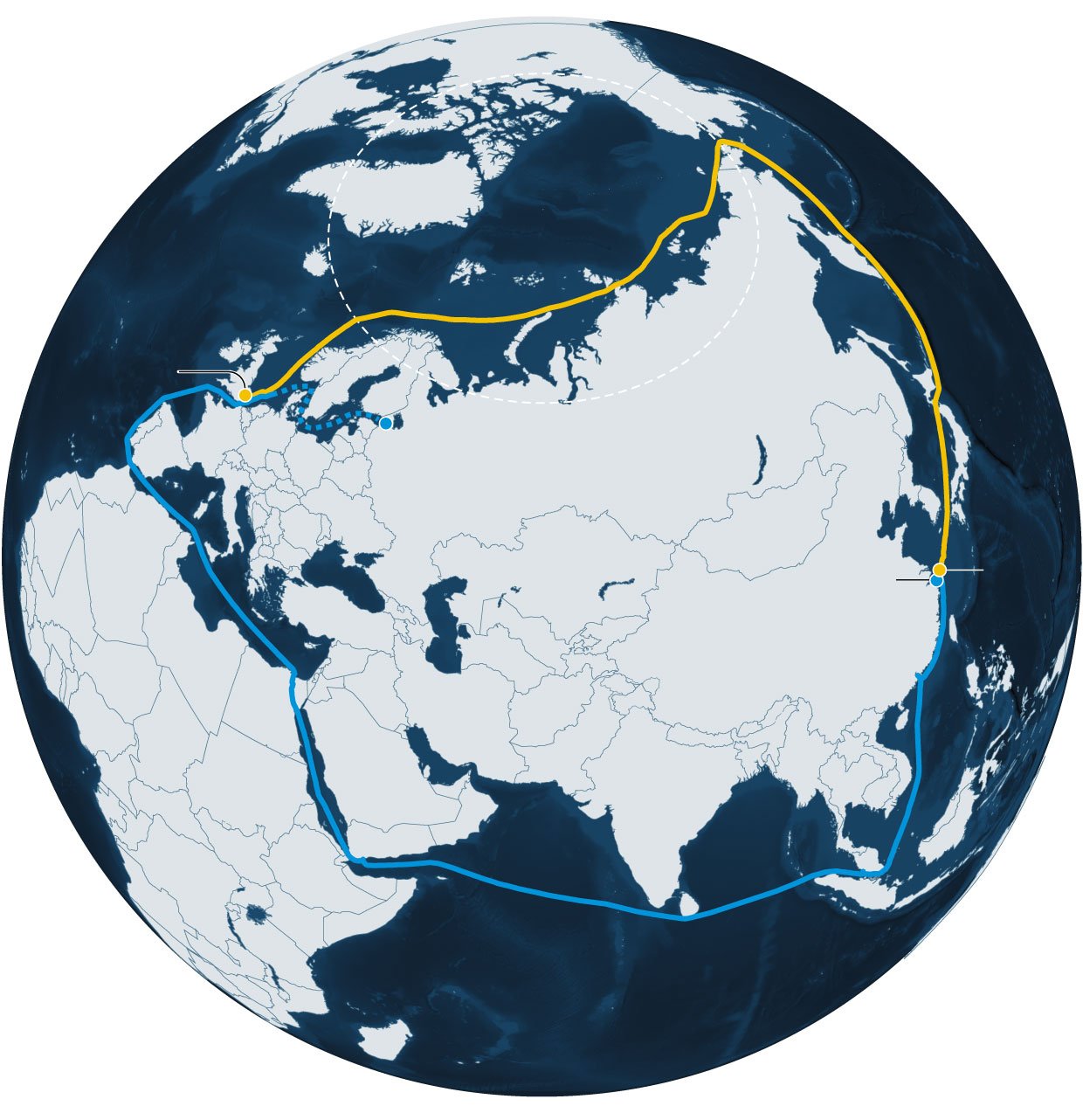
The ship 'Istanbul Bridge' completed its journey from Ningbo city in China to Felixstowe in the UK in just 20 days.
According to data from 'Marine Exchange of Alaska,' an organization monitoring maritime activity, there were 665 transits through the 'Bering Strait,' connecting Russia and the US, in 2024. This number represents a 175% increase compared to 2010.
The newly opened routes are not without risks, which certainly casts some doubt on their commercial viability.
According to Seraphima Andrieva, a researcher at the 'Fridtjof Nansen Institute' in Norway, Russia aims to use the North-East Passage from Europe to Asia year-round and is investing heavily in nuclear icebreakers to clear the path.
Ships are still occasionally getting stuck in the ice. Andrieva notes that problems still arise sometimes even during the 'summer' season.
- Growing Tensions Around the Arctic
Most Arctic nations are asserting claims over the region. These claimants include Canada, Denmark, Norway, Russia, and the United States.
The United Nations' 'Commission on the Limits of the Continental Shelf' (CLCS) provides advice and recommendations regarding the claims of coastal states.
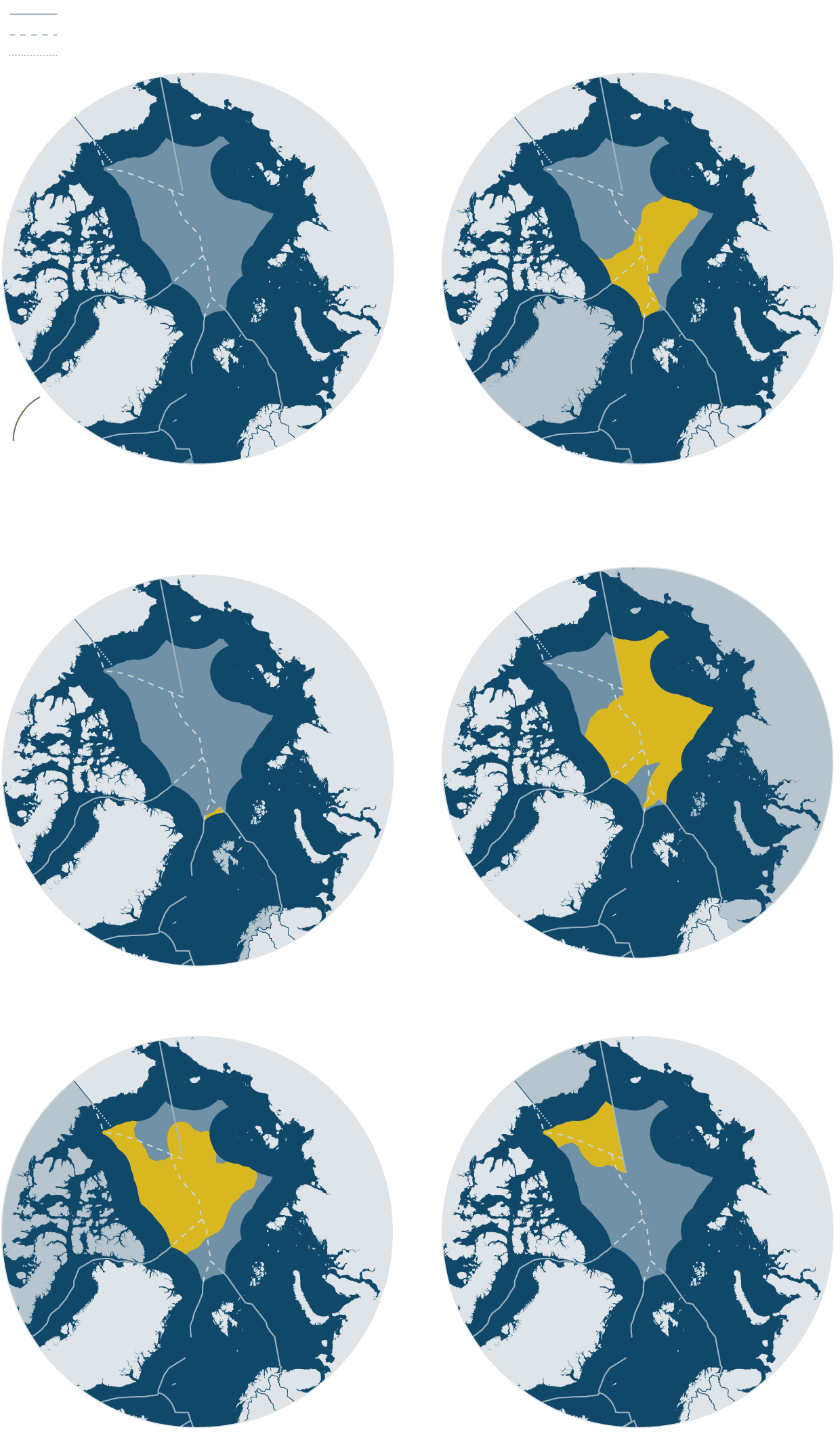
The US has already established a military presence in the Arctic, particularly in Greenland.
In the remote area of Pituffik Base in Northwest Greenland, there are facilities for missile warning systems, missile defense systems, and space activity centers for the US and NATO.
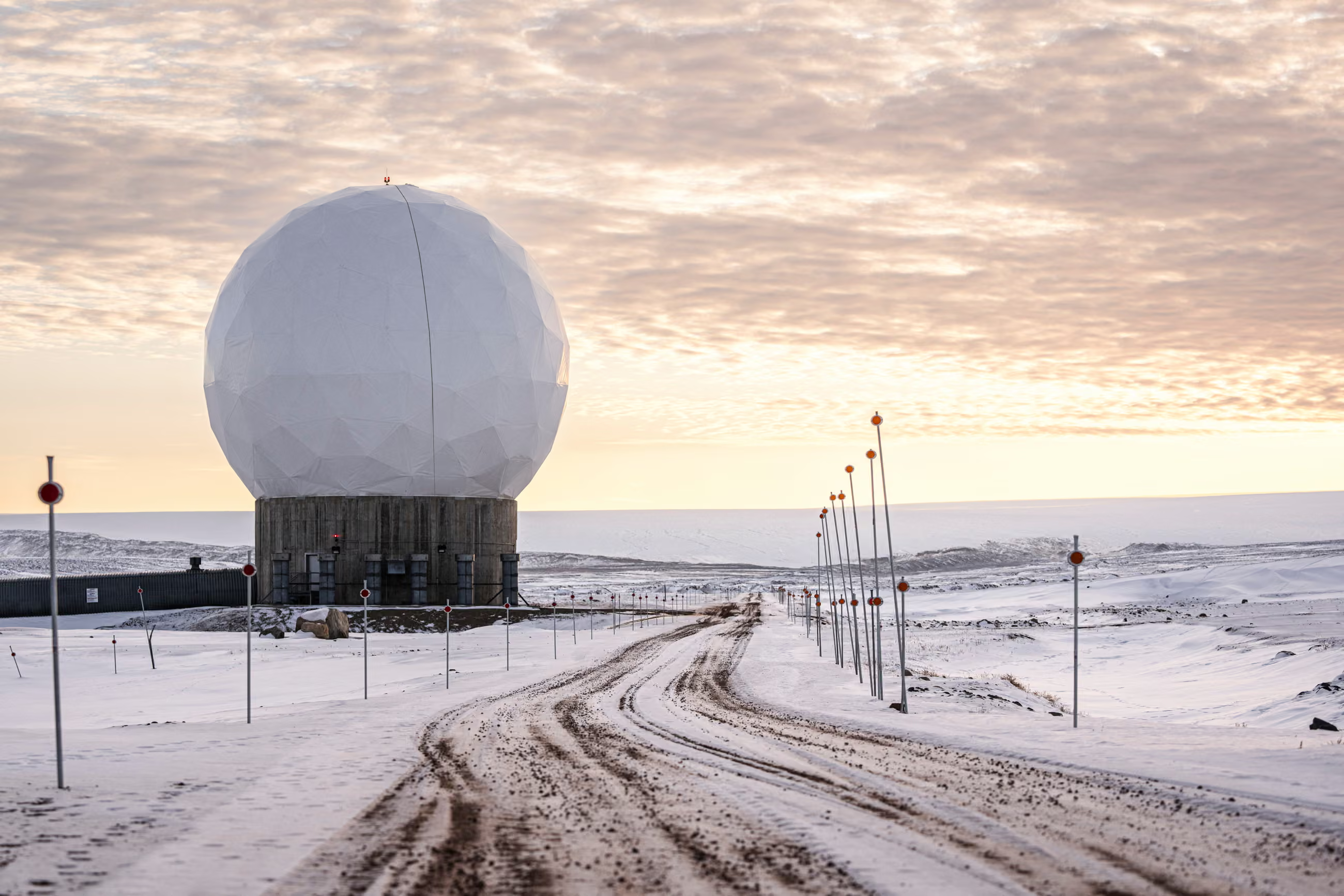
Russia has also established numerous such military bases over the last decade, while restoring old Soviet-era infrastructure and airfields.
In 2018, China declared itself a 'Near Arctic State' in an effort to increase its influence in the region.
Researcher Andrieva states, "Military interest in the Arctic has been growing over the last 10 to 15 years. Furthermore, the landscape of this region has changed significantly following Russia's invasion of Ukraine in 2022."
She adds, "The security situation in the region has changed dramatically with the recent entry of Finland and Sweden into NATO, leading to a collective focus on the 'Nordic' region. Russia's desire to control areas like the Kola Peninsula and the Barents Fortress is also strengthening."
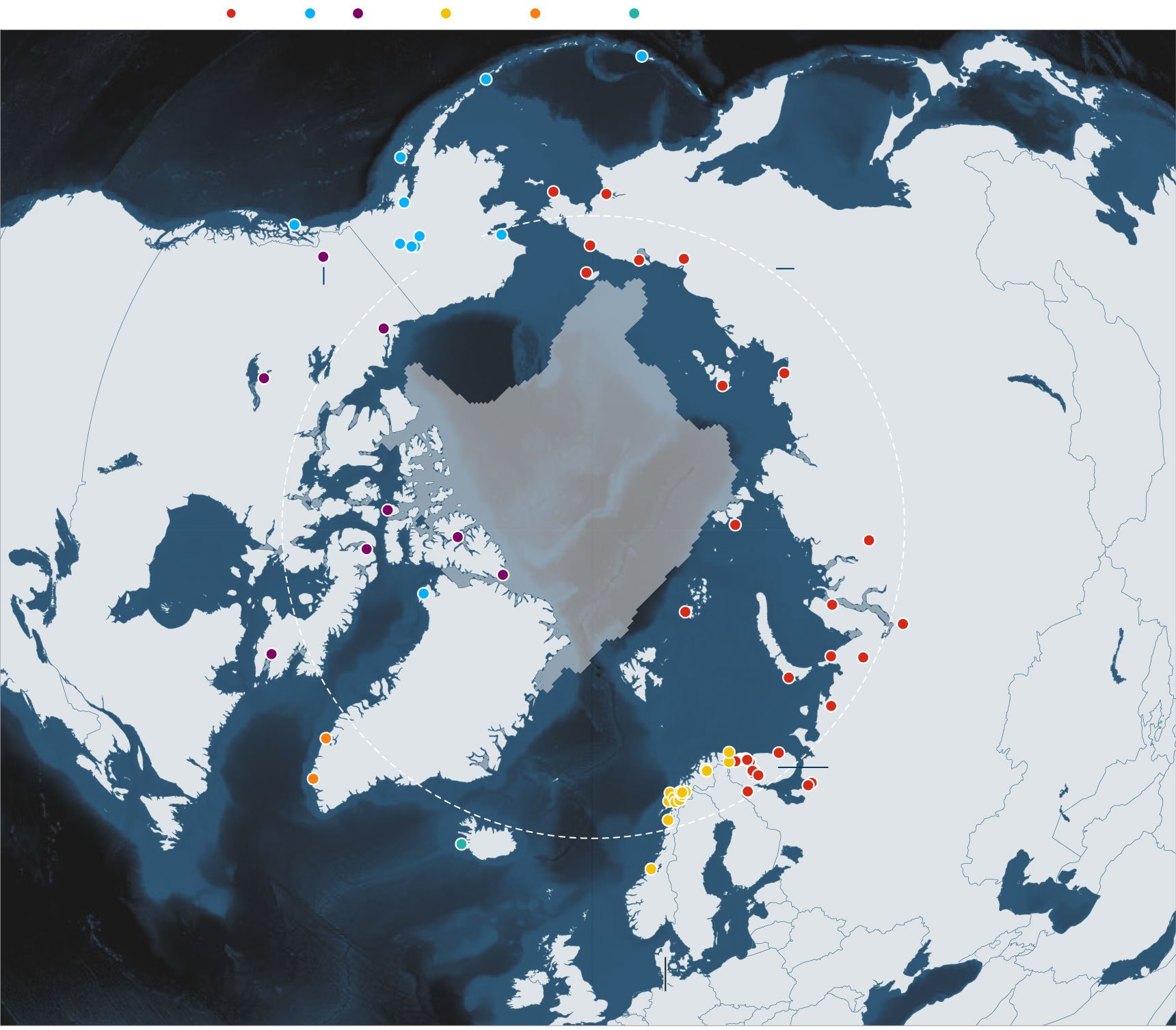
Even though Russia's focus has primarily been on Ukraine since 2022, its presence in the Arctic remains significant.
NATO member states are strengthening their naval presence in the Arctic, and announcements have been made to increase the construction of 'icebreakers.'
With NATO's expansion in the Nordic region, the Danish Air Force is becoming more integrated with Finland, Norway, and Sweden. In 2024, China deployed three ice-breaking vessels in the Arctic region.
- Interest in Greenland's 'Critical Minerals'
Greenland holds significant importance in the global scramble for 'critical minerals.' According to estimates by the 'US Geological Survey,' Greenland possesses reserves of 1.5 million tons of 'Rare Earth Materials,' ranking it eighth globally.
Two major deposits have been identified in the Kvanefjeld and Taseq areas. Interest from world powers in these deposits is increasing.
China's 'Shenghua Resources' company is the second-largest shareholder, with a 6.5% stake, in the mining and processing project operating in Kvanefjeld.
Due to geographical remoteness, no 'rare earth' mine has become operational yet. Even today, only 20 percent of Greenland's surface is ice-free, and most of the island remains inaccessible for a large part of the year.
However, as shipping routes gradually become easier and due to global warming, Greenland's situation is rapidly changing. As surface ice decreases, new mineral sources are being discovered.
(This report was prepared for 'The Guardian' by Ashley Kirk, Lucy Swan, Tural Ahmadzadeh, Hamen Simmons, and Oliver Holmes.)
This specific news has been automatically translated by AI. As a result, there may be some inaccuracies or language errors.