Heavy Financial Burden on Timber Consumers Due to Collection and Service Fees
_iy62dwpfzp_yzmnU1Mb3D.jpg)
Consumers Struggle Amid Bureaucratic Hurdles
Timber consumers in Nepal are facing severe financial and logistical challenges due to excessive fees, long waiting periods, and systemic mismanagement in forest offices. Jalandhar Prasad Jayswal from Parsauni Gaupalika-3 waited a full year to obtain timber for his new home’s windows and doors, while Pradeep Thakur of Jeetpur Simara-8 endured similar delays despite applying months in advance. Many, like Mohan Gole of Kolhabi-2, live near forests but are forced to buy expensive black-market timber due to inefficient distribution systems.
Exorbitant Fees and Corruption
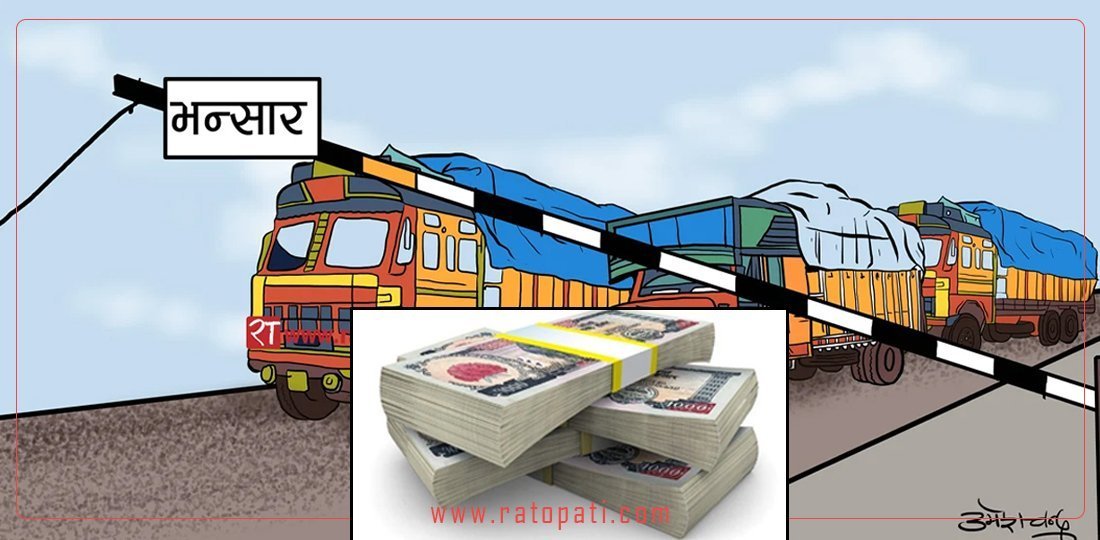
The financial burden on consumers is worsened by collection fees (₹116/cu.ft), VAT (₹178), and service charges (₹645)—making legal timber unaffordable for many. Meanwhile, corruption allegations persist, with claims that forest offices prioritize well-connected individuals over ordinary citizens. Despite vast amounts of timber being logged, much of it rots unused while consumers struggle to secure even basic supplies.
Madhesh Province: High Production, Poor Access
Bara district, the largest timber producer in Madhesh, generated 75,000 cu.ft this year, yet delays and red tape prevent fair distribution. Rautahat faces rampant timber smuggling, with officials admitting that mill operators often control illegal trade. With only 27.49% forest cover in Madhesh—and much of it encroached—timber shortages are worsening.
Huge Demand-Supply Gap
Nepal’s annual timber demand stands at 2.25 million cu.ft, but production meets only 11% of this need. As a result, the country imports ₹14–18 billion worth of timber annually, even as its own high-quality Sal timber goes to waste. Experts suggest Sustainable Forest Management (SFM) could boost production to 1–1.5 crore cu.ft/year if properly implemented.
Government Acknowledges Failures
Madhesh Forest Director Jagannath Jayswal admits that high fees and mismanagement hurt consumers and vows reforms. However, past initiatives like scientific forest management in Bara’s Gadhimai and Halkhoriya community forests have failed due to poor regeneration and fund misuse.
Rising Reliance on Imported Alternatives
With legal timber hard to obtain, many consumers are shifting to aluminum and UPVC materials, further increasing Nepal’s trade deficit in wood products (₹141.38 billion imports vs. ₹27.4 billion exports over six years).
_cyugwao9kr_GiExWqSTri.jpg)
The Way Forward
-
Reduce fees to make timber affordable.
-
Crack down on smuggling and corruption.
-
Expand SFM to balance production and conservation.
-
Streamline distribution to ensure fair access.
"If managed properly, Nepal could even export Sal timber instead of importing low-quality wood," says Rajiv Kumar Jha, Divisional Forest Officer, Bara. The solution lies in policy reforms, transparency, and sustainable practices before the crisis deepens further.