China's trade with US sinks in November amid tariff warBy JOE McDONALD AP Business Writer
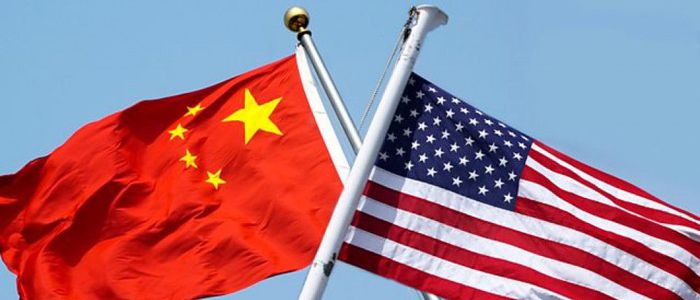
BEIJING–trade with the United States sank again in November as negotiators worked on the first stage of a possible deal to end a tariff war. Exports to the United States fell 23% from a year earlier to $35.6 billion, customs data showed Sunday. Imports of American goods were off 2.8% at $11 billion, giving China a surplus with the United States of $24.6 billion.

Exports to some other countries including France rose, helping to offset the loss. China’s global exports were off 1.1% from a year earlier at $221.7 billion despite weakening worldwide demand. Imports were up 0.3% at $183 billion, giving China a global surplus of $38.7 billion. Hopes for a settlement to the fight over Beijing’s technology ambitions and trade surplus rose after President Donald Trump’s announcement of a “Phase 1” agreement following talks in October. But there has been no sign of agreement on details nearly two months later.

The dispute has disrupted global trade in goods from soybeans to medical equipment and threatens to depress economic growth. Trump put off a tariff increase in October but penalties already imposed by both sides on billions of dollars of imports stayed in place. Another U.S. increase is due on Sunday on $160 billion of Chinese goods.

That would extend penalties to almost everything Americans buy from China. Chinese spokespeople have expressed hope for a settlement “as soon as possible,” but Trump spooked financial markets last week by saying he might be willing to wait until after the U.S. presidential election late next year. Financial markets have repeatedly risen on optimism about the talks only to fall back when no progress is announced.

The “Phase 1” agreement doesn’t cover contentious issues including U.S. complaints that Beijing steals or pressures companies to hand over technology. Economists warn tensions could rise again next year and the bulk of tariff hikes are likely to stay in place for some time. For the first 11 months of 2019, China’s total global exports were off 0.3% at $2.3 trillion despite the tariff war.

Imports were down 4.5% at $1.8 trillion, adding to signs Chinese domestic demand is cooling. China's exporters have been hurt by the U.S. tariff hikes but its overall economy has been unexpectedly resilient. Growth in the world's second-largest economy slipped to 6% over a year earlier in the three months ending in September, down from the previous quarter's 6.2% but still among the world's strongest. Weaker Chinese demand has global repercussions, depressing demand for industrial raw materials and components from other Asian economies and oil, iron ore and other commodities from Brazil, Australia and other suppliers.

The Ministry of Finance announced Friday that China was waiving punitive import duties on U.S. soybeans and pork, keeping a promise announced in September. A sticking point is Beijing’s insistence that Washington roll back its most recent penalties on Chinese goods as part of the “Phase 1” deal. Beijing said last month the U.S. side agreed, but Trump dismissed that. A Chinese spokesman repeated Thursday that Beijing expects such a move in a “Phase 1” agreement.

Related Articles

Youth, Labour and Employment Minister Ramji Yadav States Existing Foreign Employment Act is Inadequate

Youth, Labour and Employment Minister Ramji Yadav States Existing Foreign Employment Act is Inadequate

Kathmandu. Youth, Labour and Employment Minister Ramji Yadav has stated that it is not possible...
Nagdhunga-Naubise Tunnel to Open for Traffic in July

Nagdhunga-Naubise Tunnel to Open for Traffic in July

Kathmandu. Preparations are underway to bring vehicles into operation from the Nagdhunga-Naubise tunnel from the...
Kalimati Market Sets Wholesale Prices for Agricultural Produce

Kalimati Market Sets Wholesale Prices for Agricultural Produce

Kathmandu. Kalimati Fruit and Vegetable Market Development Committee has determined the maximum wholesale price of...
Former Secretary Keshav Kumar Sharma Discusses Nepal's Infrastructure Development Challenges and Solutions

Former Secretary Keshav Kumar Sharma Discusses Nepal's Infrastructure Development Challenges and Solutions

Kathmandu. Slow pace of infrastructure development, national pride projects not being completed on time, and...
Seven Provincial Governments Prioritize Agricultural Transformation in FY 2083/84 Budgets

Seven Provincial Governments Prioritize Agricultural Transformation in FY 2083/84 Budgets

Kathmandu. All seven provincial governments of Nepal have placed the structural transformation of the agricultural...
Seven Provinces Prioritize Energy Sector in Budgets

Seven Provinces Prioritize Energy Sector in Budgets

Kathmandu. Along with the federal government's budget, all seven provincial governments have put forward the...
Seven Provinces Prioritize Forest, Environment, Watershed Protection, and Climate Adaptation in Budgets

Seven Provinces Prioritize Forest, Environment, Watershed Protection, and Climate Adaptation in Budgets

Kathmandu. All seven provincial governments have prioritized forest, environment, watershed protection, and climate change adaptation...
Passport Department Director General Arrested Amid E-Passport Irregularities

Passport Department Director General Arrested Amid E-Passport Irregularities

Kathmandu. On Tuesday, Director General of the Department of Passports, Tirtharaj Aryal, was arrested. He...