Nepal Rastra Bank Prepares Monetary Policy Amidst Economic Stability and Growth Concerns

Kathmandu. The central bank is currently in the process of formulating the monetary policy. Every year, Nepal Rastra Bank brings out a monetary policy with the objective of achieving the economic growth target set by the government in the budget and maintaining the country's economic and monetary stability.
As a continuation of this, the Economic Research Department of the Rastra Bank is working on it. After the department completes its work, the draft will be managed and passed by the Rastra Bank's Board of Directors. Then the monetary policy for the new fiscal year will be made public. This time, the policy is being prepared to be released in the last week of Asar, according to Sudha Shrestha, spokesperson for the Rastra Bank.
Stakeholders have so far presented various suggestions to the Rastra Bank for the monetary policy. Pre-monetary policy discussions have also been held in several phases organized by various institutions. The Rastra Bank is collecting necessary suggestions through such platforms.
However, looking at the suggestions and discussions for the monetary policy, there are no new or concrete issues that have been particularly expected from the Rastra Bank. So far, suggestions have been given by stakeholders including Nepal Bankers Association, Nepal Chamber of Commerce, and the Confederation of Industries for the monetary policy. According to this, they seem to have presented their old demands in a new guise.
It is being analyzed that there is not much room for further relaxation as the Rastra Bank has already reduced interest rates, adopted flexibility in restructuring, and made arrangements for working capital loans.
Bankers Association Emphasizes Operational Ease
Nepal Bankers Association has submitted a 21-point suggestion for the monetary policy. Most of the suggestions submitted by the association are technical and some are related to policy concessions. Banks have particularly emphasized reducing the burden of directed investment.
The association has suggested reducing the current provision of investing a minimum of 5 percent of total loans in the deprived sector to 4 percent. Similarly, a review of the base rate calculation method and flexibility in loan loss provisioning have been demanded.
Santosh Koirala, President of the association, says that banks' returns are currently low, so banks should be given breathing room. 'Currently, the average return of banks has dropped to 7 percent. The banking sector needs breathing space right now. Especially the provisions for NPL classification and 100 percent provisioning have made it difficult for banks to invest further.'
The association has also put forward demands such as giving official recognition to in-app notifications, creating a platform against shared digital fraud, and reducing the period for closing dormant accounts from 10 years to 5 years.
Private Sector Focuses on Single-Digit Interest Rate
Representative private sector organizations like the Nepal Chamber of Commerce and the Confederation of Industries seem to view the monetary policy primarily as an effort to make interest rates cheaper. The Chamber has demanded that credit expansion should be more than 20 percent to achieve an economic growth rate of 7 percent in the coming year.
Kamlesh Kumar Agarwal, President of the Chamber, has demanded that the single-digit interest rate be made a permanent policy. He stated that the bank rate should be limited to 5 percent and the spread rate to 3.5 percent.
However, these demands do not seem very relevant given that deposit interest rates have already reached historic lows in the market. The private sector appears silent on the risk of depositor and capital flight if interest rates are further reduced.
The view of Birendra Raj Pandey, President of the Confederation, is similar. He said that the monetary policy should be accommodative as market demand has decreased. The Confederation has demanded special loans for startups and the formation of an empowered monetary policy committee within the Rastra Bank.
'The Problem is Not Liquidity, but Capital and Structure'
However, experts say that the current problem cannot be solved with minor efforts. Currently, banks have deposits of approximately 80 kharabs (8 trillion) rupees, and the CD ratio has dropped to 79 percent. According to banking expert Analraj Bhattarai, the fact that credit expansion is limited to 5.7 percent despite this indicates that the problem is structural rather than monetary.
_DKeVAJkyYb.jpg)
Bhattarai said, 'The challenge now is not to reduce interest rates, but to manage banks' capital and create demand. The core capital ratio of banks is only 9.61 percent, due to which many banks do not have the capacity to lend further.'
He claimed that if the provisioning rate could be adjusted according to India's practice, capital worth approximately 105 billion rupees could be released from banks. Bhattarai stated that the monetary policy should focus on managing asset-liability mismatch and non-banking assets rather than interest rates.
Sibifin Concerned About Accumulated Non-Banking Assets
Prachanda Bahadur Shrestha, President of the Association of Financial Institutions, says that banks have now become institutions that hold collateral. Currently, non-banking assets worth more than approximately 60 billion rupees have come under the responsibility of banks.
'When there is no cash flow in the market, borrowers cannot repay principal and interest. When banks try to auction collateral, it does not sell, so banks are forced to take it themselves,' Shrestha said.
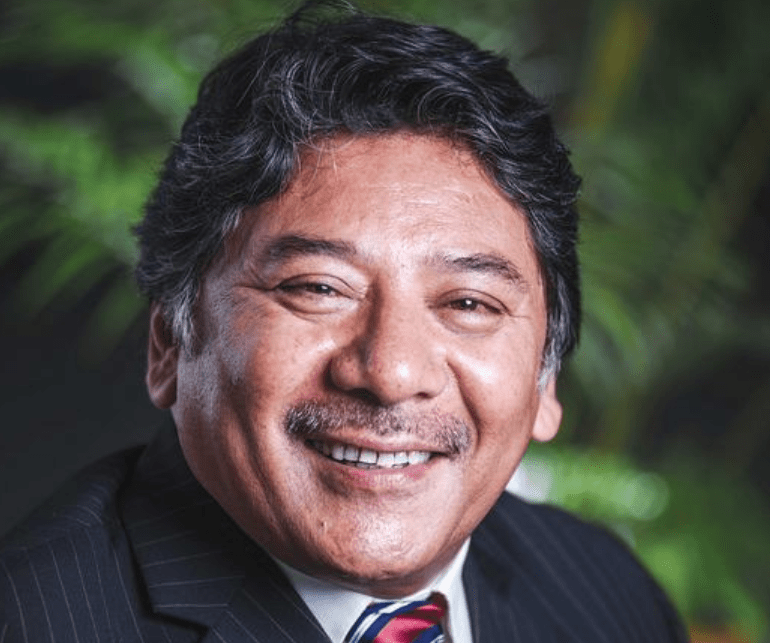
He suggested that the monetary policy should allow these assets to be rented out and utilized. This can help mobilize the unproductive capital of banks to some extent.
Rastra Bank in a Dilemma Between Stability and Economic Growth
The budget introduced by the government has set an economic growth target of 7 percent. To meet this target, the monetary policy must support credit expansion. However, Deputy Governor Kiran Pandit clarifies that the Rastra Bank cannot bring a policy at the expense of financial stability.
'We are in the process of formulating the monetary policy. It is our responsibility to support the budget's goals, but we are conscious of keeping economic indicators within desirable limits,' said Deputy Governor Pandit.
He also commented that in some cases, non-monetary demands create policy uncertainty. This means that the Rastra Bank is not in favor of providing indiscriminate concessions as demanded by the private sector.

The Deputy Governor's statement appears to be related to working capital loans. The most demanded issue by the private sector is relaxation of working capital loans. Initially very strict, the Rastra Bank has since provided flexibility multiple times. This guidance was revised under Pandit's leadership when he was an Executive Director at the time.
Moreover, the Rastra Bank has already reduced the bank rate and policy rates of financial institutions. The deposit interest rate has fallen to around 4 percent. Falling below this level would harm savers. Furthermore, the fact that loan demand has not increased even with falling interest rates has made it clear that the problem is structural rather than related to interest rates.
This specific news has been automatically translated by AI. As a result, there may be some inaccuracies or language errors.