Prime Minister's Office Directs Constitutional Body on Arrests, Sparking Debate on Separation of Powers
Kathmandu. The 'arrest order' given by the executive body (Prime Minister's Office) to the independent constitutional body, the Commission for Investigation of Abuse of Authority (CIAA), during the investigation into alleged irregularities in the printing of electronic passports, has raised serious questions about the principle of separation of powers and the rule of law.
The government's alleged interference in the jurisdiction of the constitutional commission, after the Director-General of the Department of Passports and other employees were taken into custody under the 'command' of the Prime Minister's Office, has sparked widespread criticism and legal debate.
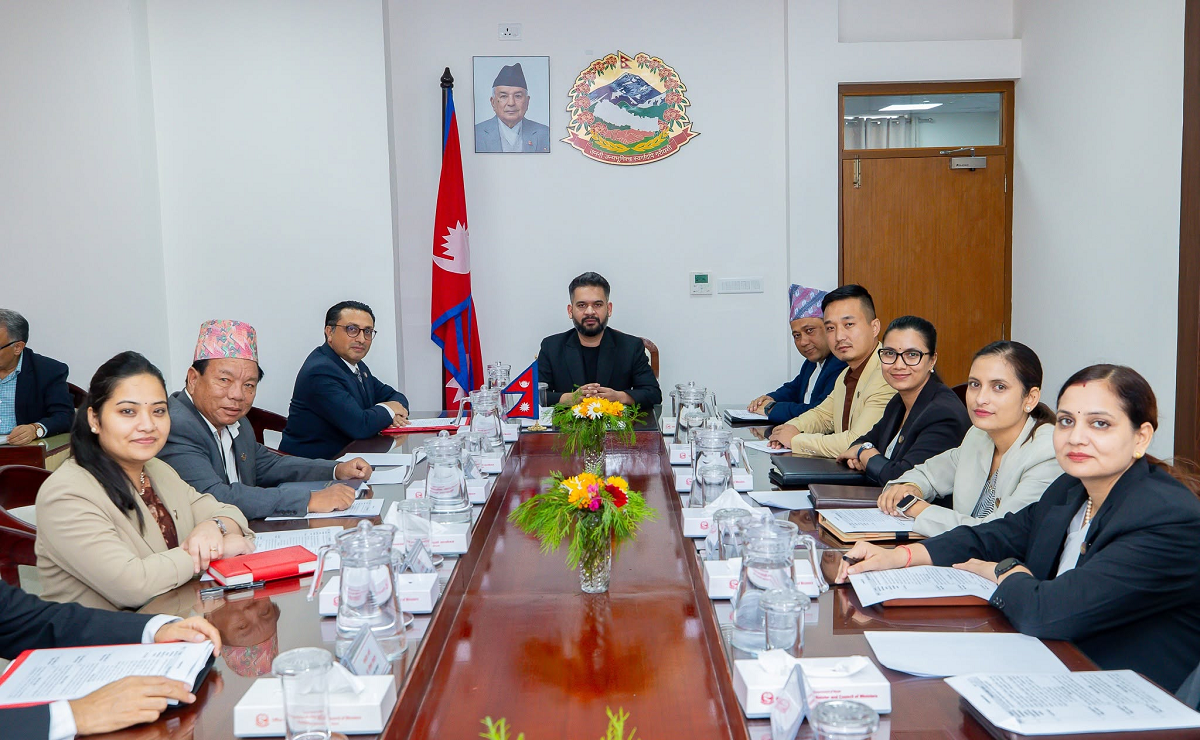
On Asar 1, the Prime Minister and Council of Ministers' Office summoned the Chief Commissioner of the CIAA, Prem Kumar Rai, and instructed members of the Prime Minister's Secretariat to investigate irregularities in the passport tender process. When Chief Commissioner Rai arrived at the Prime Minister and Council of Ministers' Office at 12 PM that day, the Director-General of the Department of Passports, Tirtha Raj Aryal, was already present. Sunil Kumar KC, the Information Technology Director of the department, was also there.
Aryal and KC had arrived with details of the decisions made regarding electronic passport printing and the companies that participated in and were selected for the tender. Upon being asked by the employees working in Prime Minister Balen Shah's secretariat to study the file, Rai also summoned his fellow commissioners to the Prime Minister's Office.
-pm-office_YZG9ToBodL.jpg)
After the Chief Commissioner summoned them, Commissioners Jaibahadur Chand, Dr. Hari Poudel, and Dr. Sumitra Shrestha Amatya, along with Secretary Narayan Prasad Sharma Duwadi, arrived at the Prime Minister and Council of Ministers' Office.
After a day-long study and discussion about the alleged irregularities in passport procurement, officials from Prime Minister Shah's secretariat 'instructed' the Director-General of the Department of Passports, Aryal, and Director Sunil Kumar KC to be arrested and investigated in custody. According to a CIAA official, the instruction to arrest and take them away was followed accordingly.
Around 9 PM, a team led by a DSP from the CIAA's Police Division arrested both individuals and brought them to the CIAA's central office in Tangal. Siddharth Thapa, Nepal representative of the German company Veridos, which received the passport printing contract, and Munindra Raj Malla, Nepal representative of Mulhbaur, were present during the discussions. A high-ranking CIAA official informed that Malla voluntarily appeared at the CIAA on Asar 3 after being summoned by the investigating officers.
Currently, Munindra Raj Malla, Tirtha Raj Aryal, Sunil Kumar KC, and the then Accounts Officer of the Department of Passports, Tulsi Prasad Acharya, are in CIAA custody. The CIAA's preliminary investigation concludes that approximately 8 billion rupees were misappropriated in passport procurement under the influence of the then Foreign Minister Arzu Rana Deuba.
Questions have arisen as to whether the country's executive body can 'instruct' a constitutional body formed to maintain oversight and balance over the government. Experts say that the executive body cannot interfere with a constitutionally formed independent commission.
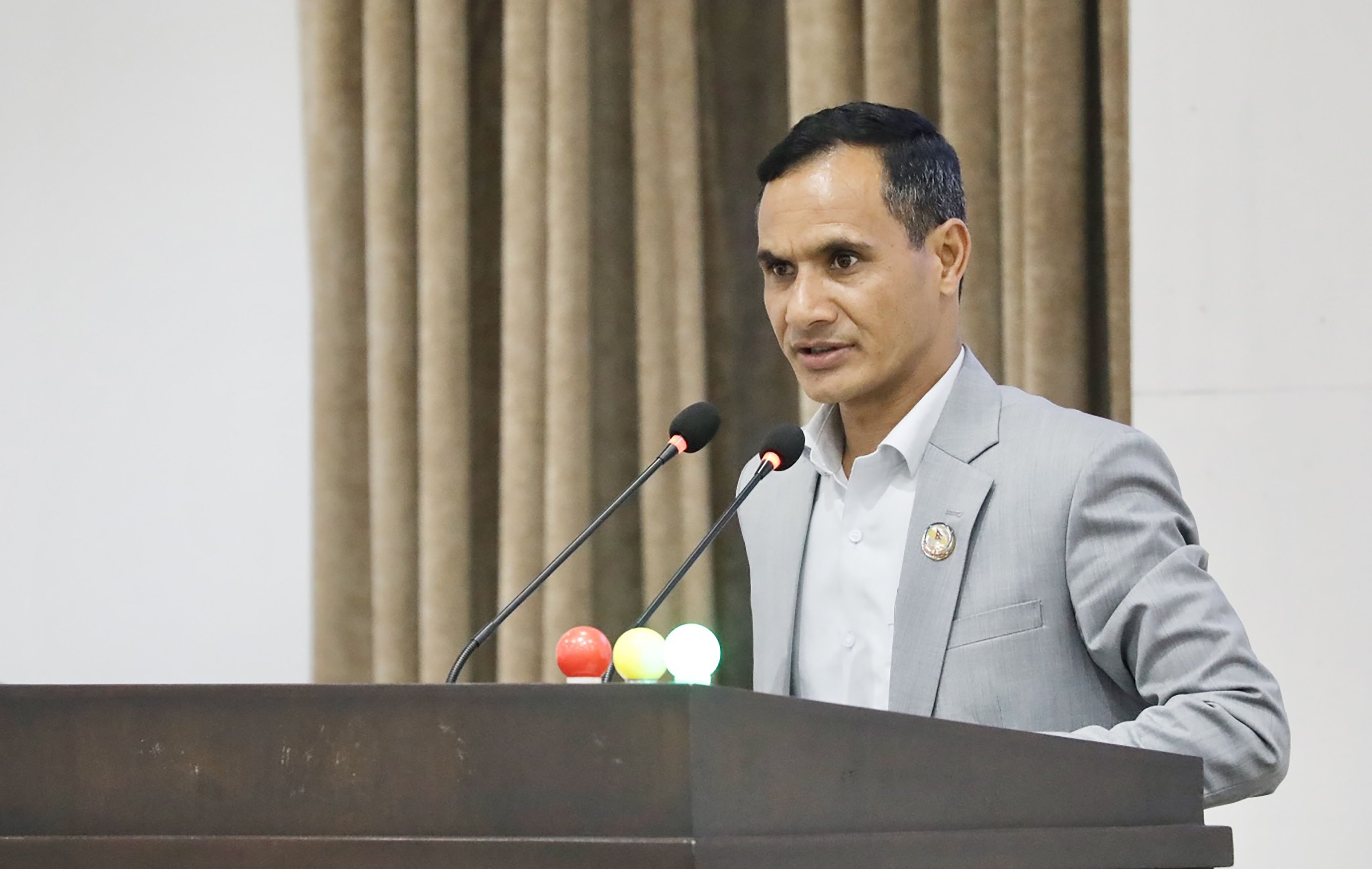
On Friday, in the House of Representatives meeting, Nepali Congress MP Khadga Bahadur Buda raised questions about it. In the House of Representatives meeting on Asar 4, other Congress MPs Narendra Kerung and Nepali Communist Party MP Ramesh Malla also questioned the incident, saying, 'Can the heads and officials of constitutional bodies be summoned and given instructions?'
Stakeholders have questioned the jurisdiction of the Prime Minister and Council of Ministers' Office, as the work, duties, and rights of the constitutional commission are specified by law. MPs have sought an explanation from the Prime Minister's Office regarding the incident.
Former Chief Commissioner of the CIAA, Suryanath Upadhyay, stated that the Prime Minister's Office cannot 'instruct' a constitutional body. Upadhyay told RatoPati, 'It might be possible to call and discuss administrative matters, but giving instructions is not permissible.'
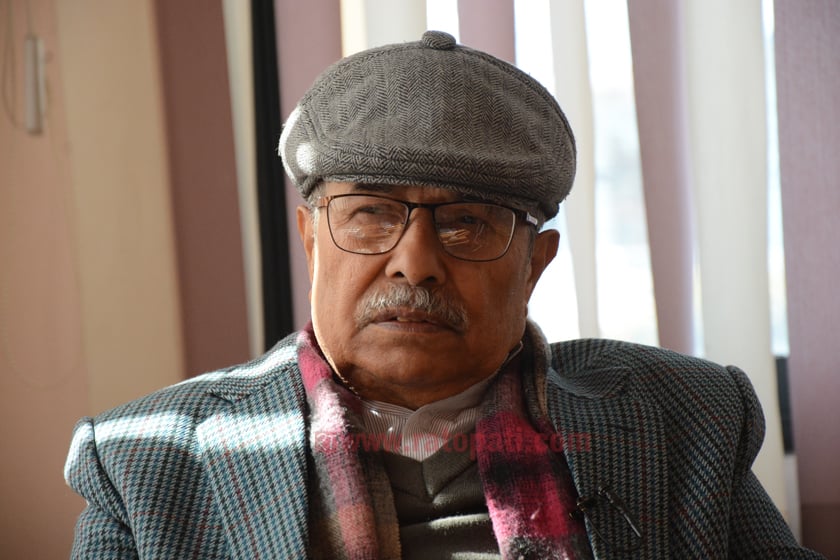
Upadhyay said that information can be obtained from the commission's officials and informal communication is possible. He added, 'There is a provision to summon the Chief Commissioner to parliament and ask for work progress, but there is no constitutional provision to give orders.'
Nepal Bar Association President Prof. Dr. Vijay Prasad Mishra said that it is wrong for the Prime Minister to summon officials of a constitutional commission and give them instructions. According to him, it is also not right for the officials of the commission to go when summoned by the Prime Minister.
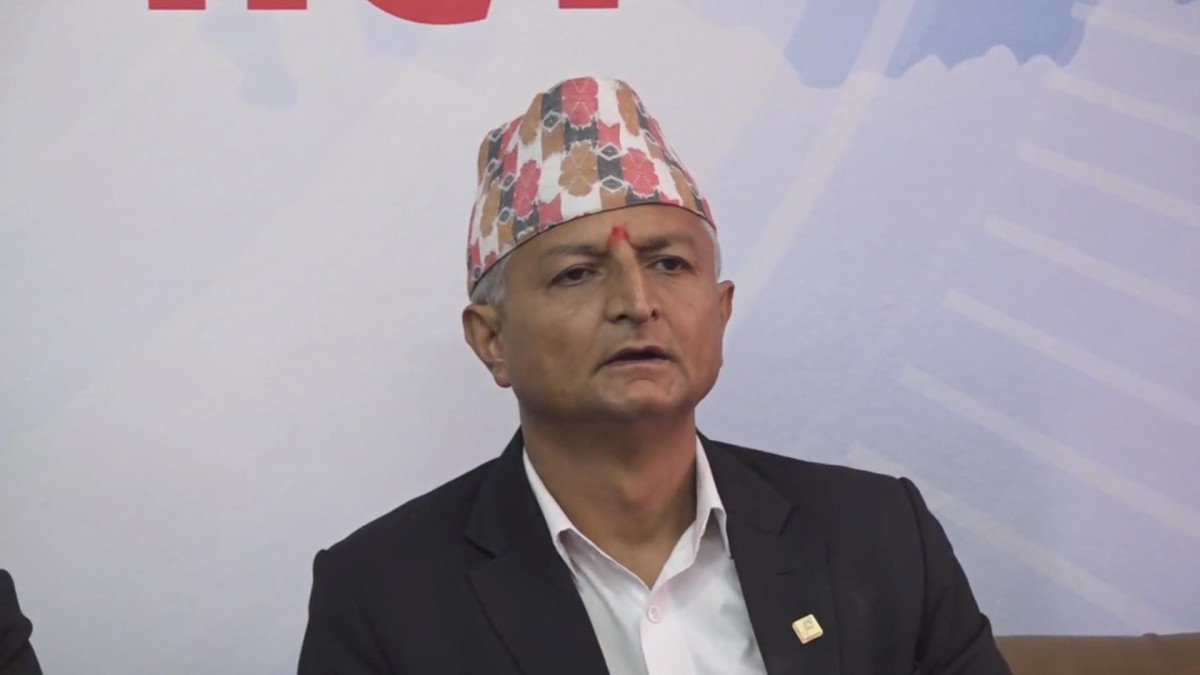
'Officials of constitutional commissions work under the constitution,' he said, 'They should not go just because the Prime Minister has summoned them. If the news reported in the media is true, then that action is wrong.'
Senior Advocate Dr. Surendra Bhandari argued that the Prime Minister's Office cannot summon the chief of a constitutional commission and give instructions. 'The state cannot attack anyone's personal liberty without completing legal procedures. Arresting someone or filing a case is an act of the state curtailing personal liberty,' Senior Advocate Bhandari told RatoPati. 'To curtail that personal liberty, it must be established that a crime has been committed. First, a complaint must be filed. After filing the complaint, an investigation must be conducted. Only then will a case proceed based on the facts revealed by the investigation.'
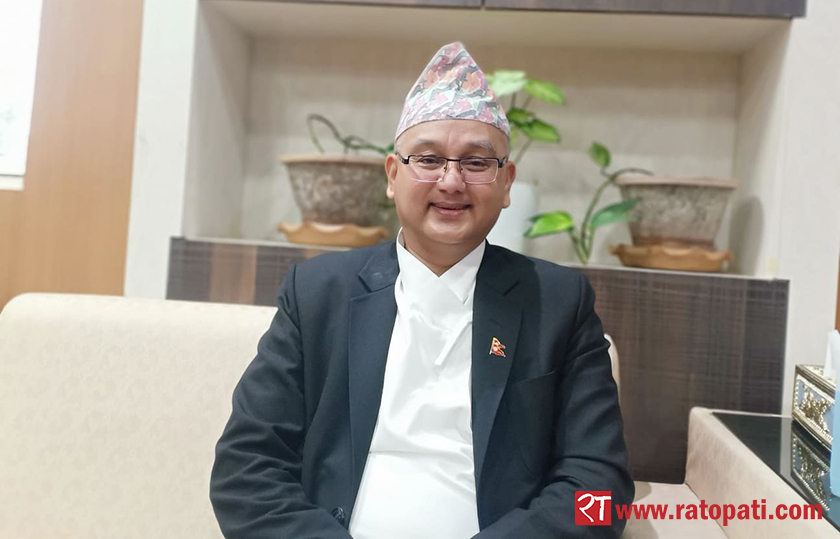
Bhandari stated that the Prime Minister does not have the role and authority to order someone's arrest or release. 'If the Prime Minister or the cabinet starts doing such things, it is an act not envisioned by the constitution and criminal law,' he said. 'What has come out now will develop a tendency to govern by lawlessness. No matter how powerful one is, they must follow the law and the procedures prescribed by the law.'
Bhandari maintains that no one can be arrested or detained without exercising the authority clearly granted by law. 'The CIAA itself is a constitutional commission. The constitution has provisions for its rights, duties, and functions. There are related laws and regulations. The Prime Minister giving instructions, the Council of Ministers giving instructions, or assigning tasks beyond that does not fall under the rule of law,' he said.
Bhandari believes that such practices weaken the rule of law and foster a tendency to operate the state based on personal ego, self-interest, and arbitrary decisions. He indicated that this could push the country towards autocracy. 'Saying I don't follow the law, whatever I think is right is an example of Louis XIV,' he said.
Furthermore, Bhandari finds it objectionable that an interventionist role is being played while the related case is sub-judice in the Supreme Court. 'Regarding the issue of withdrawing the case of Ravi Lamichhane, the case of money laundering is sub-judice in the full bench of the Supreme Court. The Kaski District Court and other district courts have already issued orders to withdraw the case. This shows we have gone beyond the rule of law,' he said. He stated that the situation where anything can be done to save a person or to frame a person leads to autocracy.

Advocate Ananta Raj Luintel also believes it is wrong for the Prime Minister to control officials of a constitutional commission and demand decisions favorable to him. He stated that various developments have proven that the Prime Minister considers himself above laws, legal traditions, Supreme Court precedents, principles, and constitutionalism.
If the news circulating that CIAA officials were summoned to the Prime Minister's Office, kept for seven to eight hours, and then issued arrest warrants, or instructed to file cases against individuals, is true, it would completely undermine constitutionalism, he said.
According to Advocate Luintel, it is also a sign of extreme helplessness for officials to go in a group when summoned by the Prime Minister and then say they did it because someone told them to. He believes it would be more appropriate for such officials to resign and pave the way. He said, 'It is not right to say the government did wrong and then become a witness to that wrong.' He clarified that there is no argument that can justify this action based on constitutionalism, rule of law, legal order, and constitutional traditions.
Luintel stated that such activities are the beginning of arbitrariness and authoritarianism.
_fRG1p0yLu0.jpg)
- What is the Electronic Passport Controversy?
In November 2081 BS, the Department of Passports had called for a global tender to supply 6.4 million new electronic passports and manage their systems for five years. On February 9, 2081 BS, then Foreign Minister Arzu Rana Deuba formed a tender evaluation committee led by the department's Director-General Tirtha Raj Aryal. On the same date, a sub-committee was formed under the leadership of the department's Information Technology Director Sunil KC, comprising technical staff. Investigating officials say that both committees approved the contract in the names of companies specified by Arzu.
The printing contract was awarded to German companies Veridos and Mulhbaur. Mulhbaur received a package worth 1.55 billion and Veridos a contract worth 6.55 billion. Siddharth Thapa is the Nepal representative for Veridos, and Munindra Raj Malla is the Nepal representative for Mulhbaur.
Although the passport printing and system management work has not started as per the contract, the Prime Minister and Council of Ministers' Office has pressured the CIAA to investigate, claiming that the procurement process and contract violated procurement regulations. At that time, the French company Idemia was excluded from the tender process. Allegations of significant financial manipulation and regular commission collection have been made regarding the contract.
- Setting and Irregularities Occurred During the Tender Process Itself
The main reason for the arrest of Director-General Tirtha Raj Aryal is not just the technical aspect of tax evasion, but also the extreme 'setting' and abuse of authority in the initial tender process. Any international company bidding in Nepal is legally required to submit a tax clearance certificate. However, the French company IDEMIA was given special exemption in collusion with the high administrative leadership of the Department of Passports. According to sources, at the time of submitting the tender, the company had not fully submitted its tax clearance certificate in Nepal.
Legally, the bid of a company without tax clearance should have been technically rejected from the outset, but the company was deemed eligible and awarded the contract based on the 'setting' among the department's senior officials. Furthermore, the specifications for the contract were 'locked' in such a way that no company other than IDEMIA could compete.
This means that a 'deal' for commissions had already been made between the French company, a Singaporean intermediary company, and senior officials of the Department of Passports before the tender process even began. According to that deal, the contract was signed, creating a liability of billions for the state, and the commission was sent abroad.
This specific news has been automatically translated by AI. As a result, there may be some inaccuracies or language errors.

_klRsz1L6R3.jpg)