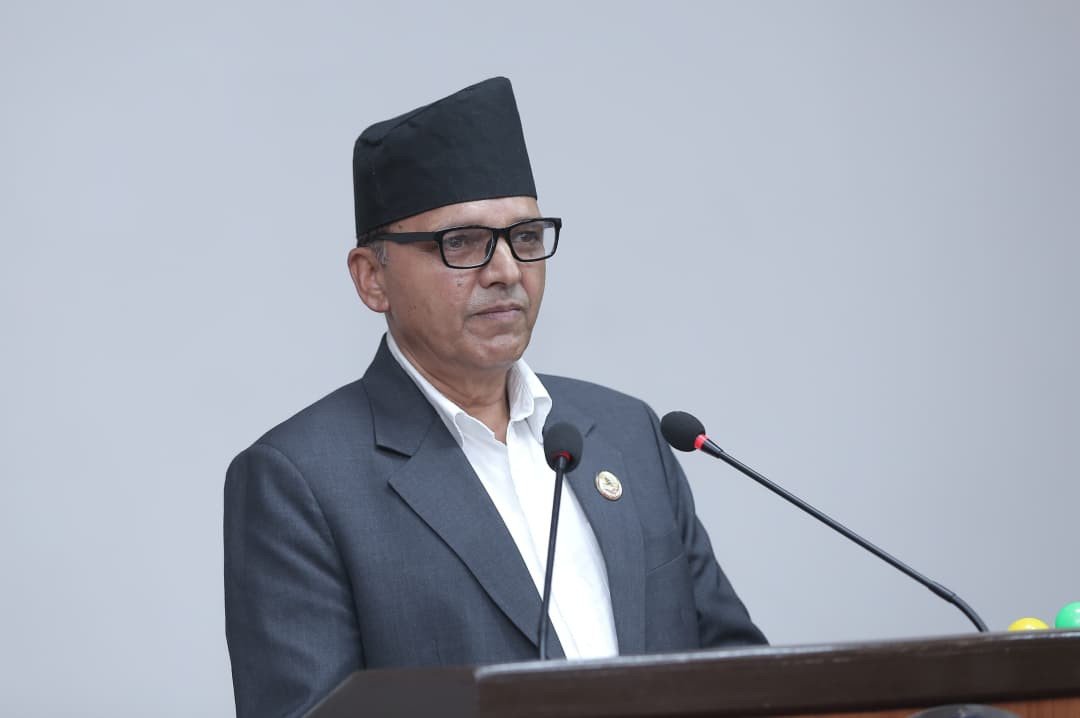
Congress MP Sandip Rana Criticizes Finance Minister's Budget for Neglecting Rural Citizens

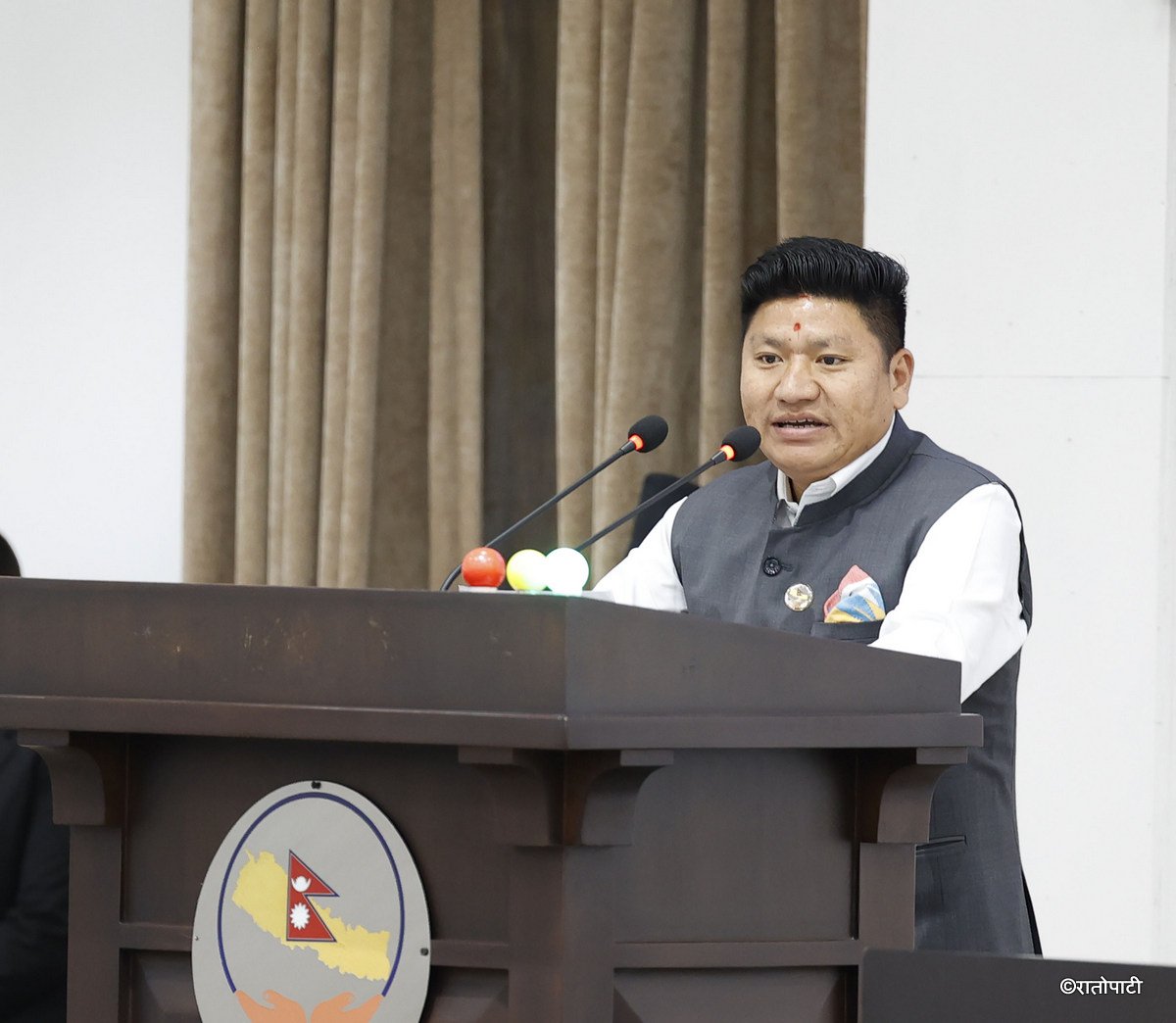
Kathmandu. Nepali Congress MP Sandip Rana has commented that although Finance Minister Dr. Swarnim Wagle claims to follow BP Koirala as an ideal, he has forgotten the citizens of remote villages while preparing the budget in practice.
Participating in the theoretical discussion on the budget in the House of Representatives meeting on Thursday, he made such an accusation. He said that the Finance Minister has completely forgotten BP's main principle of keeping in mind the citizens living in the huts of remote villages while making the blueprint for development in the budget. He stated that the budget brought by the government is impractical, non-inclusive, and insensitive to rural life.
He claimed that the goal of achieving 7% economic growth and keeping inflation within 6% by bringing a budget of approximately two trillion rupees more than the limit set by the National Planning Commission is not practical under any circumstances. He further stated that the budget does not even include the spirit of social justice and inclusivity in accordance with the spirit of the constitution. He mentioned that the low-income class, unorganized sector workers, farmers, youth, women, and marginalized communities have been left out of priority.
Criticizing the budget, he said in parliament, 'In the budget brought by the honorable Finance Minister, a renowned economist who considers Mahamanav BP Koirala as an ideal and starts the budget speech in the name of Suvarna Shamsher, has forgotten BP's statement that the blueprint for development should be made keeping in mind the citizens living in the huts of remote villages. The ambitious budget of 2 trillion rupees more than the limit set by the National Planning Commission, aiming to achieve 7% economic growth and keep inflation within 6%, does not appear practical anywhere. It is not in the spirit of the constitution at all, and although some classes may like it, this budget has not done social justice. It has not been able to include the lower class, farmers, youth, women, and marginalized classes. This budget has not included the large class of the country like the lower class below 20% and the unorganized class below 20%. The agricultural sector, which contributes 24% of GDP and 60% of employment, has been neglected.'
MP Rana reiterated that there is no basis for the government's commitment to create employment and self-employment for youth in rural areas within the budget. He commented that the plan to resettle depopulated villages will remain only a declaration as programs for village revitalization, increasing agricultural production, utilizing barren land, and developing local roads and tourism infrastructure have not been effectively included in the budget. Although a new Ministry of Science, Technology, and Innovation has been formed, the budget is insufficient, and due to the government's working style, the private sector has become discouraged, making it difficult to achieve the goal of employment expansion.
He emphasized that the state should collect taxes without imposing unnecessary burdens on the public and invest it in development. He accused the budget of making the tax system unjust by adding additional tax burdens on education, health, milk production, and electricity sectors, contrary to the principle that luxury goods should have high taxes and basic necessities should have concessions.
This specific news has been automatically translated by AI. As a result, there may be some inaccuracies or language errors.

_cxVIjUxMbx.jpg)