Parliamentary Debate on FY 2083/84 Budget Highlights Dissent and Defense
Kathmandu. Discussion on the budget for the fiscal year 2083/84 is currently underway in the parliament. After being obstructed for 10 days due to controversial remarks by Prime Minister Balendra Shah (Balen), the theoretical discussion on the budget began 13 days after its presentation.
Just as there is significant interest in the budget presented by the new parliament formed after the GenZ movement and the new government built on its foundation, the discussions and suggestions received are also being viewed with equal importance. However, the discussions so far do not seem to have risen above the mindset of the ruling and opposition parties.
On Thursday, 40 lawmakers participated in the budget discussion in the parliament. Except for a few participants, others could not present their views beyond their positions. Most lawmakers from the ruling party spent time praising the budget, while most opposition parties were seen highlighting issues for public consumption.
This trend shows that the parliamentary disease of expressing opinions based on party interests and affiliations rather than the merits and demerits of the budget remains. However, some lawmakers did attempt to subtly present their issues.
Except for Dr. Amaresh Kumar Singh, a lawmaker from the ruling coalition, no other ruling party lawmaker dared to criticize the government. Lawmaker Sulabh Kharel defended the Finance Minister, offering only a few general suggestions. On the other hand, among the opposition, lawmakers like Niskal Rai praised the budget on specific issues, while others attempted to brand the budget as 'anti-poor' and 'unsuccessful'.
Accusations Ranging from Treason to a Deflated Balloon
During the discussion, opposition lawmakers also made serious accusations against the Finance Minister and the budget. Opposition lawmaker Niskal Rai accused Finance Minister Dr. Swarnim Wagle of treason for allegedly altering tax rates in the economic bill presented in the house.
Reminding that the Finance Minister himself used to call changing tax rates treasonous when he was in the opposition benches, Rai argued that changing taxes through executive decision was an unforgivable mistake and a step above the constitution.

Similarly, Dr. Amaresh Kumar Singh, despite being a lawmaker from the ruling party, strongly criticized the budget. He called the current budget a deflated balloon, stating that a budget of up to 32-33 percent of the Gross Domestic Product (GDP) is never made anywhere.
Saying that a balloon does not last long, he expressed not an iota of confidence in the implementation of this budget. Furthermore, he objected to the state imposing taxes on education and health, which are fundamental rights according to the constitution.
Sandip Rana, a lawmaker from the main opposition Nepali Congress, commented that although the Finance Minister claims to follow BP Koirala as an ideal, he has completely forgotten the citizens living in huts in remote villages while preparing the budget. He claimed that presenting a budget of about two kharba rupees more than the limit set by the National Planning Commission and aiming for 7 percent economic growth is completely impractical.
Gyan Bahadur Shahi, a lawmaker from the Rastriya Prajatantra Party (RPP), sarcastically remarked that the Finance Minister, who formulates policies, reads books and statistics but does not understand the reality of Nepali society and soil. He opposed the provision of giving a 40 percent subsidy only to agricultural enterprises with an initial capital of at least 20 million rupees, stating that the budget aims to benefit only a select few well-dressed individuals and businessmen. He alleged that villagers never have such capital and criticized the reduction in health insurance premiums and the discouragement of domestic pharmaceutical industries.
Defense from the Ruling Side Alleging Boost to Private Sector Morale
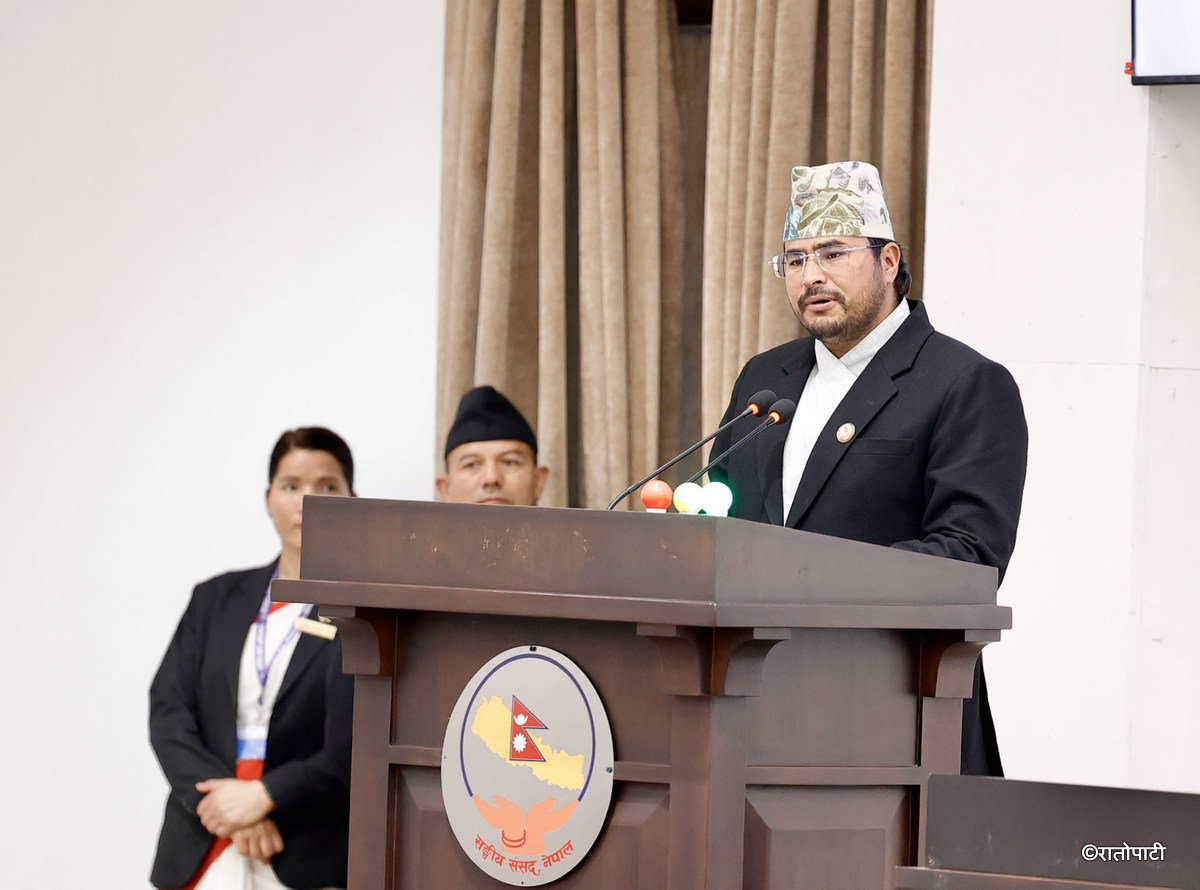
While the opposition severely criticized the budget, lawmakers from the ruling side strongly defended the Finance Minister. Lawmaker Bidushi Rana claimed that the budget has brought historic reforms in the business environment and tax system.
She stated that this budget has addressed long-standing legal uncertainties, tax disputes, and administrative delays. She said that the budget clearly sends a message that the state is now on the side of producers rather than intermediaries, and the reduction in customs duties on hundreds of industrial raw materials is an important step for industrial development.
Lawmaker Sulabh Kharel interestingly supported the budget by comparing the current political leadership to characters from the Mahabharata. He referred to Prime Minister Balendra Shah as Arjuna on the battlefield, party chairman Ravi Lamichhane as Krishna, and Finance Minister Dr. Wagle as Bhishma, who thinks about the long-term interests of finance and ethics. However, he suggested minor improvements, stating that the 25 percent corporate tax imposed on small companies and the 3 percent tax on education and health would burden parents.
Problems of Localities and Common People Not Prioritized
Besides national economic and policy debates, some lawmakers expressed dissatisfaction that local-level serious problems were not included in the budget. Hark Sampang Rai, chairman of the Shram Sanskriti Party, commented that the budget is like trying to wear new shoes without treating a wound on the foot. He said that the budget completely ignored basic needs such as drinking water for citizens in remote hilly areas and mobile network connectivity.
Sita Thapaliya, a lawmaker from the Congress, expressed anger that the state has been perpetrating extreme injustice on the local residents of Sisdol and Banchare Danda, the landfill sites for Kathmandu's waste, for the past 21 years, yet the budget remained silent. She lamented that despite the pollution of rivers and streams due to leachate from waste and the increasing incidence of diseases like cancer among locals, the Finance Minister was unmoved by the suffering of the citizens.
Similarly, lawmaker Niskal Rai said that although the Finance Minister made a video (reel) in the tea gardens of Ilam, the budget completely disappointed Ilam and its farmers. He expressed concern that factories in the tea gardens, where sweat flows, are on the verge of closure, and the problems of dairy farmers remain unresolved.
Finance Minister's Defensive Reply, Aggressive Expression
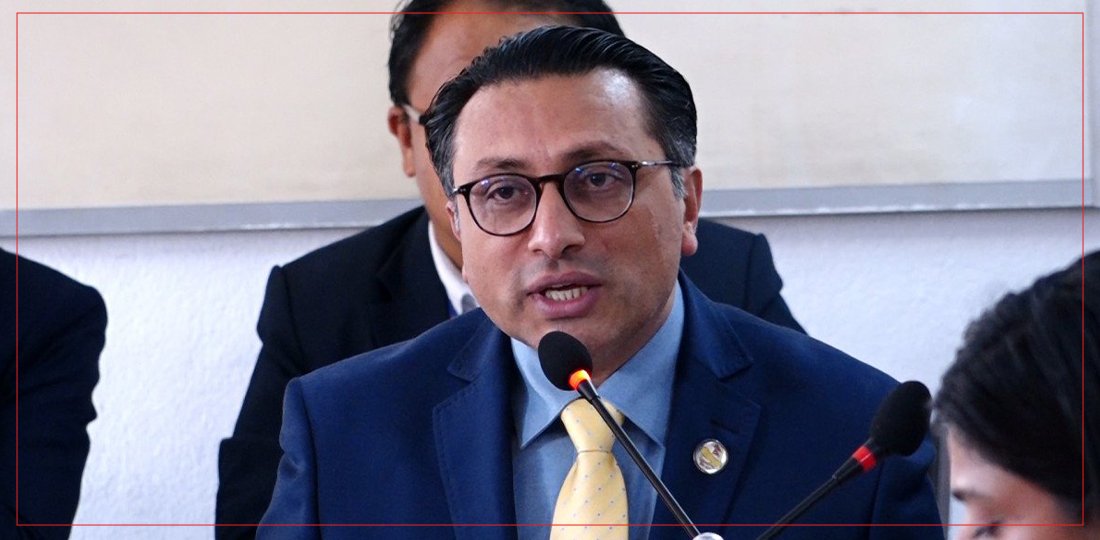
Finance Minister Wagle gave a lengthy response to the dozens of questions, accusations, and policy criticisms raised by the lawmakers. During his speech, he clarified that the current budget is based on the mandate received from the elections and the party's manifesto.
Finance Minister Wagle philosophically refuted the criticism that the budget is solely for urban or a limited class.
He explained that in a situation where the overall demand has collapsed in the economy, which is recovering from COVID, industries, trade, and employment cannot be created without boosting the confidence and purchasing power of the middle class. Regarding the questions about poverty alleviation, he claimed that poverty does not decrease merely by distributing cash. He stated that the philosophy of this budget is to enable people to earn income through employment rather than keeping them in a state of perpetual dependency on aid.

The Finance Minister explained the criticism from lawmakers regarding the provision of subsidies only to those with two crore rupees in agriculture as a pilot project. He claimed that this is a small step taken to move subsistence agriculture towards commercial and industrial scale, and the facilities provided to small farmers remain unchanged.
Responding to the criticism that the budget size is like a deflated balloon, Finance Minister Wagle claimed that the budget is relatively small. He asserted that, in proportion to the Gross Domestic Product (GDP), this is the smallest budget in a long time, at just 28.5 percent. Recalling that a budget exceeding 30 percent of GDP was presented last year, he stated that the state's mandatory liabilities have reached 14 kharba rupees, and the budget has been presented within disciplinary limits amidst resource constraints.
He linked the questions raised about taxes on education, health, and electricity to the modernization of the economy. He said that since nearly half of Nepal's economy is still informal, it is necessary to gradually move from an income-based tax system to a consumption-based tax system. He argued that the education tax is imposed to bring those who spend thousands in private schools but are not in the tax net into the formal economy. He assured that taxes on electricity would not burden the end consumer and that technical adjustments would be made before August 1st.
Finance Minister Wagle strongly refuted the serious accusations of treason and manipulating tax rates to benefit specific businessmen. While stating that minor technical errors, such as suitcases and blood carriers appearing on the same list, would be corrected, he warned against questioning his integrity.
He clarified that the government, which has come with a ruthless agenda of good governance, will not compromise on integrity. 'A couple of ragamuffins wrote about a suspicion of two billion. If it is proven that I have committed any wrongdoing or dishonesty of even two rupees, not just my ministerial post, but my entire public life is at stake,' Finance Minister Wagle challenged from the rostrum.
This specific news has been automatically translated by AI. As a result, there may be some inaccuracies or language errors.