
"Lalibazar" Film Faces Controversy Over Depiction of 'Nathiya Pratha' and Societal Issues

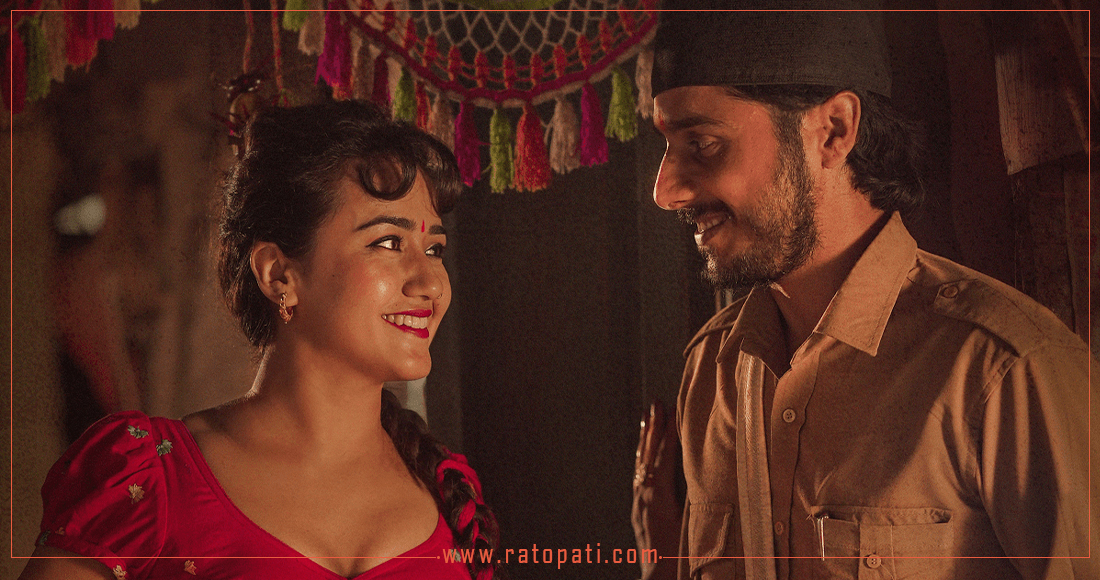
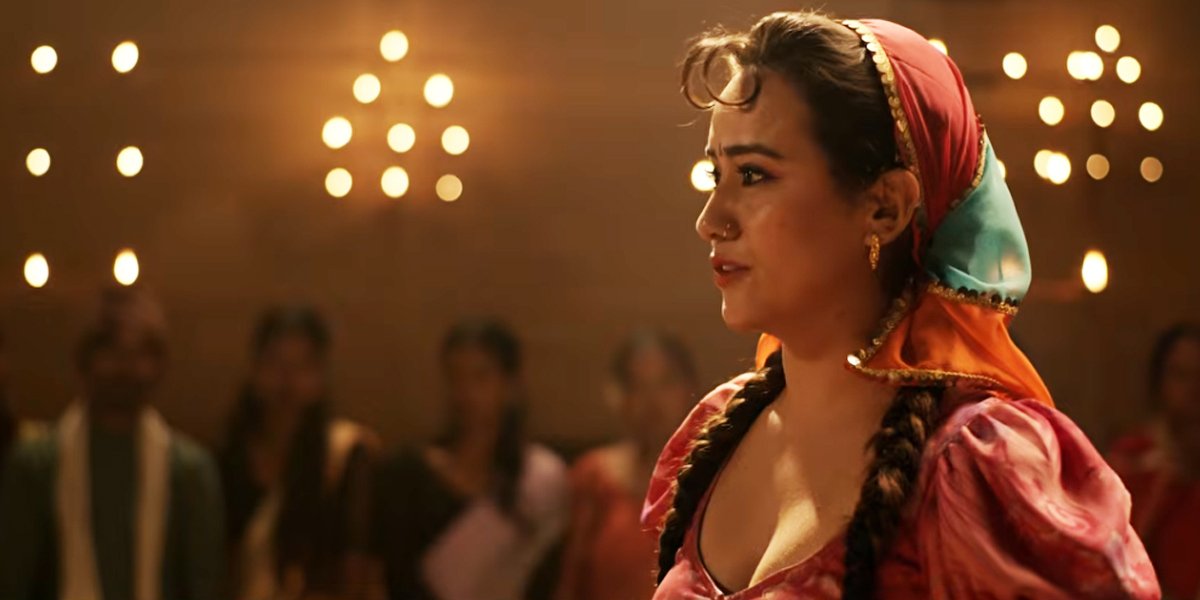
Following the High Court Patan's order to halt the public screening of the film 'Lalibazar' based on a writ petition filed by activist Dr. Roshni Wadi, discussions and debates have ensued in Nepali public circles regarding the film's content. Directed by M. Thapa and starring Swastima Khadka as the main character 'Madhuwala', 'Lalibazar' attempts to narrate a story connected to the 'Nathiya Pratha', which was once practiced in Nepal's Wadi community.
As the film faced legal hurdles due to its content, filmmakers staged a collective protest at Maitighar, deeming it a violation of constitutionally guaranteed creative freedom. On the other hand, activists from the Wadi community accuse the film of reproducing their painful past, linking historical traumas to the market for profit in a manner that disrespects the feelings of the oppressed.
According to the activists, the film 'Lalibazar' weakens the social rehabilitation achieved by the Wadi community through decades of struggle and reiterates historical traumas. Furthermore, they argue that it violates the right to live with dignity. Meanwhile, as the dispute surrounding 'Lalibazar' escalated to the Supreme Court, the situation has arisen where the repercussions created by the film must be considered serious issues, rather than merely a legal process.
This article primarily aims to discuss the film 'Lalibazar' from the perspective of feminist anthropology, examining the historical experiences of the Wadi community, the self-deprecating history associated with Nathiya culture, discriminatory collective memories, and the social exclusions they continue to face even in the present.
- My Perspective Before Watching 'Lalibazar'
Firstly, the inherent bias of this article lies in analyzing events and tendencies from a conceptual perspective of feminist anthropology, in a film directed by a male director from a non-Wadi community and written by a film personality and male writer from a non-Wadi community. Therefore, I wish to clarify my conceptual position, or 'positionality'.
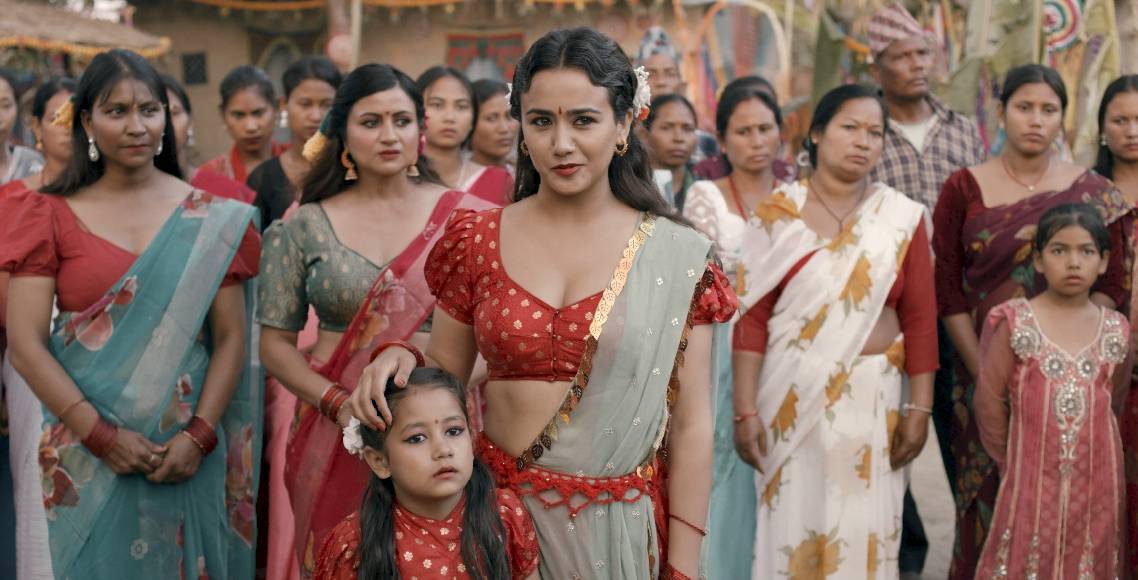
Before watching 'Lalibazar', as a student of anthropology, I was somewhat aware of the reality that the Wadi community has long faced a crisis of representation. Although the Nathiya Pratha was formally abolished in 2007 through the Wadi movement and a government decision in 2009, my understanding is that the general public's perception of the Wadi community has not undergone significant change.
In my view, not only 'Lalibazar' but also other works and films have repeatedly portrayed the identity of the Wadi people solely through the lens of sexual labor and ethnic insult. It is said that as long as rabbits do not have their own historians, they will have to accept the history of rabbits written from the perspective of lions. In other words, the marginalized are forced to view their own history through structures created by the powerful.
The question of where the modern democratic state has failed in empowering the Wadi community to tell their own stories or to produce historians is equally complex. Listening to the voices of activists on social media, I felt that resisting and rejecting a film that portrays the bodies of the Wadi people solely as sites of sexual labor, by negating their overall identity, is justified.
In this regard, Wadi rights activists are demanding not only the 'right to be seen' but also the 'right to how they are seen'. In my understanding, under the guise of representation, such activities legitimize the pain of the suppressed bodies of women by developing it as narrative capital in the name of cultural production.
From this perspective, the concept of 'symbolic violence' by French sociologist Pierre Bourdieu is highly relevant. According to this concept, patriarchy dominates women's bodies not only through economic or physical power but also through cultural representation and symbolic systems. When a community is repeatedly portrayed in a one-sided manner, solely through the aspect of their stigmatized history, such visual practices themselves manifest as a violent structure.
Symbolic violence is manifested not only through the misrepresentation of oppressed communities but also through repeated visibility. Through various forms of artistic endeavors, the complexities faced by marginalized women in practice are denied, and only their stigmatized history is continuously re-established as suffering.
Even before watching the film, I felt that the decades-long struggle of the Wadi community for education, diversification of labor, and social and political identity has been overshadowed. From the critical perspective of feminist anthropology, the suffering of oppressed women is often aestheticized for the consumption of dominant audiences.
In the visual culture constructed by the powerful and patriarchal, the representation of marginalized women is never neutral. This is because the camera itself represents the male gaze, and the directorial gaze is deeply intertwined with the female body.
- Perspective After Watching 'Lalibazar'
Upon initial viewing, the film 'Lalibazar' not only unilaterally exposes the humiliating custom of Nathiya faced by the Wadi community but also highlights the bodies of women marginalized ethnically and historically marked by sexual stigma, their collective memories, and the structural violence linked to ethnic oppression, as well as the social tragedies associated with poverty and deprivation.
In this film, Madhuwala's body is presented as a body born from the cycle of continuous exploitation, where patriarchy is constantly engaged in the business of turning Madhuwala's body into a site of sexual labor for its self-centered satisfaction. The insatiable patriarchy, not satisfied with making Madhuwala's mother's generation sex slaves, seeks to exploit generations through a cultural agreement of Nathiya bondage, involving her and her daughter's bodies.
From the perspective of feminist anthropology, some scenes in this film feel created for the sexual satisfaction of male audiences, and it is entirely justified to present this film as a document that reproduces historical trauma, as argued by Wadi rights activists.
Although in a few scenes the camera directly intervenes with Madhuwala's body, in most scenes of the film, the directorial gaze attempts to bear witness to the oppression through the camera concerning the social tragedies Madhuwala experiences.
If viewers develop empathy for the historical discrimination faced by characters like Madhuwala due to social evils like Nathiya, and if their struggle resonates with the audience's gaze, then the film should be absolved of the accusations of merely reproducing historical trauma.
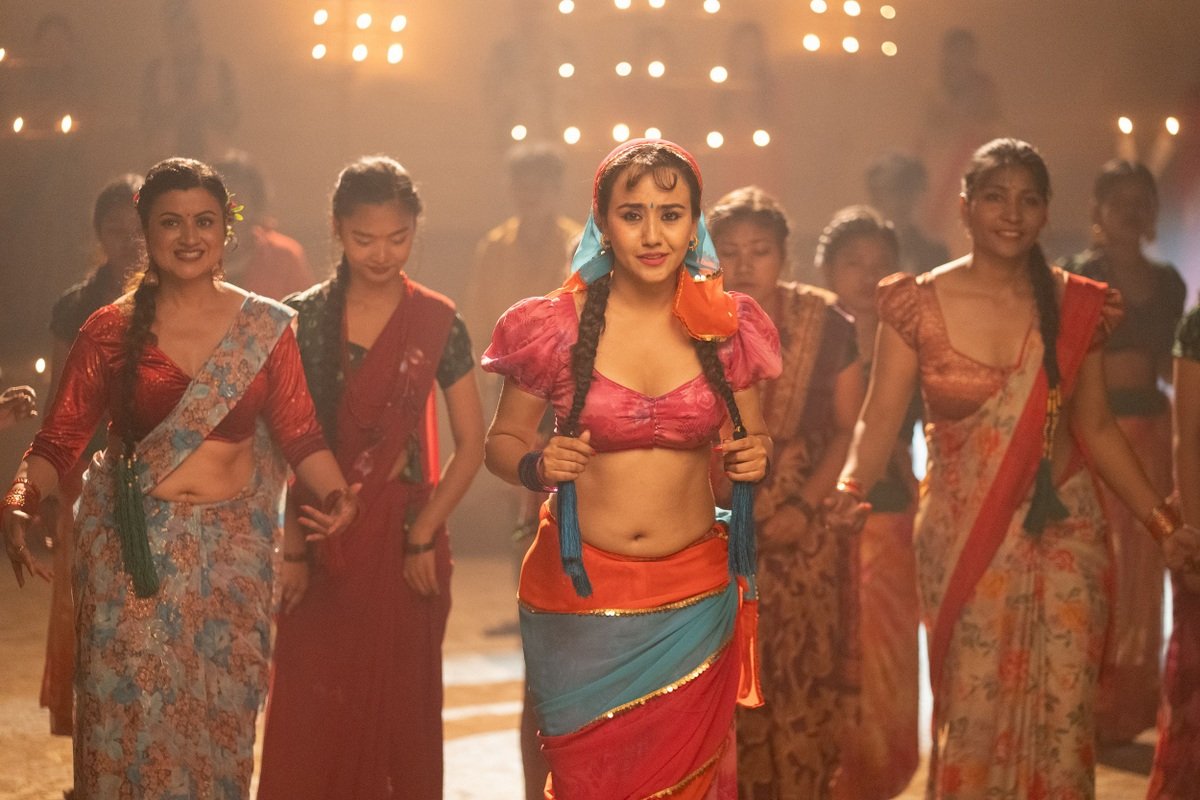
If any viewer perceives that the film's 'premise', or its core intention, conveys the expression that customs like Nathiya should be maintained for the pleasure of feudal patriarchal society, then it is also justified to accuse this film of 'selling the tears of the oppressed community in the colorful world of the market'.
In this regard, if activists from the Wadi community insist that historical traumas can be healed by not having any writer write a novel, filmmakers make a film, or public interest is shown, then creators must also be ethically sensitive to such voices.
However, in any country, the message that people of one community should not speak about the oppression faced by people of another community, and that it is beneficial to remain silent about the historical stigma seen/experienced within one's own society, may not be a justifiable argument in an open society. This film should not only be seen as a social-cultural text that reproduces historical contempt but also as a resistant voice against the structural power relations that seek to legitimize the cycles of exploitation created by patriarchy, corrupt culture, and local power dynamics.
However, it is equally important to discuss whether the filmmakers in this film have viewed the story with the same lens as the community that did not have to endure oppression, or if they have shown extra sensitivity with an egalitarian perspective.
It may not be possible to hide history by saying that one cannot speak/listen or do anything about the oppression faced by a community for centuries. Therefore, it is equally necessary to raise a resistant voice against the state power and feudal culture that have forced centuries of discrimination and oppression, by making the pain of history public rather than hiding the wounds of history.
Adopting a policy of 'forgive if you can, but never forget' towards historical oppression, continuously seeking an accounting of exploitation and discrimination by every oppressed class may be the just way to mitigate historical trauma.
- Struggle for Birth Registration
The most powerful scene shown in the film 'Lalibazar' is Madhuwala's struggle to register the birth of her daughter (played by Prathana Subedi). As voices calling for the outright ban of the film gain momentum, the serious structural violence issues raised by 'Lalibazar' have been overshadowed.
The painful scenes of how a legal document that should be easily obtained after birth in Nepal becomes a structural obstacle for the powerless, who are forced to endure oppression, are vividly portrayed through Madhuwala's pleas to every man in society to become her daughter's father.
In the feudal society established by 'Lalibazar', no one is willing to be the father of Madhuwala's daughter. Consequently, the girl not only lacks legal status socially but also becomes a zero existence, pushed outside the system in the eyes of the state and bureaucracy, unable to even become a citizen.
Through such scenes, the film 'Lalibazar' exposes the dilapidated oppression that existed within the Panchayat-era feudal state system. In this context, marginalization is not just physical and bodily violence but also a barbaric exclusion created by the bureaucracy and state system that denies identity and legal existence.
In this film, the character of Madhuwala is also a fluid existence crushed by the grip of power, history, and cultural norms in a specific social structure. The emergence of Madhuwala's agency, developing a resistant consciousness against the structural power and cultural norms imposed on her without the help of any concrete political power or organization, is akin to James C. Scott's concept of 'Moral Economy of the Peasant' revolt.
In 'Lalibazar', Madhuwala does not blow the trumpet of a major revolution with the support of any change-seeking force, but she raises a resistant voice against the power structures and social walls that create obstacles to her desires.
The Nathiya system, which involved the auction of virginity in the workplace where Madhuwala lived, is not just a cultural institution of exploitation but also an inhumane cultural practice imposed by patriarchy on women's bodies that played a role in reproducing feudal customs from centuries ago.
Therefore, Madhuwala's struggle in 'Lalibazar' is not just an attempt to escape the unequal cultural relationship with characters like Raja Saheb, but also an initiative to resist the ethnic and feudal structures that confine her body as a site of sexual labor and lead her on a journey towards self-respect.
Madhuwala's solitary resistance in 'Lalibazar', at the cost of her progressive lover, holds not only political but also emotional and psychological significance. This resistance should also be viewed in conjunction with the efforts of the new generation of the Wadi society to redefine their identity linked to the Wadi caste and labor, by stepping out of exploitative cycles and imagining a beautiful future for themselves and their daughters.
- Social Death and the Weapon of False Rape Allegation
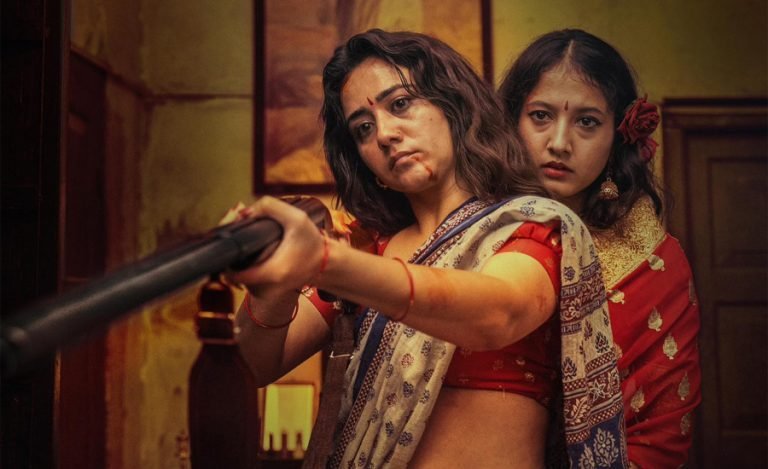
When Madhuwala's daughter requires paternity legitimacy, Madhuwala's brother character agrees to give his name to his niece but proposes to publicly accuse himself of false rape. This incident is the most painful scene shown in the film 'Lalibazar', which exposes the structural violence prevalent in Nepali society.
From one perspective, this scene within 'Lalibazar' seems very unusual and unnatural, but from another perspective, it shows how the state power has compelled the brother character to resort to the false weapon of his sister being raped, as if to obtain legitimacy of paternity for a Wadi woman's child's birth registration.
This is the extreme state of oppression where the oppressed lose their reason under the burden of the system. When any person or community is excluded from the scope of human rights and civil rights, as in 'Lalibazar', they become 'socially dead', as sociologist Orlando Patterson wrote in his book 'Slavery and Social Death', even if they are biologically alive.
The self-destructive proposal made by Madhuwala's brother character for his niece's birth registration is a desperate attempt to save the child from social death. The film 'Lalibazar' exposes, through the powerful acting of actor Govinda Sunar, the extent of thought and social practices that the poor and marginalized are forced to adopt through self-deprecating and self-humiliating strategies to ensure a civic life, when scorched by the heat of structural violence and exclusion.
The proposal made by Madhuwala's brother should not be viewed merely through concepts like normalization of crime or criminalization of circumstances, but should be understood as a deep pain born of structural violence, where humiliation, shame, and violence must be redistributed within one's own family.
When the situation arises where the maternal uncle has to declare himself a false criminal for his niece to obtain citizenship rights, the entire Nepali legal and social structure appears to have collapsed. The question now is, would it have been just to ban 'Lalibazar' itself, which raises such a serious structural question, or would it have been just to compel it to address the factual errors it contained?
Similarly, while strengthening the character of Madhuwala, the question of why the role of her daughter, who also represents the new generation, was made so weak, and the pursuit of its answer, is not seen anywhere.
- Politics of Caste Discrimination in the Classroom
In 'Lalibazar', despite various social obstacles and the threats and arrogance of feudal lords like Raja Saheb (Rabindra Singh Baniya), Madhuwala eventually succeeds in enrolling her daughter in school. However, after overcoming numerous legal and social hurdles to reach school, the daughter is denied equal rights and is forced to sit on the floor.
Our society, which has long excluded the Dalit community from classrooms and practiced structural discrimination, has exposed the discrimination against the Wadi community as social and symbolic violence.
The scene of Madhuwala's daughter sitting on the floor in the classroom in this film reveals the reality that caste discrimination is practiced not only through physical violence but also in subtle social spaces like classrooms for a long time. Feminist anthropology considers such established and institutionalized experiences as practices that reproduce inferiority in society in subtle ways.
In such discriminatory practices, the bodies of the powerless are repeatedly placed in a lower physical position than others, forcing them to internalize the idea that they are 'inferior and impure'. This behavior, initially appearing only physically, is gradually normalized by silently tolerating the inequality and politics of caste discrimination created by societal structures.
Therefore, violence is not always a dramatic event that occurs occasionally. The film 'Lalibazar' illustrates that the tools of violence are constantly used by the powerful against the oppressed in various forms and styles in society.
However, the story of the film 'Lalibazar' does not end at the point of silently accepting this situation faced by Madhuwala's daughter. Madhuwala, challenging the structural violence she and her daughter have endured, breaks the chains of caste reproduction and feudal compromise and reaches a stage of imagining an alternative future for her daughter and herself.
If the debate could have been raised whether 'Lalibazar', in its use of narrative freedom, faltered at any point on the scales of reality and objectivity, it could have created an opportunity for even those unfamiliar with the Wadi community to meticulously consider the politics of structural discrimination and oppression associated with Wadi society.
However, the debate surrounding the film 'Lalibazar' got bogged down in mere mathematical aspects like freedom of expression and prohibition, and a profound public debate on the socio-cultural significance of the story of struggle for self-respect and change by the Wadi community and characters like Madhuwala could not take place.
In conclusion, despite all the difficulties and struggles in 'Lalibazar', Madhuwala succeeds in freeing herself from feudal obligations and cultural promises like Nathiya. This event offers hope that it is possible to break free from the burden imposed by tradition and feudal power relations and develop a resistant consciousness in communities living under oppression.
Through the content presented by 'Lalibazar', it is evident that a powerful narrative has been disseminated in society that resistance is possible even when cultural agreements are supported by feudal power relations.
It is not justified to view this film merely as a film made solely for profit based on historical trauma, or as a narrative limited to a romantic imagination of sexual liberation and ethnic emancipation.
'Lalibazar' has revealed itself as a starting point in the journey towards self-respect, encompassing the ethnic oppression faced by the Wadi community in a certain period of history, the politics of citizenship, the right to education, control over one's body, and the journey towards self-respect.
Certainly, the various forms of structural violence depicted in this film have not yet been eradicated in our society. If the forms of violence shown in the film are repeatedly reproduced in society, then the film must be credited with raising a voice against structural violence through freedom of expression.
However, if someone can prove that our society has been completely freed from the social, cultural, and psychological violence depicted in 'Lalibazar', then the entire team that made 'Lalibazar' must apologize for the misrepresentation of Nepali society. Although structural violence, feudal power relations, and unequal cultural relationships like Nathiya have changed their form, new forms of oppression and exploitation are also constantly being created in various contexts.
In this situation, it is the need of the hour for filmmakers to develop the craft of storytelling with sensitivity and empathy towards the issues of marginalized and historically traumatized oppressed people, thereby making themselves additionally responsible.
This specific news has been automatically translated by AI. As a result, there may be some inaccuracies or language errors.



_18aawmzmsd_sTzy83VQGv.jpg)
