Rohingya Found in Saptari, Sent to Human Service Ashram in Janakpur

Biratnagar. Despite knowing that a foreign national (Rohingya) of unknown identity was present in Kanchanrup Municipality of Saptari, the Saptari administration has sent him to the Manavsewa Ashram in Janakpur. The person was sent to the Manavsewa Ashram due to policy ambiguity in the management of refugees entering Nepal illegally and their management.
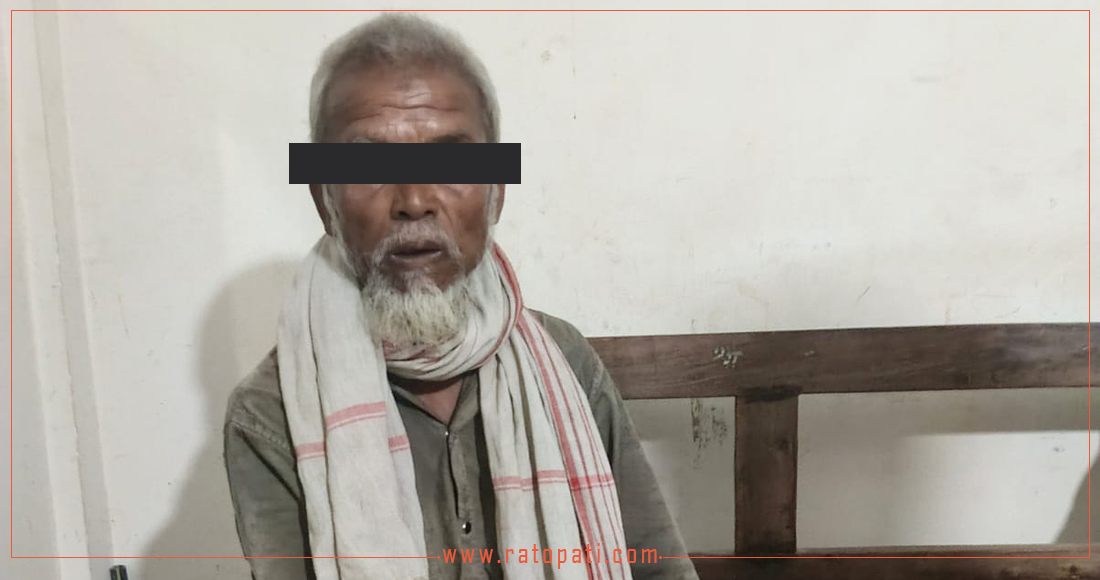
On the evening of Asar 27, around 5 PM, a man estimated to be around 55 years old was found in Baramjiya, Kanchanrup Municipality-2. Although the security committee meeting decided to send him to the Department of Immigration, sources claim that the Department of Immigration suggested sending him to the ashram.
Locals say that some people brought him from India to Nepal on the 27th and left him there. Local residents informed the police about him. A team from the Kanchanpur Area Police Office immediately reached the spot, took him into custody, and began questioning him.
During the interrogation, the man could not understand or speak any commonly spoken languages such as Nepali, Hindi, Maithili, or English. According to police sources, he uttered only a few words like 'Taka', 'Bangladesh', and 'Allah' during the conversation. As he understood some words in the Hanifi script, security personnel suspect he might be a member of the Rohingya Muslim community displaced from Myanmar and who reached Bangladesh.
According to DSP Hemchandra Ghimire, spokesperson of the Saptari District Police Office, the found person could not speak any clear language and no documents were found to identify him.
'Our team rescued him after finding him. He was not in a condition to speak. Seeing the need to provide him protection out of humanity, he has been sent to the Manavsewa Ashram in Janakpur,' he said.
Sources from the Department of Immigration itself state that the national policy and laws regarding foreigners or refugees entering Nepal illegally are weak.
When asked about the district security committee meeting or the directive from immigration, DSP Ghimire claimed that it was not a formal decision but he was sent to the ashram purely on humanitarian grounds. However, Saptari security sources claim that contrary to the established practice of sending foreign nationals to the Department of Immigration after completing legal procedures, he was sent directly to a charitable organization.
This incident is merely representative. Sources from the Department of Immigration itself state that the national policy and laws regarding foreigners or refugees entering Nepal illegally are weak. Managing unidentified or illegally entered Rohingyas in Nepal has become a challenge for the Department of Immigration.
'Such individuals are arrested here repeatedly, but arresting them is not enough, they cannot be kept in detention forever. The court also orders their release or appropriate resolution after a certain period,' the source said.
Nepal does not have an effective mechanism or strong diplomatic channel to immediately deport illegal immigrants. 'We do not have the resources and capacity like America to put them on planes or ships and drop them directly in their country. The Myanmar government does not accept them as its citizens, and Bangladesh also does not easily agree diplomatically to take back Rohingyas from Nepal,' the source said.
Taking advantage of the open border, brokers are bringing Rohingyas into Nepal by luring them with financial incentives.
According to the official policy of the Government of Nepal, Nepal does not recognize refugees from countries other than Tibet and Bhutan. Legally, Rohingyas are considered illegal immigrants in Nepal, but in practice, after they enter Nepal, the United Nations High Commissioner for Refugees registers them as urban refugees and issues identity cards. As a result, even when the immigration department tries to take legal action against them, the legal proceedings become weak due to court orders and pressure from international humanitarian law.
The Department of Immigration itself states that a large settlement of Rohingyas has been established in areas like Kapan in Kathmandu. Although official government data shows a few hundred Rohingyas formally in Nepal, security agencies estimate that the informal number has exceeded thousands.
Taking advantage of the open border, brokers are bringing Rohingyas into Nepal by luring them with financial incentives. It is suspected that the person named 'Mahib' found in Saptari may also have fallen victim to this network.
After entering Nepal, they are pre-trained on where to go and how to live. This is why they remain silent or hide their identity when caught.
According to security experts, the uncontrolled settlement of unidentified foreigners can have long-term effects on Nepal's internal security, demographic balance, and economy. Although the Department of Immigration has repeatedly corresponded with the Home Ministry and security agencies to increase surveillance in border areas and prevent illegal entry, effective implementation has not been achieved.
This specific news has been automatically translated by AI. As a result, there may be some inaccuracies or language errors.

_gcmnFrn8Po.jpg)
_TnSwJpC5e7.jpg)