Fever Cases Rise in Nepal Amidst Monsoon

With the onset of monsoon in Nepal, the number of fever patients has also been increasing. Daily rainfall in Kathmandu and the situation where water accumulates as if to flood Kathmandu due to poorly managed drainage systems, have significantly increased the risk of waterborne infectious diseases.
Along with fever, the number of patients with severe diarrhea coming to the hospital for treatment has also increased. Since people in Nepal do not come to the hospital for સામાન્ય diarrhea, such patients who come to the hospital are referred to as 'severe diarrhea' in this article.
Currently, the graph of infectious diseases is also seen to be increasing. Since fever is only one symptom of the disease and tests are conducted for only a limited number of bacteria, many diseases remain unknown. That is, the diagnosis for most fever patients is not determined. Some of the communicable diseases with fever symptoms confirmed in Nepal since the onset of monsoon are as follows:
- Dengue
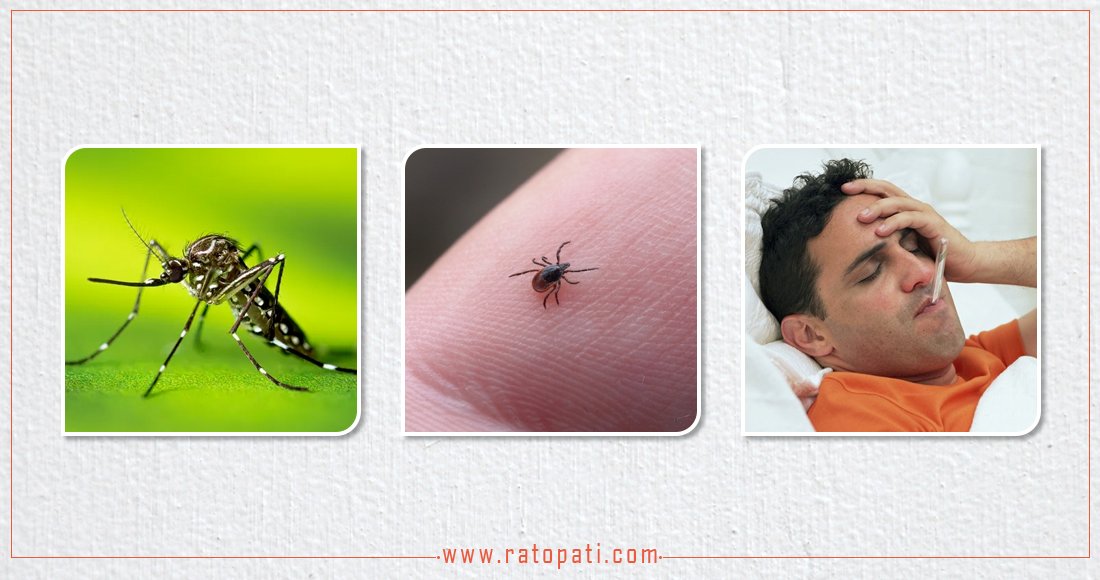
In the last few days, mosquitoes have been seen to have increased significantly. The development of mosquitoes has been facilitated by the daily hide-and-seek of sun and rain. For this reason, the risk of dengue is expected to increase in the coming weeks. Since dengue is transmitted by the 'Aedes' mosquito, controlling mosquitoes is the only indispensable measure for controlling dengue.
Although there has been extensive debate for many years about the 'find and destroy larvae' campaign for mosquitoes, the implementation aspect appears to be very weak, due to which dengue is spreading geographically.

In 2022, the largest human loss in Nepal's history was due to dengue. Although official statistics show the number of infected people in the 5-digit range, it can be estimated that this number could be in the 6-digit range, i.e., in the lakhs. This is because, after some time into the outbreak, most patients with dengue-like symptoms stopped getting tested, along with other family members.
Severe pain in the body's muscles and joints, and intense nausea or vomiting upon hearing the name of food are symptoms that distinguish it from other infections. Besides these, pain in the eyeballs as if they might fall out, small red rashes on the body, and loss of appetite are other symptoms.
If dengue becomes more complicated, bleeding starts from the nose and gums, especially. Besides this, dengue also affects various organs. Although the mortality rate of dengue is lower compared to other infectious diseases, its pain is extremely difficult to bear. Perhaps that is why dengue-infected patients themselves sometimes say, 'May the enemy also not get dengue,' based on the author's experience.
- Scrub Typhus
Scrub typhus has started appearing sporadically. It is caused by the bite of mites called 'chigger mites'. Dengue and scrub typhus are seen together almost every year. Last year, scrub typhus was seen more than dengue in Kathmandu.
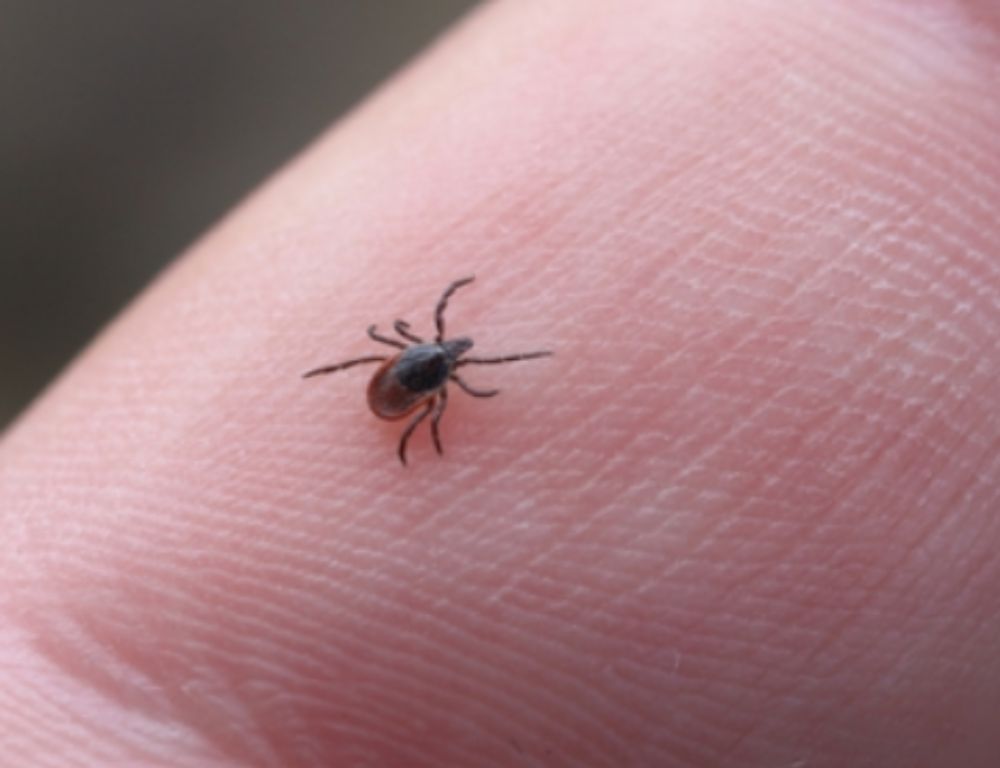
The widespread occurrence of scrub typhus in Kathmandu was surprising in itself; because, in the past, scrub typhus was more commonly seen in the districts outside Kathmandu. If scrub typhus is not treated at the beginning, it can even cause death. However, if identified and treated with antibiotics in time, it is completely curable.
Along with fever, if a black scab or 'eschar' appears on the skin from the bite of chigger mites, the possibility of scrub typhus infection is very strong. Sweating, rashes on the body, feeling difficulty in breathing, slight redness in the white part of the eyes, nausea, and vomiting are further symptoms of scrub typhus.
Confirmation of scrub typhus is certain through laboratory diagnosis. Since chigger mites are found especially in tall bushes and grass, such weeds should not be kept around the house. Also, when sitting on the ground, one should only sit after placing something underneath. Since this mite is also found in rats, an environment conducive to rats should not be created around the house. In other words, the surroundings of the house should not be allowed to become dirty, and the storage areas for grains should also be managed to prevent rats from entering.
- Typhoid
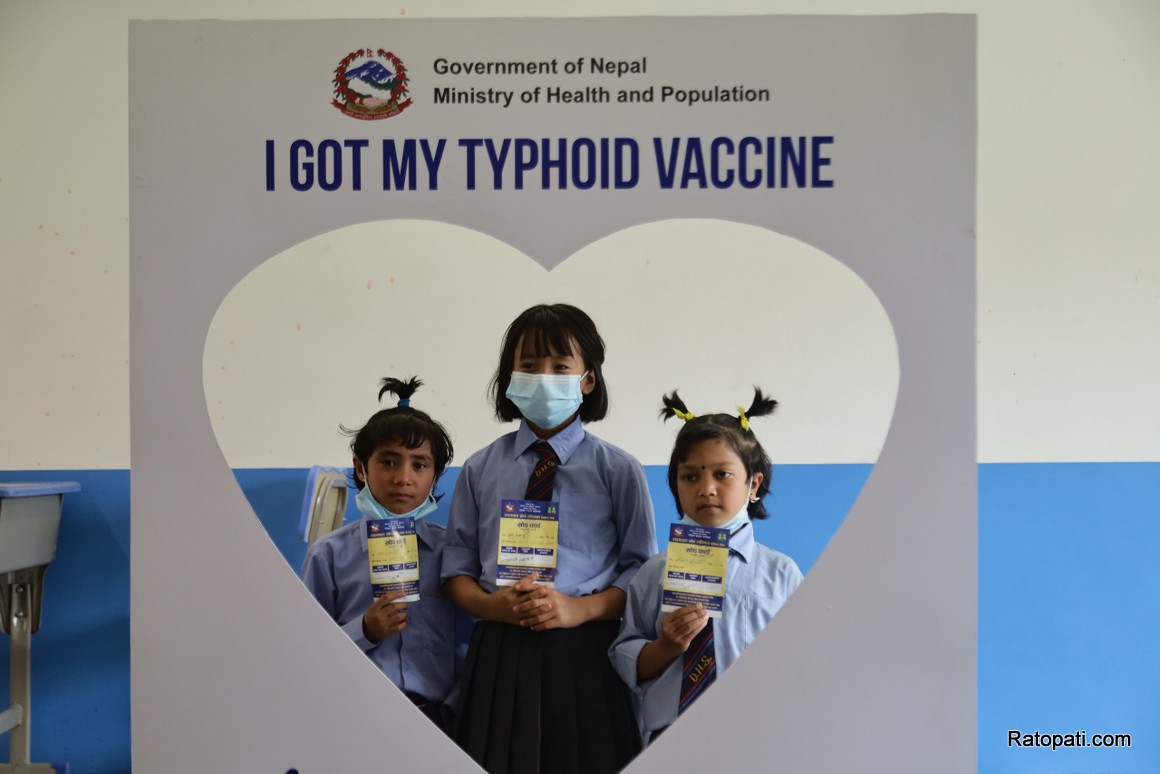
In our society, the saying 'Got fever? It could be typhoid too' still persists. This indicates that typhoid is one of the major causes of fever in Nepal. It is transmitted through infected food and water. It is caused by the bacterium 'Salmonella Typhi'.
In recent times, bottled water has also been found to be a major reason for the spread of typhoid. Various tests have shown that many bottled waters sold in Kathmandu are mixed with 'fecal coliform', i.e., bacteria found in feces.
Although the monsoon has arrived this year, information about whether the quality of bottled water being sold in the market is being tested or not has not been made public. Such information needs to be made public so that consumers can consume the water they are about to drink with at least some confidence.
Symptoms include prolonged fever, fatigue, headache, nausea, abdominal pain, constipation or diarrhea, and in some cases, rashes on the body. Its definitive diagnosis is made after a blood test, and it is treated with antibiotics.
In conclusion, besides the infections mentioned above, there are many other infectious causes of fever in Nepal. But unfortunately, since only a limited number of infections are regularly tested, the cause is not identified in many fever patients. Without identifying the infection, the possibility of proper treatment is low, and treatment may be prolonged or complications may arise in the patient. Therefore, it is highly necessary to expand the scope of testing in Nepal to identify more potential causes and bacteria of fever. If the bacteria can be identified, it will be quick and easy to control the outbreak of fever. However, by providing timely awareness about the communicable diseases mentioned above and those being confirmed, and by focusing on the cause and prevention of outbreaks, potential infections, complications, and the spread of the disease can be quickly stopped.
Dr. Sher Bahadur Pun is the coordinator of the Clinical Research Unit at Shukraraj Tropical and Infectious Disease Hospital.
This specific news has been automatically translated by AI. As a result, there may be some inaccuracies or language errors.