Government Removes Obstacles for 400kV Dhalkebar-Hetaunda Transmission Line

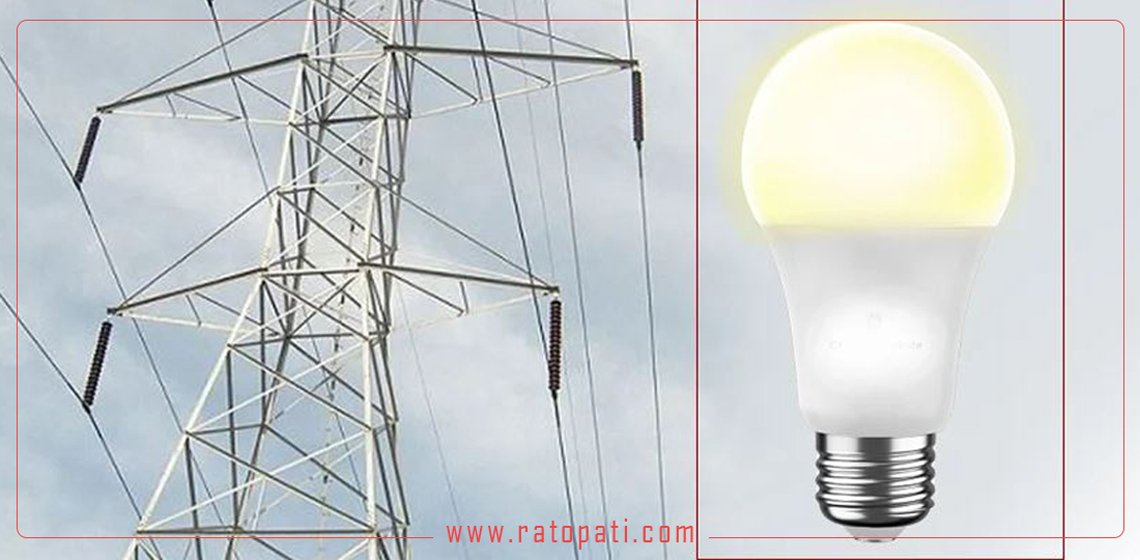
Kathmandu. The government has removed the obstacles to the construction of the 400kV Dhalkebar-Hetaunda transmission line, which had been stalled for various reasons for 12 years. With the decision of the Council of Ministers on Wednesday, permission has been obtained to use forest land in the Makwanpur section of the project.
The Council of Ministers meeting has granted permission to the Nepal Electricity Authority to use 2.2 hectares of national forest land under the Rato Mate Community Forest User Group and the Saraswati Community Forest User Group in Hetauda-15, Makwanpur, in accordance with Section 42(1) of the Forest Act, 2076. It has also granted permission to remove 1,292 trees of various species in the said area.
According to the Ministry of Energy, Water Resources and Irrigation, the project was stalled for a long time due to the lack of decisions regarding forest land use, right of way, and tree felling. The Dhalkebar-Hetaunda-Inaruwa corridor is approximately 300 kilometers long, and a 46-meter wide right of way is required for the 400kV high-voltage transmission line, making forest land permission essential.
A 220kV transmission line circuit has already been constructed from Hetauda to Butwal. Once the new 400kV transmission line becomes operational, electricity flow between the east and west will be facilitated, system reliability will increase, tripping and power outages will decrease, and it will be easier to export surplus electricity to India.
Nepal Electricity Authority Acting Executive Director Dirghakumar Shrestha said that once the transmission line becomes operational, Nepal's national transmission system will become more robust, balanced, and reliable. Electricity produced in the east will be able to flow to the west, and electricity produced in the west will be able to flow to the east.
Meanwhile, Minister for Energy, Water Resources and Irrigation, Birajbhat Shrestha, described this project as an 'energy highway' and stated that it has increased the country's electricity export capacity. He added that once the transmission system is fully operational, the capacity to export electricity will increase from the current approximately 1,000 megawatts to 2,500 to 3,000 megawatts.
This specific news has been automatically translated by AI. As a result, there may be some inaccuracies or language errors.
_SNQ1qVB9aP.jpg)