Koshi Province Government Passes Budget Amidst Controversy

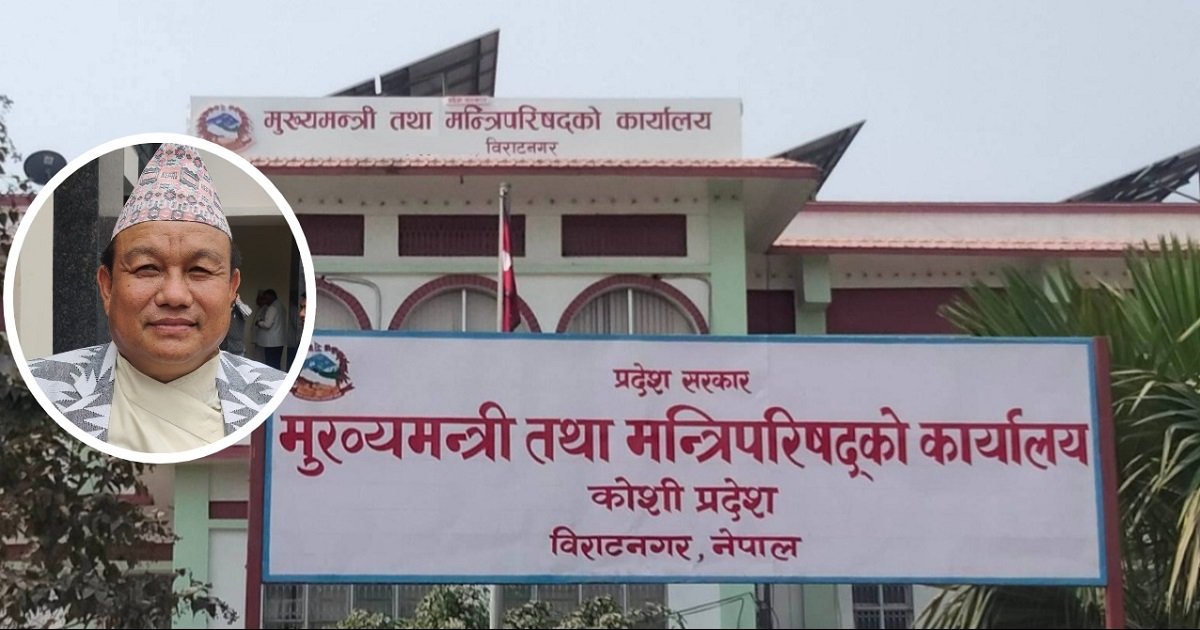
Biratnagar. The Koshi Province Government's estimated budget of Rs 40.44 billion 98 million for the upcoming financial year (2083/084) has been passed by the Provincial Assembly. However, the political conflict prior to the budget's passage and the government's promise to amend the budget by the third week of Shrawan have not yet subsided.
To get the budget passed, the government appeased disgruntled lawmakers by promising to postpone projects worth approximately Rs 1 billion and include new projects by the third week of Shrawan. The opposition argues that it is legally impossible to amend the budget's 'red book' so soon after the start of the financial year.
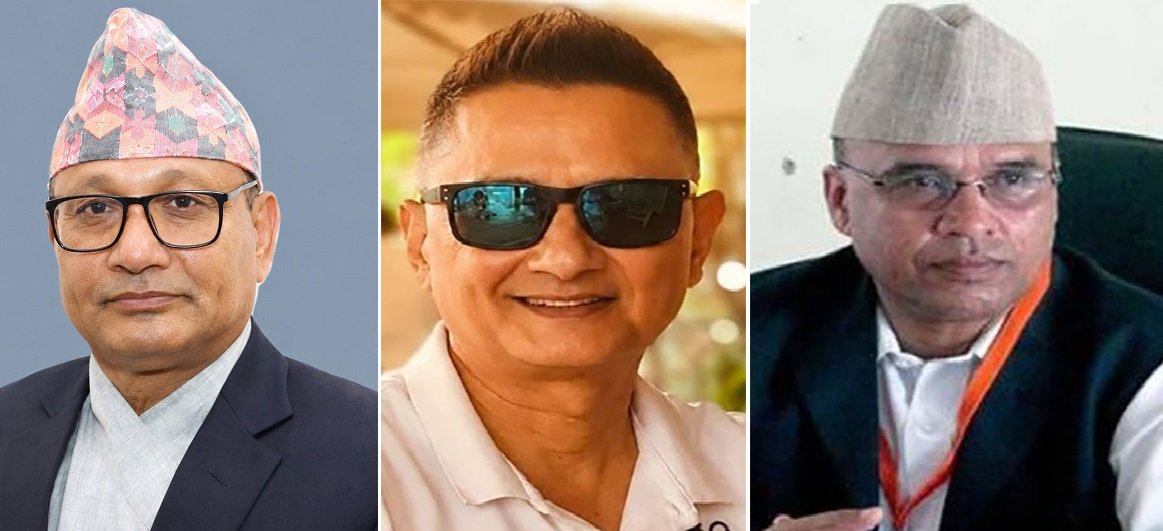
Following a collective rebellion warning from a majority of lawmakers, including parliamentary committee chairpersons, citing an unbalanced budget allocation, the government was compelled to promise amendments in the Provincial Assembly. In line with that commitment, the provincial cabinet's meeting on Wednesday decided to form a task force led by the Minister for Economic Affairs and Planning, Bidur Kumar Lingthep.
Although the budget was passed on Wednesday, when asked by journalists how he would proceed, Minister Lingthep stated that he would move forward as per the agreement. He, however, denied that the budget was flawed or erroneous.
Minister Lingthep said that the concerns of the lawmakers would be addressed by the third week of Shrawan. 'If the budget were flawed, it would not have been passed by the Provincial Assembly. The task force will work according to established legal procedures and norms to address the dissatisfaction raised by some honorable members and to maintain balance in the budget,' he said.
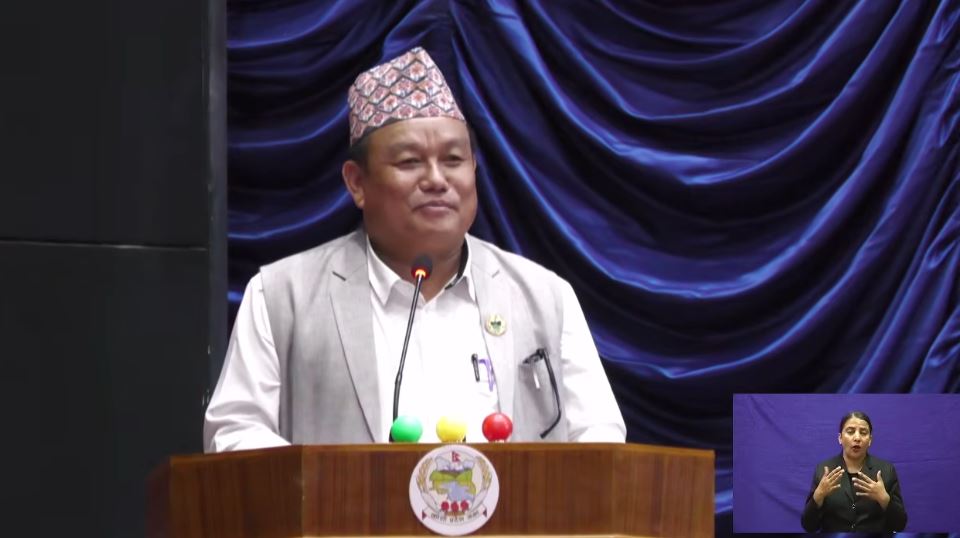
Lingthep mentioned that the terms of reference (TOR) and members of the task force have not yet been finalized, so a decision on how to proceed is still pending.
Amending the 'red book,' which is the list of programs and projects of the appropriation bill (budget) already passed by the parliament, within the first month of the financial year is a sensitive issue from a financial discipline perspective. The Auditor General's reports have repeatedly cited Section 23(3) of the Provincial Procedures and Financial Accountability Act, 2078, stating that budget should only be surrendered within the stipulated time if it is not implemented.
This section of the Act stipulates that if any amount and program included in the Provincial Appropriation Act is not spent by the second quarter of the financial year or is unlikely to be spent in the remaining period, the accounting responsible officer must surrender it to the Ministry of Economic Affairs and Planning by Chaitra 15.
'This year, 5 ministries and bodies surrendered a budget of Rs 59 crore 11 lakh 44 thousand, of which the Ministry of Social Development surrendered Rs 1 crore 96 lakh and the Ministry of Industry, Agriculture and Cooperatives surrendered Rs 11 crore 37 lakh 50 thousand after the stipulated period. To achieve the target, budget must be surrendered within the stipulated time if the action plan is not implemented,' the Auditor General's eighth report states.
However, the provincial government has committed to surrendering projects worth approximately Rs 1 billion by the third week of Shrawan. Section 5 of the Koshi Province Appropriation Bill, 2083, deals with reappropriation and source transfer. Section 5(1) allows for the reappropriation of savings within a budget sub-head to another sub-head. However, there are strict limitations. Section 5(2)(b) prohibits the reappropriation of funds allocated for capital expenditure to current expenditure headings, and according to the Financial Procedures Act, reappropriation cannot exceed 10 percent of the total allocated budget.
Similarly, the proviso to Section 10(2) states that 'the Ministry of Economic Affairs can correct entries and allocations without making substantial changes to the budget and programs.'
Section 12 of the Appropriation Act states that the Provincial Government can issue orders and make necessary arrangements if any obstacles arise in the implementation of the Act. UML lawmaker and former minister, Rewati Raman Bhandari, states that this section will be used to amend the budget.
If the government has to change projects worth approximately Rs 1 billion by the third week of Shrawan, the only legally safe and valid path is a supplementary appropriation bill. According to Article 209 of the Constitution of Nepal and the Koshi Province Financial Procedures Act, a supplementary budget can be introduced if the allocated amount for the current financial year is insufficient or if new projects need to be added.
However, that section is for special circumstances, not for amending the budget. The opposition party, Nepali Communist Party (NCP) leader Indra Bahadur Angbo, states that the government's attempt to remove projects worth approximately Rs 1 billion, approved by the parliament, and introduce new ones is not merely correcting errors or balancing the budget. He considers replacing projects listed in the schedule of the Act passed by the parliament solely by executive order or task force decision as a violation of legislative authority.
Similarly, Section 22 of the Provincial Financial Procedures and Financial Accountability Act, 2078, also tightens the provisions for reappropriation and source transfer. Generally, reappropriation is done in the second or third quarter of the financial year after reviewing the implementation status and savings of projects.
In the first month of the financial year, Shrawan, no projects have typically been implemented, and there is no possibility of showing savings. Angbo claims that reappropriating Rs 1 billion goes against the spirit of the Act.
Likewise, Section 23 of the Act deals with budget suspension or control and surrender. While the government can suspend the budget for a project, there is no clear legal provision in the Act to directly enter new projects that have not been approved by the parliament into the 'red book' in place of the suspended budget.
If the government needs to change projects worth approximately Rs 1 billion by the third week of Shrawan, the only legally safe and valid path is a supplementary appropriation bill. According to Article 209 of the Constitution of Nepal and the Koshi Province Financial Procedures Act, a supplementary budget can be introduced if the allocated amount for the current financial year is insufficient or if new projects need to be added. However, going to parliament with a supplementary budget within 15 days of the budget's passage will be challenging and ethically problematic for the government.
Lawmakers pressuring for budget amendments believe the government will fulfill its commitment regardless. 'Once it is stated in the parliament that the budget will be amended and adjusted, it gains the status of law. Moreover, if all ministers agree with what the Minister for Economic Affairs has said, we should not doubt its implementation,' said Hom Thapa, chairperson of the Infrastructure Development Committee.
This specific news has been automatically translated by AI. As a result, there may be some inaccuracies or language errors.


_hXuKAenRlA.jpg)