Far-Western Nepal Braces for Monsoon Risks: Floods, Landslides Threaten Thousands

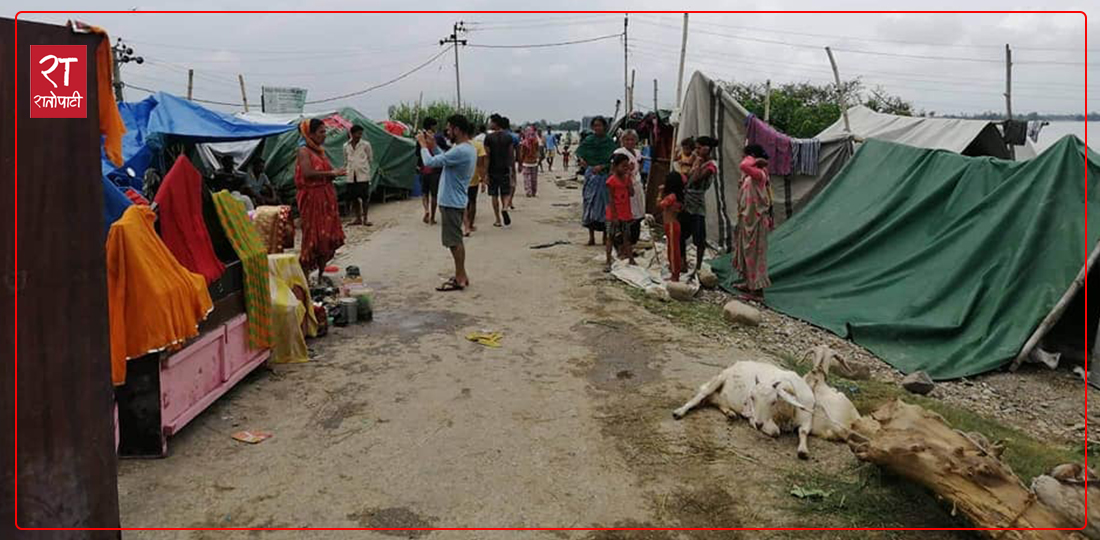
Dhangadhi. With the monsoon becoming active in the Far-West, the risk of floods, inundation, and landslides has increased. As every year, this year too there is a risk of floods and inundation in the Terai and a high risk of landslides in the hilly districts. In the past years, hundreds of families have been displaced due to these natural disasters, and property worth millions of rupees has been damaged.
According to the monsoon preparedness and response plan prepared by the Ministry of Internal Affairs and Law of the Far-West, it is estimated that about 7,603 households, comprising 32,227 citizens, may be affected by monsoon-related disasters in the Far-West this year.
According to Janak Dhami, computer officer and disaster contact person of the ministry, monsoon preparedness has been carried out in coordination with all districts. He said that Kanchanpur and Kailali are at the highest risk. It is projected that 7,213 people in Kanchanpur and 6,195 people in Kailali may be affected. The ministry's data shows that there is also a risk in Doti, Bajura, Baitadi, Dadeldhura, Bajhang, Achham, and Darchula.
In the last fiscal year, flood, landslide, and lightning alone caused an economic loss of more than 62.5 million rupees in the Far-West. Dhami informed that as disasters recur every year causing loss of life and property, the provincial government has given special emphasis on preparedness this year.
According to Dhami, the Provincial Disaster Management Fund currently has more than 80 million rupees. He informed that the Nepali Army, Armed Police Force, and Nepal Police have been kept on standby for immediate rescue and relief in case of disaster. He said that tents, tarpaulins, and other necessary non-food items have been stored in the emergency warehouse at Geta, Dhangadhi.
A provision for reconstruction grants has also been made for families who lose their homes due to disasters. The ministry stated that grants of up to 300,000 rupees in the Terai, 400,000 rupees in the hills, and 500,000 rupees in the Himalayas will be provided. This will involve joint investment from the federal, provincial, and local levels.
This year, preparations are also being made to make the early warning system more effective. In coordination with the Department of Hydrology and Meteorology, risk information will be disseminated through radio, SMS, and local community ward offices and elders.
The districts in the Terai are most affected by floods and inundation every year. In Kailali and Kanchanpur, when river flows increase, settlements get submerged, arable land is destroyed, and hundreds of families are forced to move to safer places.
Dhodha Chandani Municipality in Kanchanpur has also stated that preparations have been made targeting the monsoon. According to Mayor Kishore Limbu, potential risk areas have been identified, locals are being alerted in time, coordination for rescue has been arranged, and arrangements have been made for immediate mobilization in case of emergency. He said that early warning and local vigilance are the most important things during a disaster, so emphasis has been placed on them.
Due to preparedness here, the risk of floods and inundation has been reduced every year.
In the hilly districts, the main challenge is landslides. With continuous rainfall, roads get blocked, settlements are at risk, and transportation and daily life are affected every year. The ministry has admitted that the risk of landslides has further increased due to roads constructed without adhering to engineering standards during road expansion. The ministry's conclusion is that disorganized road construction obstructs water drainage, weakening the soil and increasing the problem of landslides.
The Chief District Officer of Bajura, Dorendra Niroula, said that the District Disaster Management Committee is active keeping the monsoon in mind. According to him, regular coordination is being carried out with local levels, security agencies, and concerned offices. He informed that monitoring of at-risk settlements, management of necessary materials, and immediate response to potential incidents are being prepared.
The provincial government has also stated that disaster management is not the responsibility of any single body, and work is being carried out in coordination among all ministries, local levels, security agencies, and the community. Ministries such as Physical Infrastructure, Social Development, Forest, and Agriculture have also been included in the monsoon response plan.
Meteorologist Dharmaraj Upreti says that along with government preparedness, public awareness is equally important. He stated that by following early warnings on time, not residing in high-risk areas, and obeying the instructions of the local administration, the damage caused by floods, inundation, and landslides can be significantly reduced.
Although the government claims to have made preparedness effective, damage still occurs here during heavy rainfall. The public says that the concerned bodies should pay attention to timely rescue, relief, and effective coordination.
This specific news has been automatically translated by AI. As a result, there may be some inaccuracies or language errors.