Far-Western Province Faces Significant Budget Underutilization

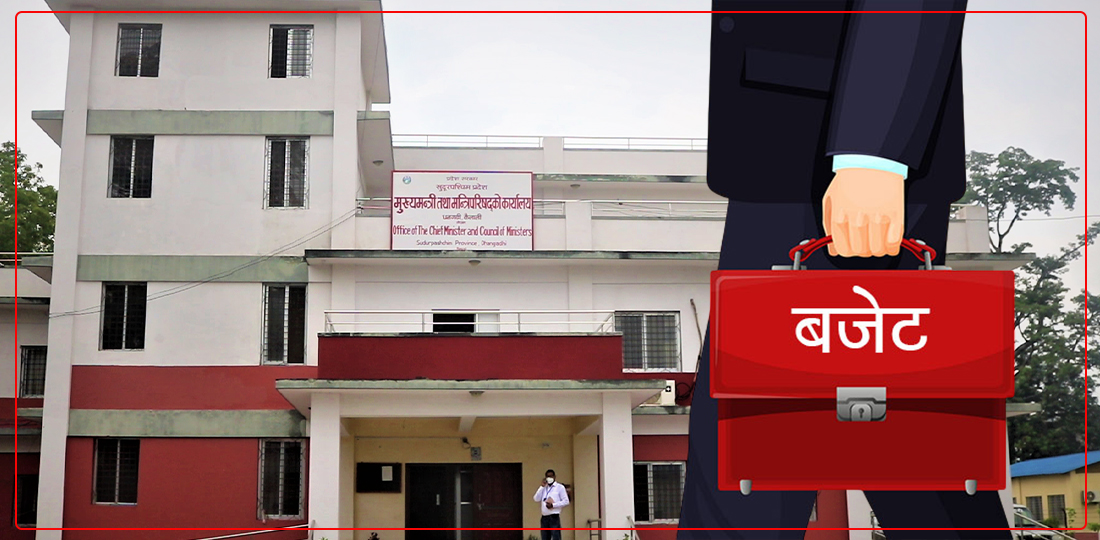
Dhangadhi. Billions of rupees are allocated every year for development in the Far-Western Province. Even as the fiscal year nears its end, a large portion of the budget remains unspent. Consequently, development projects remain incomplete. Roads, bridges, buildings, and other infrastructure are not built on time.
This problem, which has been recurring for years, has continued this year as well. Only two days are left until the government accounts are closed. A large portion of the budget allocated by the provincial government for development has still not been spent.
According to the Far-Western Province Treasury Comptroller Office, the Far-Western Province government had allocated a budget of 19.8385 billion rupees for development in the current fiscal year. As of Ashar 20, only 6.54 billion rupees, or approximately 36 percent, has been spent. 13.29 billion rupees remain to be spent.
With government accounts closing on the night of Ashar 25, there is very little time left to spend the remaining amount. For this reason, it is almost certain that a large amount will be frozen this year as well.
However, Province Treasury Comptroller Basudev Joshi says that spending has increased since the second week of Ashar. According to him, the office is working even on holidays due to the increased pressure of payments.
“Spending has increased since Ashar 15. Efforts are being made to increase spending by working even on holidays. The goal is to reach a total expenditure of 60 percent,” he said.
Even if 60 percent of the budget is spent, approximately 8 billion rupees of the development budget will remain unspent. This is expected to have a significant impact on the province's development.
The question of why development budgets cannot be spent arises every year. According to employees, the main reason is the delay in project implementation.
According to Baldev Kapdi, an accounts officer at the Province Treasury Comptroller Office, development spending is affected by delays in project initiation.
“Many projects are made on paper, but their implementation is delayed. When work does not start on time, there are problems in spending the budget at the end,” he said.
According to journalist Yogesh Rawal, who closely observes the work of the Far-Western government as an analyst, the problem is not a lack of budget, but the government's working style. According to him, although project selection, contracting process, and construction work should start immediately after the fiscal year begins, most work only starts in Baisakh and Jestha.
“Government processes are very slow. There is a tendency to not work at the beginning and spend the budget only in Ashar at the end. If project implementation were done from the beginning, development would gain momentum,” he said.
According to him, the public has to directly bear the consequences of unspent development budgets. Due to the lack of construction work, employment is not generated, money does not reach the market, and economic activity also weakens.
It is also alleged that political interference is another reason for the unspent development budget. Opposition parties have accused the government of distributing budgets based on access rather than need.
According to RPP Provincial Assembly member Khima Devi Bisht, budget freeze every year has become normal in the province. “This is a budget for the development, health, education, and employment of the province, but it cannot be spent. The current budget is minister-centric. More budget has been allocated to the ministers' districts and places reached by their cadres,” she said.
According to her, due to the unspent budget, the public cannot receive services. Problems like lack of treatment, unemployment, and youth migration are increasing.
Khagaraj Bhatta, leader of the parliamentary party of the main opposition party, the Nepali Communist Party, also says that development budgets cannot be spent due to the government's weaknesses. He stated that development work has been affected because the government could not make timely decisions.
Meanwhile, the government has admitted to some technical and policy-related problems. Chief Minister Kamal Bahadur Shah said that efforts are being made to increase development spending.
“The government is trying to increase development spending as much as possible. Due to some policy and technical difficulties, spending has not been as per the target. Work is being done for improvement,” Shah said.
The lack of employees is also considered another reason for low development spending. Due to the shortage of necessary staff, there are problems of delayed file processing, untimely monitoring, and delayed payments.
In addition, many projects have been affected by the increase in the price of construction materials and the protests by construction entrepreneurs. Development projects could not be completed on time as some construction companies stopped work.
According to journalist Yogesh Rawal, the impact of unspent development budgets directly affects people's lives. Many roads and bridges have been incomplete for years. Construction of health facilities, schools, and other infrastructure has also not been completed on time.
According to him, local employment opportunities have also decreased due to delays in construction work. As the development budget does not reach the market, traders, laborers, and small business owners are all affected. The overall economy of the province has also been negatively impacted due to sluggish economic activity.
In the Far-Western Province, efforts to increase development spending are made only in the last month of the fiscal year every year. This trend is repeated every year.
He says that the problem of budget freeze will continue until arrangements are made to advance project selection, contracting process, and construction work from the beginning of the fiscal year.
This specific news has been automatically translated by AI. As a result, there may be some inaccuracies or language errors.