Top Individual World Cup Performances by Players Who Never Won

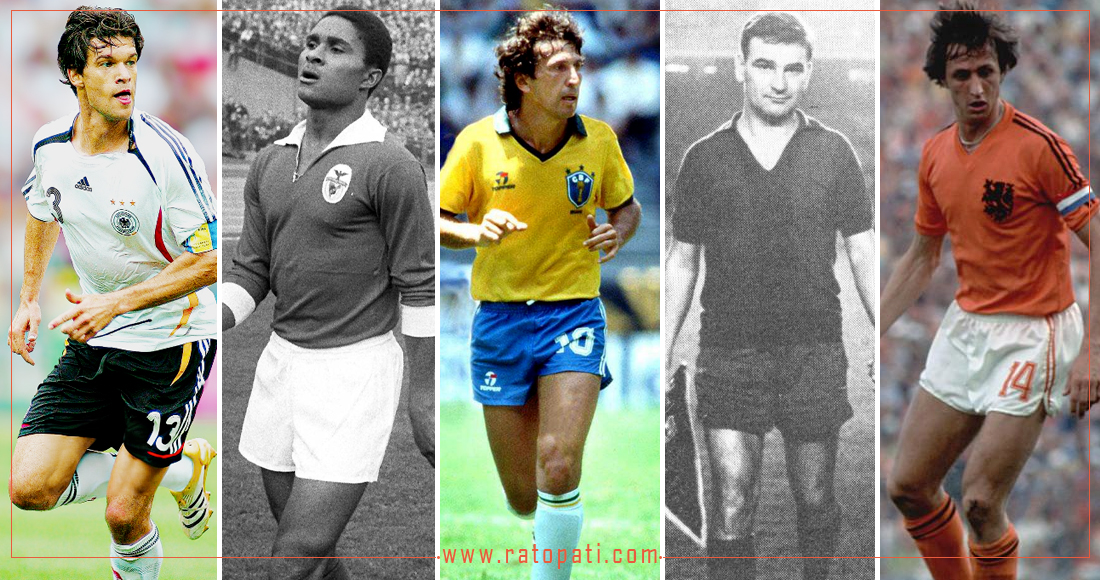
Here, we discuss the best individual World Cup performances by players who have never won the World Cup. It also covers how they couldn't win the World Cup despite their excellent performances.
This list does not include players who won the World Cup in different editions. For example, Ronaldo in 1998, Zinedine Zidane in 2006, or Lionel Messi in 2022. Only players who have never won the biggest title in world football are included here.
- Michael Ballack (Germany, 2002)
At the beginning of the 21st century, Germany was a very weak team. Their performance in Euro 2000 was so disappointing that the German Football Association decided to completely rebuild its entire youth development system. This process eventually laid the foundation for the 2014 World Cup title.
However, in 2002, Germany lacked players who could show creativity, imagination, or individual magic. However, there was one exception—Michael Ballack. Ballack was a pure German-style footballer. He was physically strong, extremely stable, and impressive. Although not a very stylish player.
Although he was not a midfielder who controlled the pace of the game, he had an amazing ability to get into the penalty area at crucial moments to score or create goals. Before the World Cup, he was in contention to become Europe's best player. He was only one goal behind the top scorer in the Bundesliga, playing from midfield for his club Bayer Leverkusen. That season, Leverkusen had a chance to win three titles—the Bundesliga, the German Cup, and the Champions League—but lost everything at the last moment. Ballack had to settle for the runner-up position there as well.
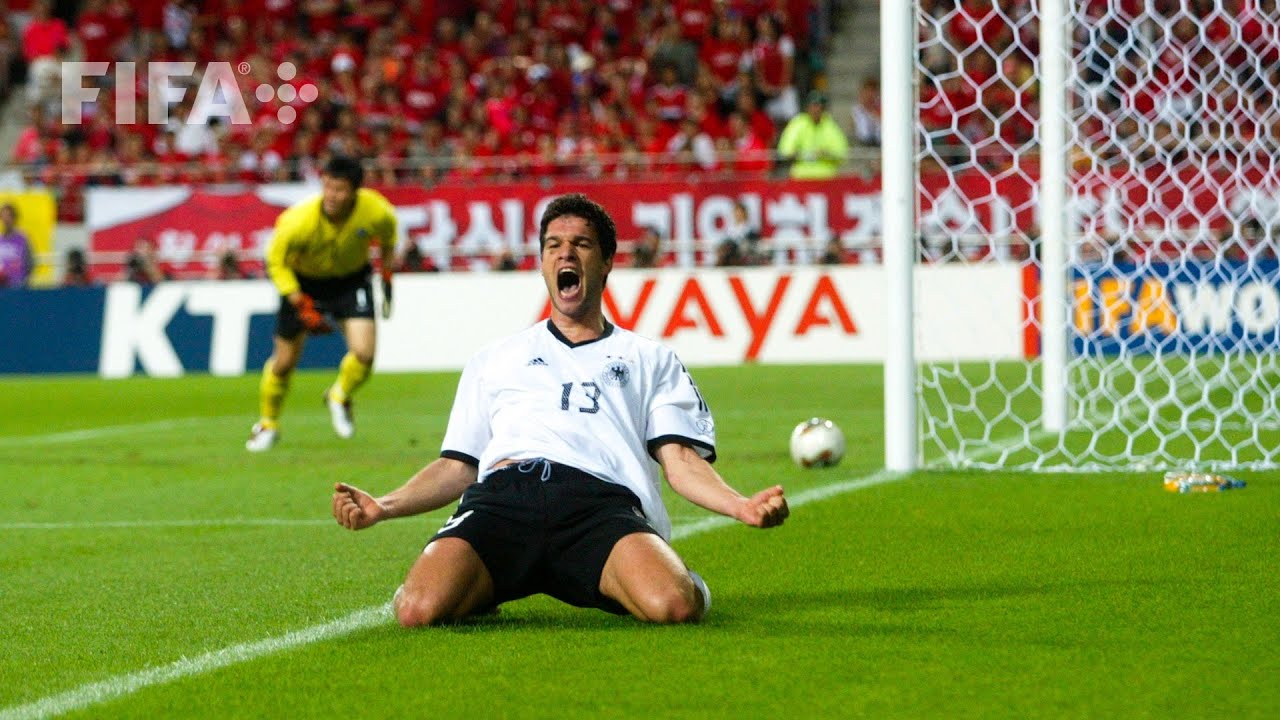
In the group stage of the World Cup, he presented an excellent creative game. He was very impressive in Germany's resounding 8–0 victory over Saudi Arabia. In the 1–1 draw against Ireland, he created a goal-scoring opportunity for Miroslav Klose with a beautiful 'chip pass' with his left foot. Then, in the 2–0 victory over Cameroon, Cameroon was reduced to 10 men after Patrick Suffo fouled Ballack. Then, with Ballack's excellent cross, Klose again scored with a header.
In the knockout stages, Ballack appeared somewhat quiet creatively, but he was Germany's savior at crucial moments. In the quarter-final match against the USA, he scored the only goal with a header. Then, in the semi-final against the home team South Korea, he scored the winning goal, taking Germany to the final.
However, behind that success lay a sad irony. He was suspended for the final because he received a yellow card before the match against South Korea.
Germany's then-coach Rudi Völler said at the time, 'He committed a tactical foul and dedicated himself to the service of his team, his coach, and indeed the entire country. He sacrificed himself, so we must hold him in high esteem.'
Germany lost to Brazil in the final without Ballack. But the reality was that Germany would not have reached the final without Ballack.
- Eusébio (Portugal, 1966)
Nowadays, Portugal is considered one of the contenders for the title when the World Cup starts. However, in the first twelve editions of the tournament, Portugal participated only once, in the 1966 tournament held in England.
In that tournament, Portugal surprised everyone by finishing third. The main credit for this success goes to Eusébio. Eusébio is considered the greatest Portuguese player of the 20th century.
Not only that, but in the eyes of many, he is also the greatest African footballer in history. He was born in Mozambique, then a Portuguese colony. At the age of 18, he moved to Lisbon and, after a long tug-of-war between the city's two arch-rival clubs, signed with Benfica. He soon debuted for the national team. However, he had to wait five years to play in the World Cup.
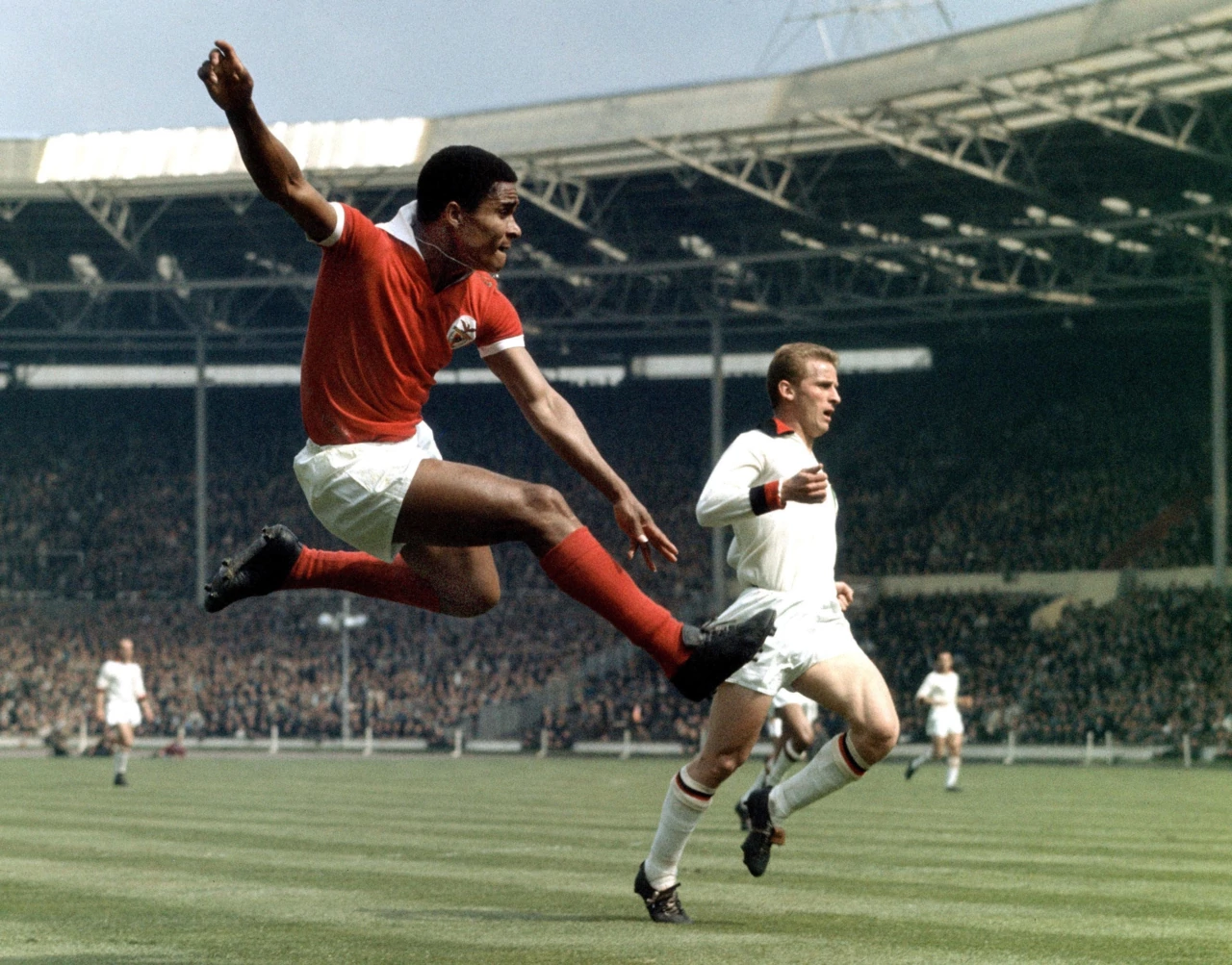
In the group stage, he created two goal-scoring opportunities from corners in the 3–1 victory against Hungary. He also scored the second goal in the 3–0 victory against Bulgaria. However, his real explosion in the tournament came in the final group game against Brazil.
Brazil needed a win to advance to the next stage. Pelé, despite being injured, was also fielded. However, Portuguese defenders continuously tackled him hard, not allowing him to play. On the other hand, Eusébio created Portugal's first goal and scored the second goal with a header. In the second half, he took control of the game and added a third goal with a powerful shot. Pelé was out of the tournament. Eusébio, however, became the new superstar of the World Cup.
In the quarter-finals, North Korea, considered weak, took a sensational 3–0 lead against Portugal. However, one of the greatest comebacks in World Cup history then became possible. The main hero of that comeback was Eusébio. He scored four of Portugal's five goals in an unbelievable performance. His powerful goal from the right flank is considered particularly outstanding.
Although one of the two penalties he scored was awarded after he forced an opponent to foul him with an amazing individual run and dribbling from the left wing.
In the semi-finals, Portugal faced hosts England. This match was seen as a clash between the two best players of the tournament—Bobby Charlton versus Eusébio. Exactly that happened. England won the match 2–1. Charlton scored two goals, while Eusébio scored one goal for Portugal from a penalty. With this, Portugal was out of the tournament.
However, in the third-place playoff, Portugal defeated the Soviet Union 2–1, where Eusébio again scored from a penalty. Out of his nine goals in six matches, four came from penalties. But that fact does not diminish the importance of his performance, as the entire Portuguese team revolved almost entirely around Eusébio.
- Sándor Kocsis (Hungary, 1954)
Ferenc Puskás was undoubtedly the greater player. His story in the 1954 World Cup is quite famous. He was injured in the match against West Germany in the group stage and could not fully recover for most of the tournament.
Although he returned for the final, he could not perform at his best. But if anyone had the best individual campaign in that World Cup, it was Sándor Kocsis. He scored a hat-trick in Hungary's historic 9–0 victory over South Korea. To this day, that is the biggest margin of victory in World Cup history. He then added four goals in the incredible 8–3 victory over West Germany.
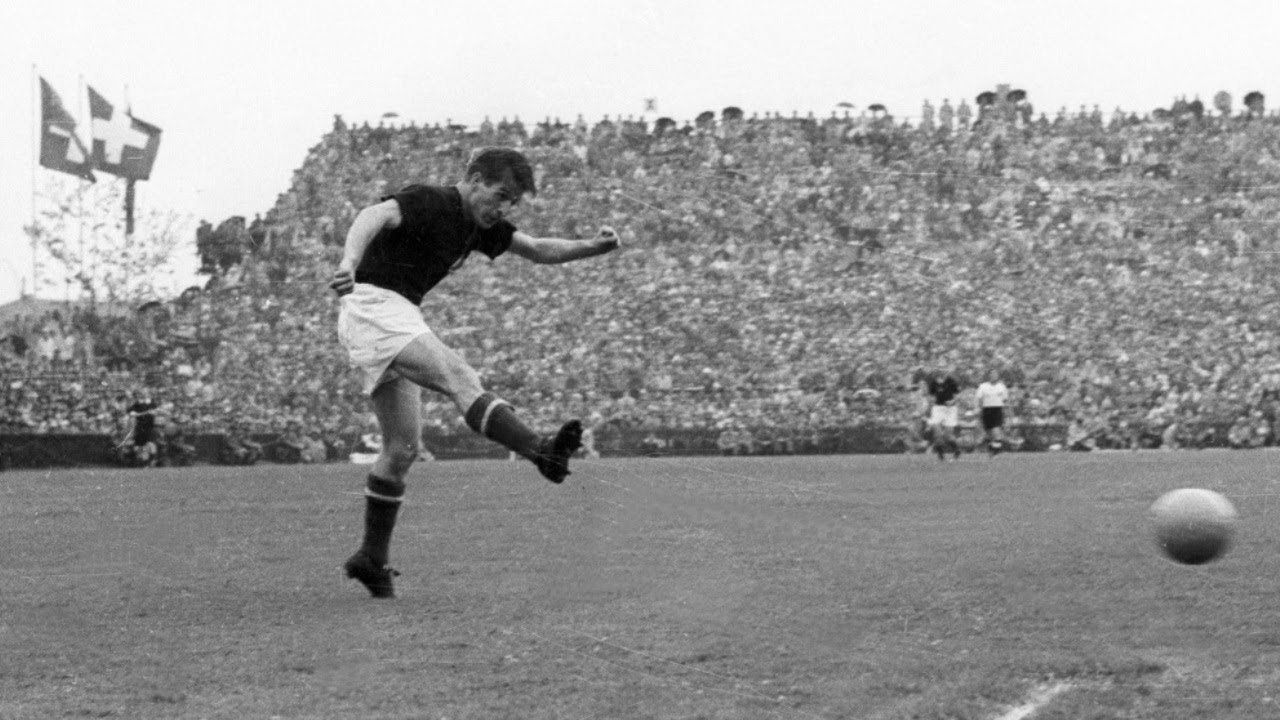
Those goals were examples of extremely controlled and excellent finishing. He then scored two goals in the 4–2 victory against Brazil. Both goals came with headers. Although an excellent finisher on the ground, Kocsis was particularly famous for his heading ability. Although it is difficult to compile statistics on this matter throughout history, he is possibly the player with the most headed goals in top-level football history.
In the semi-final against Uruguay, he passed to Zoltán Czibor with a header without scoring a crucial header himself. Then, in extra time, he scored two more headed goals, deciding the match.
In the final, with Puskás returning, Kocsis was limited to a more supportive role. Looking back, it would have been better if Hungary had stuck to the original strategy. He did not score in the final, but in his only World Cup, he scored a total of 11 goals. Of these, eight goals were scored against three superpowers of world football (Brazil, West Germany, and Uruguay).
- Zico (Brazil, 1982)
Brazil's Zico, who could dribble, make penetrating passes, and score like an excellent striker, was a truly complete attacking midfielder. The 1982 Brazil team, along with the 1974 Netherlands, is among the most admired teams in history, even though they didn't win the World Cup. And the focal point of that team was Zico.
He was an excellent free-kick specialist. He scored a spectacular free-kick against Scotland. He then added two more goals against New Zealand. One of them came from a rare bicycle kick. However, both those teams were comparatively weak.
Zico delivered his best performance in the decisive match against Argentina. That match was famously known as Zico versus Diego Maradona. Brazil won 3–1. Zico scored the first goal and provided excellent passes for the other two goals. On the other hand, Maradona was sent off with a red card for kicking an opponent towards the end of the game.
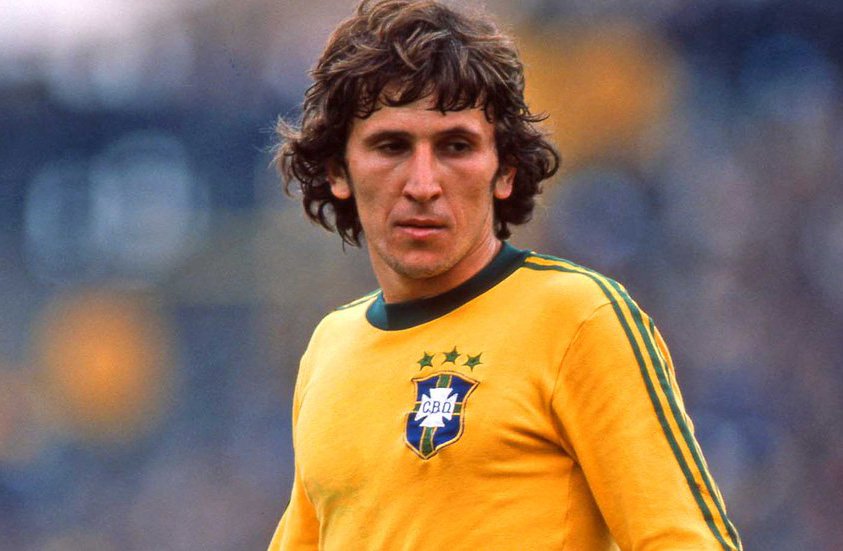
Unfortunately, Zico and Brazil could not overcome Italy. They lost 3–2 in an excellent game. Although Zico provided some excellent passes, Italy's great individual marker Claudio Gentile effectively contained him. However, even after that defeat, Brazil remained the most talked-about team in the tournament.
Pep Guardiola even called that team the greatest national team in history. Even today, Zico is asked about that World Cup. He said earlier this month, 'We had an amazing team. The team was admired all over the world. Even today, wherever we go, people remember that 1982 team. If we had won that match against Italy, perhaps football would have moved in a different direction. Instead, football that gets results no matter what, football that disrupts the opponent's game, and football based on fouls started to develop. Brazil's loss did not prove beneficial for world football.'
- Johan Cruyff (Netherlands, 1974)
It is rare in football history for a single moment to so clearly represent an entire player's tournament (perhaps even his entire career). The famous 'Cruyff Turn' against Sweden in the group stage, where he feinted past Jan Olsson, is a prime example.
That move was entirely in Cruyff's style. It was beautiful, attractive, and creative, but its purpose was not just to entertain the spectators. It was a means to completely outwit the opponent effectively. Throughout the 1974 World Cup, the Netherlands was the favorite team of neutral supporters. Their 'Total Football' style is considered to have taken football to new heights. With fluid play, a very high defensive line, and a constant attacking mindset, they captivated fans worldwide. Cruyff was a somewhat different character in this team.
This team was known for collective play, not individual brilliance. But Cruyff had the freedom to play as he pleased on the field. Along with that, he also represented the Netherlands' style of play. He was a forward in name only. But he frequently dropped back, distributed long passes, moved to the right or left at times, and operated the team's attack from various angles.
In the group stage, he also provided passes for two goals with excellent crosses. Cruyff particularly shone in the second group stage in the resounding 4–0 victory against Argentina. In the first goal, he beautifully controlled a difficult ball. Then, he easily scored after evading goalkeeper Daniel Carnevali. Carnevali often came far beyond his goal line. Cruyff's speed is often underestimated. But in that game, he also showed his quick pace. He once got a one-on-one with the goalkeeper. However, he could not convert that opportunity into a goal. Later, he provided another excellent cross, which Johnny Rep headed into the goal.
Then, when Carnevali again came too far out of his position, Cruyff completed his second goal with a controlled volley from a difficult angle. In the 2–0 victory against Brazil, the Netherlands also performed excellently. Cruyff scored one goal and assisted another in that game.
Then came the historic final. In the final, the Netherlands faced West Germany. This was not just a match between two teams; it was also a contest between the two greatest footballers in the world at the time—Johan Cruyff versus Franz Beckenbauer.
Shortly after the game started, the Netherlands presented one of the most talked-about starts in World Cup history. The Dutch team exchanged passes continuously before the West German players could even touch the ball. Cruyff dropped back to receive the ball. Then he went straight into the penalty area dribbling, where he was fouled, and the referee awarded a penalty.
Johan Neeskens scored from the penalty to give the Netherlands the lead. After that, Berti Vogts of West Germany effectively marked Cruyff. However, he continued to provide some excellent passes. But the Dutch team could not capitalize on those opportunities. Eventually, West Germany came back to win the match 2–1. The Netherlands finished as runners-up. But even today, when we remember the 1974 World Cup, the first name that comes to mind is Johan Cruyff.
This specific news has been automatically translated by AI. As a result, there may be some inaccuracies or language errors.
_Y03gLkOgqA.jpg)