Nepali Music Production Declines Amidst Investment Concerns and AI Challenges

Kathmandu. The production of music has decreased significantly in recent times.
At one time, it was common for 5 to 7 new songs to enter the market daily. Especially with the wave of digital platforms and YouTube, there was a flood of music and video production. But now, this pace has slowed down. Nowadays, only a few new songs are released sporadically in the market, which even musicians themselves admit.
A few years ago, choreographer and director Gambhir Bista was very busy directing music videos. Bista, who used to direct 8 to 10 videos a month, is now much less busy. He now directs only 2 to 4 videos a month.
Bista believes that the main reason for the decline in the music market is the lack of return on investment. 'Organic views on YouTube have stopped coming like before, it has become difficult to deliver videos without boosting,' says Bista, 'Nowadays, songs have to rely on TikTok to become popular. Even if a TikTok video gets good views, it doesn't directly yield returns on YouTube.' Bista also states that the decrease in music production is due to the economic recession in the market. 'Videos that used to be made with a budget of 5-7 lakh rupees are now being made with 2-3 lakh rupees. Investment in music production has decreased significantly,' he added.
Musician and arranger Rakesh Soni also experiences a decrease in music production. Soni, who used to arrange 15 to 20 songs a month, has seen his workload halved to 8-10 songs. 'It's not just my work; the overall ratio of music creation in the market has decreased,' says Soni, 'Audio and video production have become very expensive, but income from YouTube has decreased. That's why investors are scared.' He says that only songs by a few popular artists are being released.
Distributor companies are also closely monitoring the decrease in the number of songs and videos. According to Rupesh Khadgi of OSR Digital, one of Nepal's leading digital platforms, the release of new songs has decreased by about 40 percent compared to the past. Khadgi attributes the decline in music production to the changing market dynamics and lack of trust from investors. 'Now, viewers' attention has shifted from YouTube to Facebook Reels, TikTok, and YouTube Shorts. The trend is that viewers only come to YouTube to listen to a full song if a short video goes viral,' he adds, 'YouTube itself has tightened its advertising and reach policies.' Khadgi states that the decrease in YouTube revenue has led to a reduction in music production.
According to Khadgi, a large portion of the investment in Nepali music used to come from foreign employment or Nepali songwriters and creators living abroad. However, due to a lack of transparency in investment by some representatives in Nepal, this funding has now stopped. 'Songwriters or investors living abroad used to send money to Nepal with trust, but here, accurate data on the budget for video production was not provided. In some cases, the money was simply misused, and the songs were not even made,' he adds, 'With the loss of trust, investment from abroad has almost completely stopped, resulting in very few new works coming to the market.'
- AI Challenge?
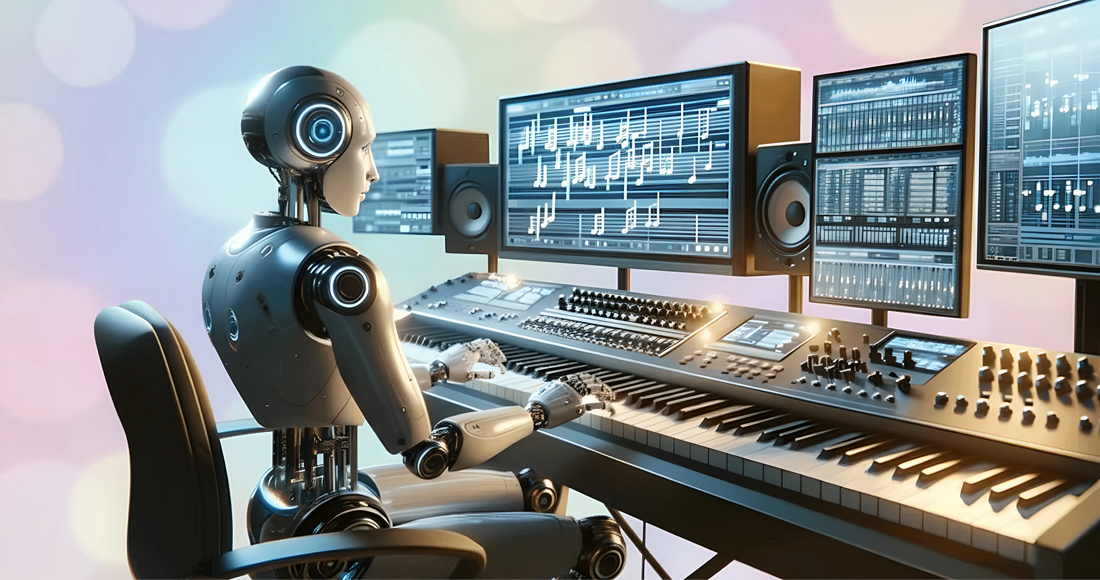
Artificial Intelligence (AI) is one of the many reasons for the recent decline in Nepali music production. Some have released creators' and artists' work using AI. This has led to a decrease in income from artists' original creations, and investors are hesitant to invest.
Folk singer and creator Kastup Pant echoes this sentiment. He states that besides the obstacles created by social media platforms like TikTok, the unauthorized use of technology is also increasing. 'Due to the increasing unauthorized use of AI and piracy, our original content is being copied and released, overshadowing the genuine creations,' says Pant, 'Viewers' interest is also shifting towards AI-generated creations, directly impacting original artists and investors.' He adds that despite the misuse of creators' intellectual property, the lack of concrete policies or regulations from the state level to make this technology limited and organized is causing frustration among creators.
Pant expresses concern over the lack of concrete state-level policies to regulate and limit the use of AI. 'We talk about the rights of creators, but we haven't considered the investment security of the investors (producers) who are most affected,' he adds, 'Unless producers are secure, new creations cannot come to the market.'
However, recording studio owner and musician Bipin Acharya views this technological change from a slightly different perspective. He considers AI a strong medium for changing music production styles. In Acharya's experience, many creators and songwriters now prepare initial tracks or compositions using AI and send them to the studio for modification. 'AI makes it easier for songwriters as it easily creates music and tracks with vocals,' says Acharya, 'Previously, after creating lyrics, it required significant expense and effort to record them. Now, with the help of AI, the structure of a song can be easily prepared, which has reduced the trend of personal recording with large investments.'
However, Acharya points out that along with this ease, AI has raised a serious question in the music sector. 'Work that takes us days, AI does it in minutes. If not satisfied, it immediately provides another option. This has created a situation where anyone can easily become an arranger without deep knowledge or effort in music,' he says, 'The impact of this on the originality and quality of Nepali music will become clear in the future, but it has certainly added new challenges to the creative field.'
This specific news has been automatically translated by AI. As a result, there may be some inaccuracies or language errors.