Rastriya Swatantra Party Faces Scrutiny Over Leadership Selection Criteria
Currently, a narrative is strongly establishing itself in Nepal's politics, which claims to have changed the system yesterday and is now moving forward on the journey to change the situation, but there is a big difference between the claim and reality. The change in the system itself feels incomplete.
Both the extent and manner of change appear incomplete. There is suspicion that the change was only to the extent deemed necessary, considering one's own political gains and losses. If the tendency to obstruct change and the dominance of self-interest of the actors continue, it may not take long to complete the unfinished task.
In other words, the country may correct its course again. We all know that the criteria, methods, and systems created for someone's self-interest never have a long lifespan.
The aim of this article will be to ensure that the National Independent Party (RSP), the largest party now, does not repeat the mistakes made by the old political parties in leadership development and establishes a systematic order. It will also be about what the mechanism for leadership development should be through the internal competition of political parties.
Political parties are the arteries or lifelines of democracy. Modern democracy is almost impossible to conceive without parties. The more political parties, considered indispensable in the life of democracy, engage in democratic practice, the more modern democracy progresses towards advancement, prosperity, and completeness.
Similarly, the geography of any country is like the hardware of a computer. The policies a country adopts are the software. The parties and concerned organizations that take public mandate and implement it are the operators.
Therefore, political parties, acting as operators to determine, implement, and make necessary changes to policies or software suitable for the hardware or geography, must have received legitimacy from the public. However, in practical life, political legitimacy alone does not provide a complete solution; competence, capability, and efficiency are equally necessary for that.
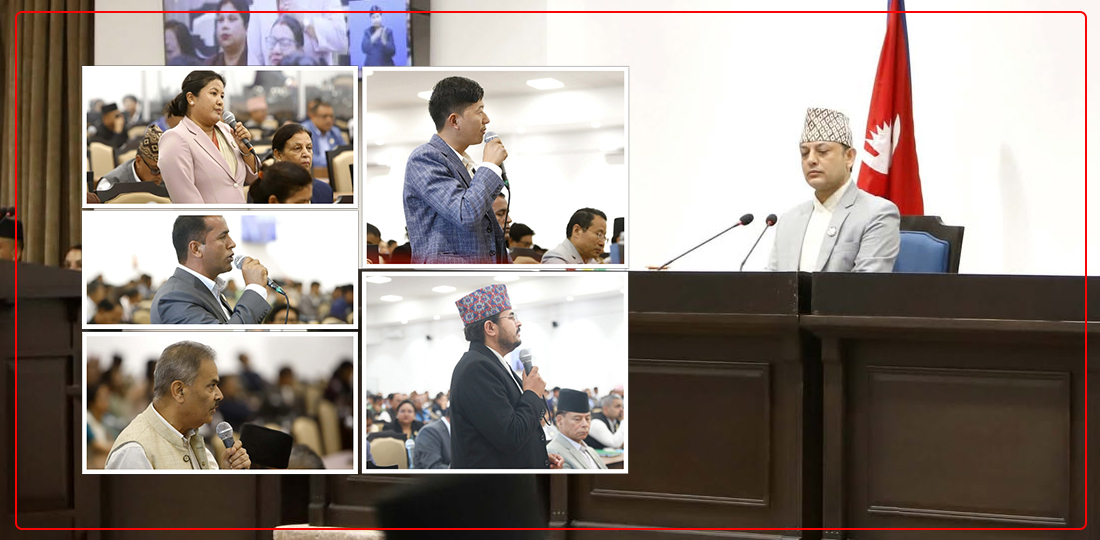
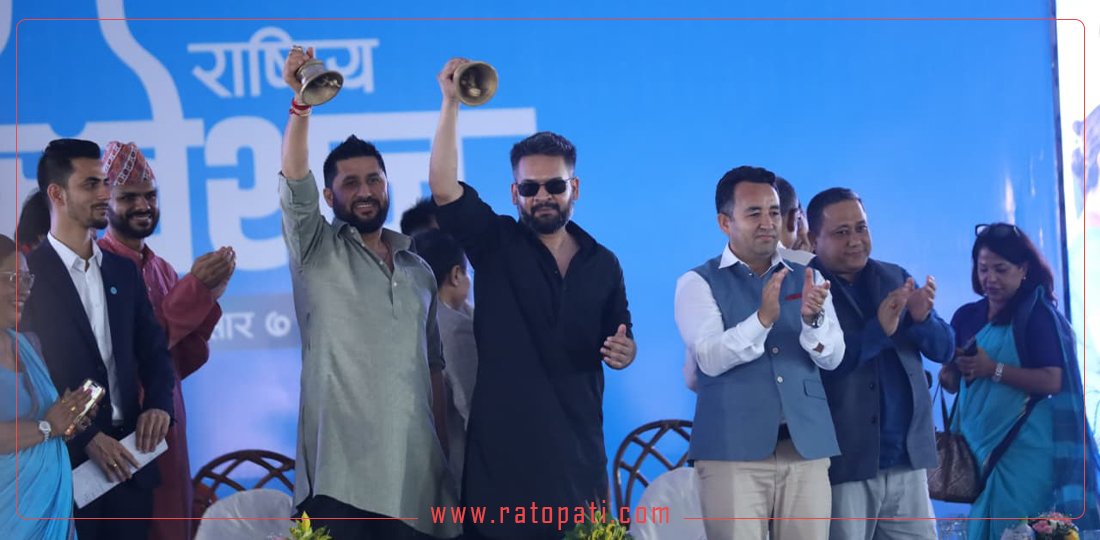
Among Nepal's parties, the National Independent Party, which has emerged in a relatively large form from the recent elections, has just completed its general convention. For the past few days in Chitwan, known as Nepal's central city, RSP leaders and cadres have debated the party's policies and leadership.
It is not yet time to criticize the results based on their quality. However, the criteria used in leadership selection can certainly be critically commented upon. The criteria presented by the RSP for candidacy in the elections, 'selecting those who know,' have certainly appeared shameful for the party.
The condition of paying 51,000 for the chairperson, 41,000 for officials, and 21,000 for central members, in addition to one proposer and 21 supporters, has deprived economically disadvantaged workers and those working focused on a specific geography or cluster from even registering their candidacy.
It appears that genuine workers will be excluded from the electoral process, and the wealthy, shrewd, and those who can win based on social media activity and identity will be able to be elected. The largest political party in the democratic republic should not consider such subtle organizational aspects weak when building leadership from its first general convention.
This general convention has selected Rabi Lamichhane as the party's main leader. In this convention, everyone's attention was focused on what policies the RSP would adopt rather than the leadership. The policies and programs approved at the convention are expected to provide significant guidance for government operations in the future, hence they were viewed with importance.
Certainly, a general convention is like labor pains for political parties. If it can give birth to capable leadership with ideas, it is a matter of enthusiasm for the entire country. However, if this does not happen and the old methods of power-sharing, leadership management, and faction management are adopted, there is a risk of choosing the path of ultimate disappointment, apart from momentary excitement.
Leadership must also be legitimate. But more importantly, it must be capable and competent. It is a tragedy that most leaders in our country are not capable despite being elected. Understanding this harsh reality in time, the RSP should focus not only on the legitimacy of leadership selection but also on the evaluation and selection of capability. The RSP should not delay in recognizing the opportunity to build a milestone in leadership development through the ongoing general convention.
Not only the qualities and characteristics play a role in leadership selection. The mechanism for it is also very important. The more open, easy, transparent, and accountable internal democracy is made, the more the effectiveness of the leadership increases. As the ancient saying goes, 'Bade bade jayate tatva bodhah' (Truth is realized through debate), there should also be ideological competition and purity.
Training and development programs for leadership should be conducted for young people with a lack of experience by developing institutional capacity. The decision-making power should be appropriately decentralized, and capacity development and participation should be ensured at the lower levels. Systems should be organized so that important issues are not limited to mere matters of interest but can contribute to the decision-making process.
In addition, leadership development must be inclusive. It should include a mechanism for older leaders to guide the new generation. By doing so, parties should create the necessary environment and arrangements for the construction of a culture of exchanging experiences between the new and the old.
It is often said that those who know politics cannot do it, and those who can do it do not know how. It is wished that the committee elected by the RSP from this general convention will teach those who do not know and give responsibility to those who know to work and move forward.
This specific news has been automatically translated by AI. As a result, there may be some inaccuracies or language errors.

_jEGOtGcTjV.jpg)