Nepal Remains on FATF Grey List

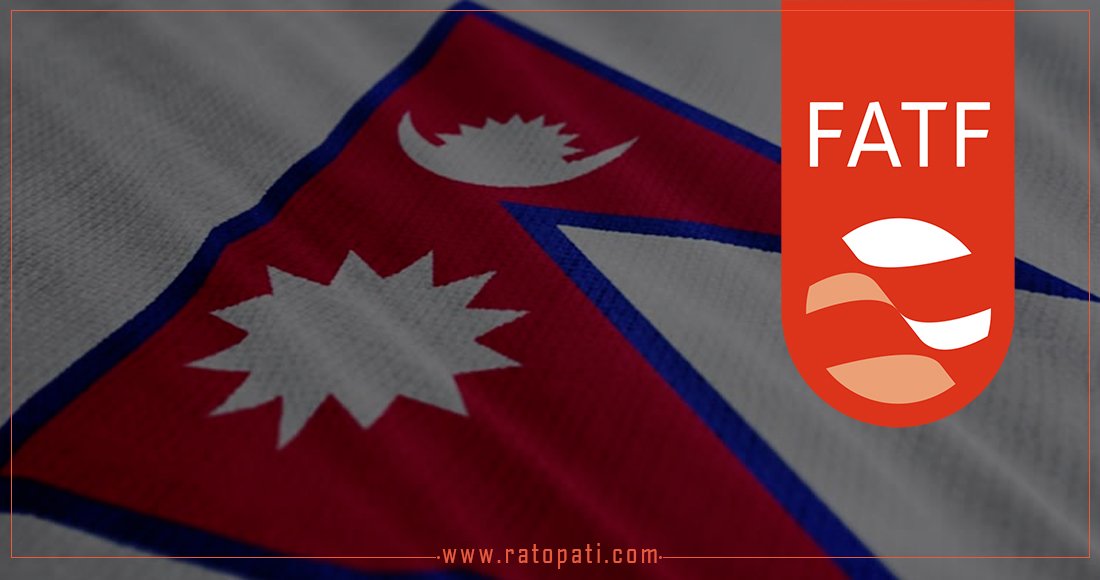
Kathmandu. Nepal could not be removed from the grey list of the international organization Financial Action Task Force (FATF) on prevention of money laundering. According to the report released on Friday, Nepal has been continued in the said list. FATF had placed Nepal in the grey list on February 21, 2081 BS. The indication that Nepal would remain in the grey list was given in the conference held in Paris, France some time ago, so it is not a new matter that Nepal has been continued in the grey list. However, this indicates that Nepal is still in a state of risk. Being on this list means that Nepal is an easy country to launder illegally earned money. It also means that the government has not been able to effectively advance the necessary legal arrangements and their implementation against this. Since Nepal has been on this list for about 15 months, there will not be much change even if it is continued. However, it deprives Nepal of the opportunity to gain benefits that would be obtained by getting out of this list.
Any country is not completely self-reliant on its own. Nepal's situation is even more dependent. We import about 15-16 trillion annually. We also receive remittances of almost the same amount. Many Nepali workers are abroad. This system makes Nepal extremely dependent. Due to being on the grey list, countries that have been doing business with Nepal are looking at their financial relations with Nepal more meticulously. This has increased the time for transactions. For example, if we import any goods from abroad, Nepali banks transact with foreign banks through LC (Letter of Credit). After being on the grey list, foreign banks have less trust in Nepali banks, so they may take time for this. As time increases, the cost for Nepali importers increases.
Not only that, foreign banks have also increased the fees for doing business with Nepal based on suspicion. Therefore, the cost of Nepal's foreign trade has increased. In some cases, there is even a possibility that transactions will not happen at all. For example, if foreign banks do not accept digital payments from Nepali banks, it can create various difficulties. However, Nepal has not had to face such a situation yet. Not only that, it has also increased the cost of remittances coming to Nepal to some extent. Nepali workers abroad are directly suffering from this. Similarly, the cost for those going abroad from Nepal for studies to pay fees to foreign universities has also increased.
The biggest impact of the grey list is on foreign direct investment. Reputable foreign investors generally do not invest in countries on the grey list. Markets in countries where wealth can be accumulated through criminal activities are not free. It does not show a competitive environment. Similarly, the cost of financial transactions increases, and in the future, suspicion may arise about repatriated assets from such countries, so such investment is less. Although Nepal has adopted a policy to attract foreign investment, it is likely to be obstructed due to the grey list, which is less likely when it comes out of the list.
Similarly, aid from foreign donor agencies also decreases. Foreign agencies also tighten such aid during the period of being on the grey list to pressure them to come out of it. In particular, grants and concessional loans are tightened under this method. It is not easy to develop infrastructure by taking loans without concessions.
This specific news has been automatically translated by AI. As a result, there may be some inaccuracies or language errors.