Finance Minister Swarnim Wagle Urges Banks to Serve Citizens

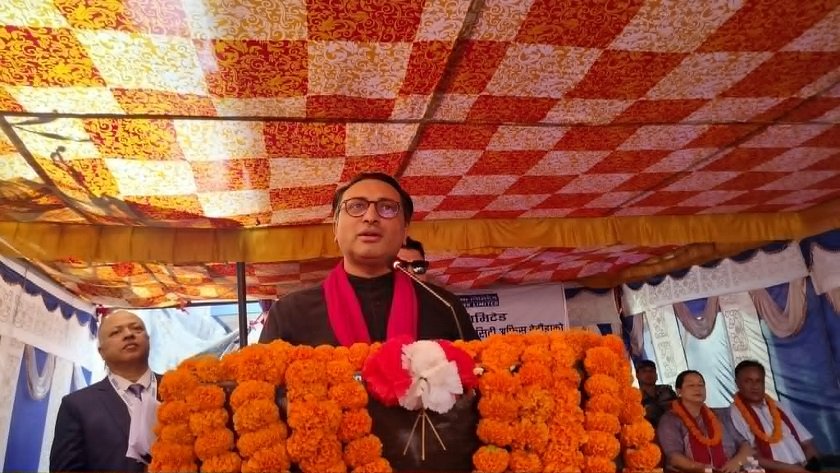
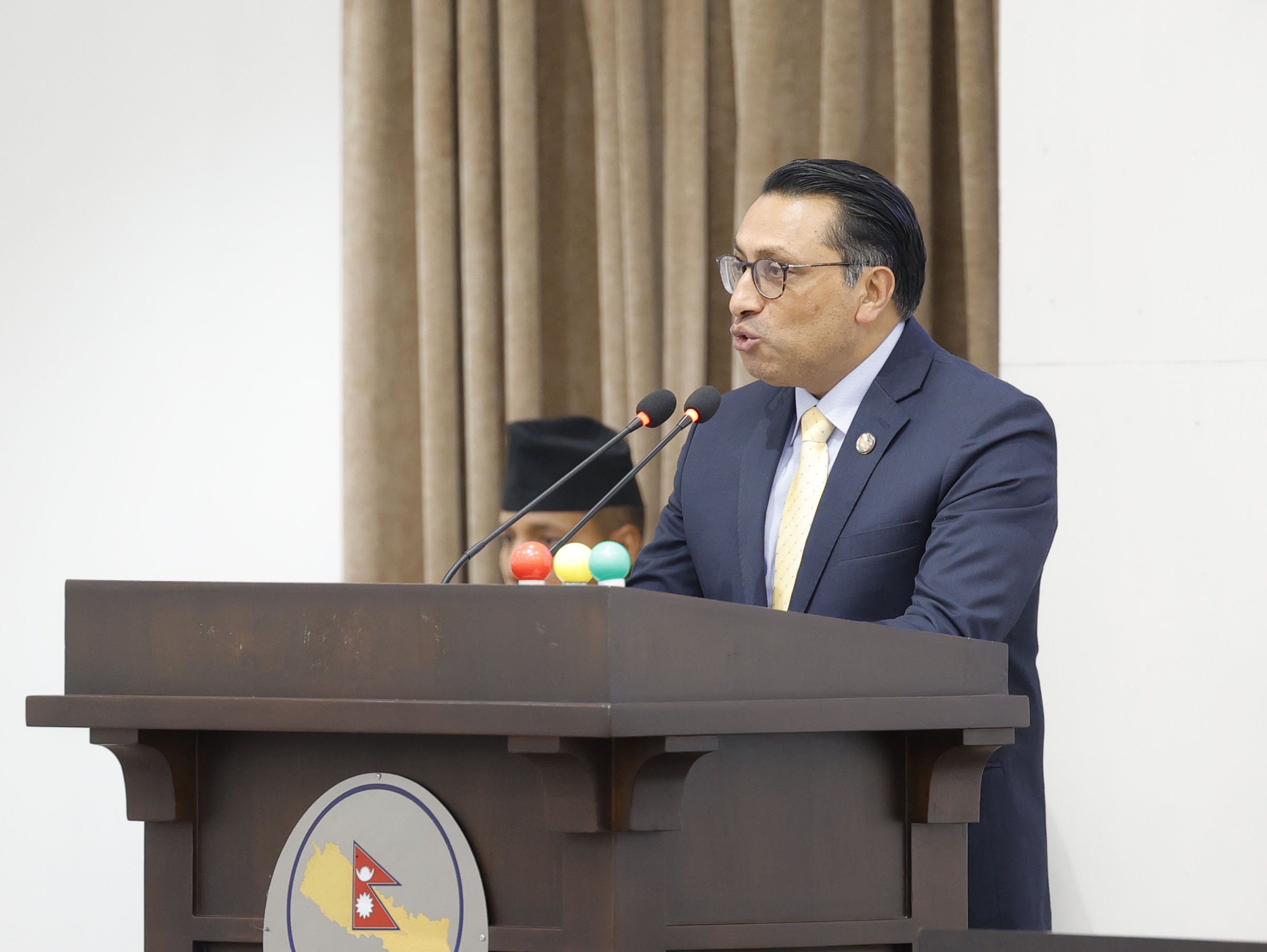
Hetauda. Finance Minister Swarnim Wagle has said that banks should become chariots for Nepali citizens. He said that the main objective of establishing banks is to benefit and do good for the citizens, and therefore they should work accordingly.
Inaugurating the new building of Nepal Bank Limited's Bagmati Provincial Office and City Office Hetauda, Minister Wagle discussed the glorious history of Nepal Bank spanning 8 decades. Recalling that Nepal Bank has had a presence in Hetauda since 2025 BS, he urged employees to provide modern technology-friendly services while preserving history and tradition. He stated that as Hetauda is also the capital of Bagmati Province, the bank's role in the economic activities of that region will be significant.
'When the Banking Act came in 1994 BS, its preamble stated that it was to do good for the Nepali people.' Minister Wagle said, 'I am happy to see that the first bank of Nepal is taking a leap forward on the path of modernization, embracing the objective written in the Rana-era history and the language of that time.'
During his address, Minister Wagle said that the government would play a role in resolving the problems of road expansion and physical infrastructure in the main market area of Hetauda. He mentioned that although it is not appropriate to say much as the road expansion issue is currently sub-judice in court, the government is making efforts to find a solution.
At the program, Nepal Bank Limited's Executive Director Tilakraj Pandey said that Nepal Bank is purely a bank of the Nepali people and the Government of Nepal. Nepal Bank is now spread across all seven provinces and 77 districts of the country. He stated that 231 branches of the bank are in operation across the country and currently 3,700 permanent, temporary, and contract employees are working.
'We currently have deposits of 400 billion rupees from the public, and we have invested loans of approximately 260 billion rupees,' he said. 'In addition, the bank has invested 140 billion rupees solely in the Government of Nepal's development bonds and treasury bills, and we are currently serving more than 2.7 million customers.'
According to Executive Director Pandey, customers seem to be attracted to digital services. He said that 20 years ago, there were up to 40 employees in an office, but now that number has decreased by more than half. He stated that the decrease in the number of customers coming to the counter indicates an increase in customer trust and usage of digital products.
He mentioned that there has been some delay in bringing in a new 'core banking system' due to the Government of Nepal's procurement act and procedural complexities. He informed that modern services are currently being provided by connecting various APIs to the old system, and efforts are being made to bring in more new technologies soon.
The Government of Nepal holds 51 percent shares in Nepal Bank, and the Employees Provident Fund holds about 3 percent. He stated that after paying 30 percent tax, 51 percent of the profit goes back to the government.
The building of the provincial office was constructed at a cost of 4 crore 72 lakh rupees from the Rastra Bank's note fund. Branch Manager Regina Subedi informed that the building has 3 floors, including underground parking, a compound wall, and a guard room.
This specific news has been automatically translated by AI. As a result, there may be some inaccuracies or language errors.