Lawmakers Criticize Government Over Squatter Management, Violence, Budget Allocation, and Governance

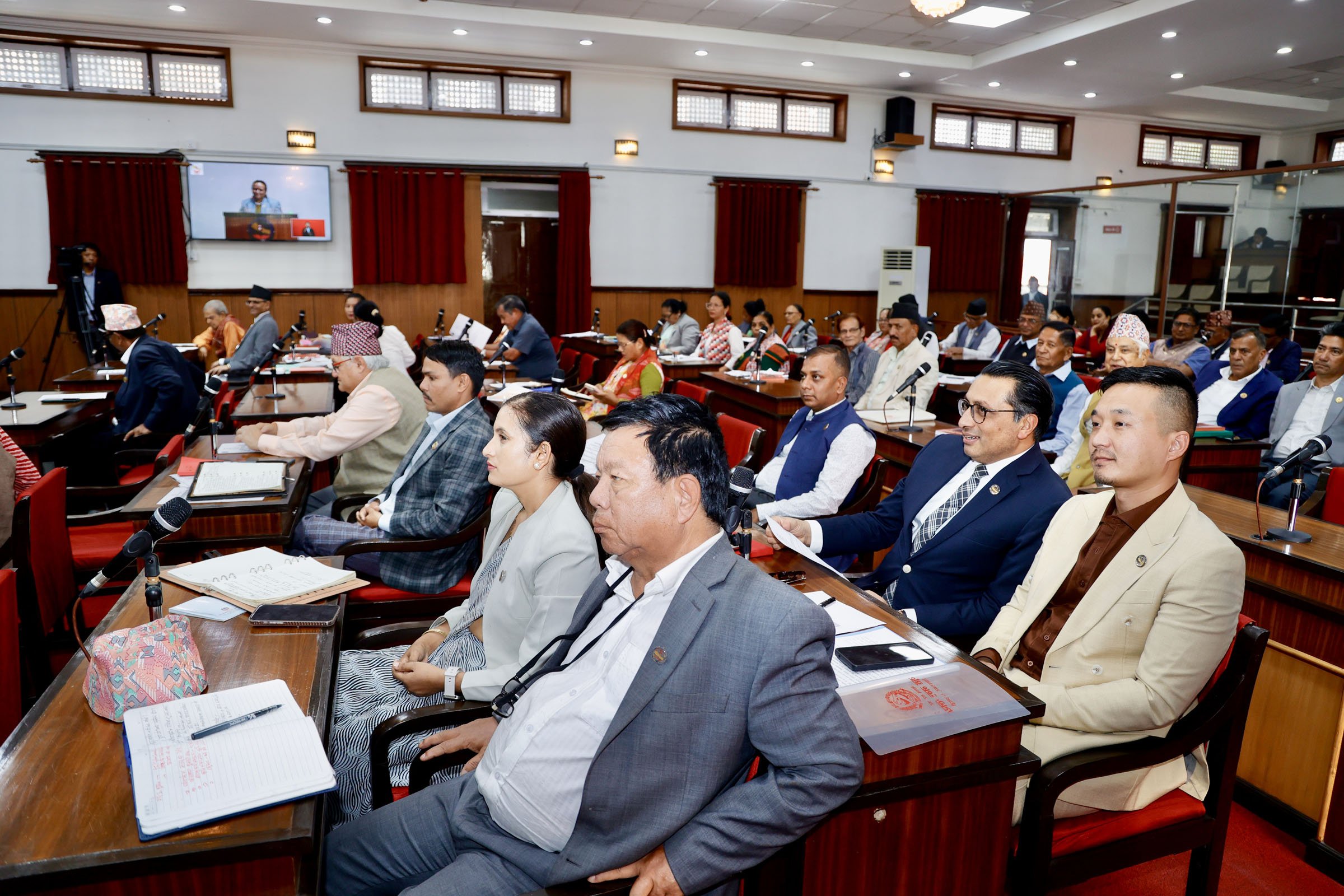
Kathmandu. In the zero hour of Friday's National Assembly meeting, lawmakers strongly criticized the government. They drew the government's attention to squatter management, rising violence against women, disorganized budget allocation, and the government's style of functioning.
Lawmaker Goma Devi Timalsina accused the government, which espouses good governance, of demolishing the homes of the poor and helpless squatters, leaving them in distress. Stating that squatters in holding centers are not receiving food, water, or medicine, she demanded an answer from the government.
Similarly, lawmaker Madankumari Sahu protested that the work of removing squatter settlements has been ongoing since Baishakh, contrary to the interim order of the Supreme Court. Presenting data that thousands of families have been displaced in the Kathmandu Valley, she demanded that the registration process for the remaining squatters be expedited.
Lawmaker Rajendralaxmi Regmi commented that the government is terrifying citizens by violating the rights to housing and the rights of Dalits guaranteed by Articles 37, 38, and 40 of the constitution. She objected, stating that instead of paying businesses, they are being threatened.
Matters of violence against women and caste discrimination were also seriously raised in the meeting. Lawmaker Jayantidevi Rai demanded that the perpetrators of character assassination and assault against relatives of a ward member in Dhakari, Achham, be brought to justice.
She expressed concern over the increasing incidents of violence against women in places like Kailali. Likewise, lawmaker Bhuwan Bahadur Sunar raised the issue of inhumane treatment due to inter-caste marriage in Bardiya and discrimination against the Dalit community. Questioning the arrest of Janak Pariyar, he accused the police administration of adopting discriminatory policies.
Lawmakers also expressed dissatisfaction with budget allocation and the government's style of functioning. Lawmaker Durga Gurung objected, stating that the budget has been allocated based on access and influence. She argued that the tendency to impose plans from the center, ignoring the actual needs of local levels, strikes at the heart of federalism.
Lawmaker Narbahadur Bisht accused the government of trying to run a 'jungle rule' by calling the chief and employees of the Commission for Investigation of Abuse of Authority to the Prime Minister's Office and mistreating them, an act contrary to diplomatic dignity. Similarly, lawmaker Yuvraj Sharma sought a clear stance from the government on the controversial statements of the Prime Minister and ministers, Nepal-India border and trade relations, and problems seen in the import of petrol, diesel, and electric vehicles.
Lawmaker Narayandatta Mishra mentioned that the condition of freed Kamaiyas in districts like Kailali is dire and emphasized the need to create employment by operating industries within the country for them. He drew the government's attention to ending the compulsion for youth to go to India for risky work due to lack of employment.
Meanwhile, lawmaker Suresh Kumar Ale Magar complained of discrimination against lawmakers themselves in entering Singha Durbar. Stating that those arriving in private vehicles are given easy entry but lawmakers walking are harassed by security personnel, he demanded that the security policy be made scientific and practical. It has been demanded that the relevant bodies address the various issues raised by the lawmakers in the meeting.
This specific news has been automatically translated by AI. As a result, there may be some inaccuracies or language errors.
_iL3K2wYemS.jpg)