FIFA President Gianni Infantino Plans to Watch Multiple World Cup Matches Daily

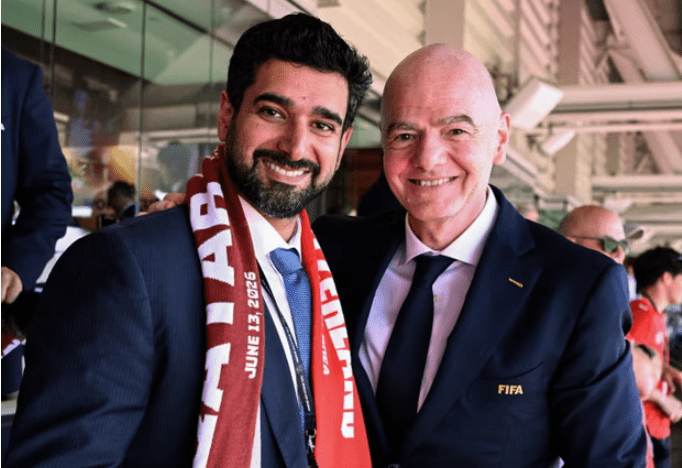
Washington DC. FIFA President Gianni Infantino has planned to watch two matches every day of the remaining duration of the World Cup, if possible. However, the problem is that the distances between the venues hosting the competition are extremely large.
Infantino has the facility of a private jet provided by Qatar Airways under FIFA's sponsorship agreement. This has made it easier for him to travel between various cities in the USA, Canada, and Mexico.
After watching the opening match in Mexico City at the beginning of the World Cup, he immediately flew to Guadalajara, where he watched the match where South Korea defeated Czechia. The next day, he attended the match between the USA and Paraguay in Los Angeles. On Saturday, he also watched the matches between Qatar and Switzerland in San Francisco and between Australia and Turkey in Vancouver.
On Sunday, he was busy organizing a summit in Miami attended by representatives of FIFA's 211 member nations. Afterwards, in the evening, he returned to Los Angeles and participated in the match between Iran and New Zealand.
According to FIFA sources, the 56-year-old Infantino will continue his efforts to watch two matches a day whenever possible, despite the arduous travel. In the 2022 Qatar World Cup, the maximum distance between stadiums was only 46 miles, allowing him to watch almost all 64 matches live.
The current World Cup is spread across three countries and four time zones. The maximum distance between the 16 stadiums of the competition is approximately 2,800 miles.
It is estimated that among all the participants in the competition, Infantino will travel the most. Among the football teams, Bosnia and Herzegovina has the most difficult travel schedule in the group stage. This team will have to travel a total of 3,144 miles between Toronto, Los Angeles, and Seattle.
Due to such extensive travel, the New Weather Institute has called this World Cup 'the most polluting sporting event ever'. The institute estimates that the competition will emit approximately 9 million tons of carbon dioxide equivalent, of which about 7.7 million tons of emissions will be from air travel alone. This is more than four times the average emissions of World Cups held from 2010 to 2022.
This specific news has been automatically translated by AI. As a result, there may be some inaccuracies or language errors.