Former Judges Divided Over Asset Investigation Commission

Kathmandu. Former judges have been divided after the asset investigation commission formed by the government included former judges in the list of those whose assets will be investigated.
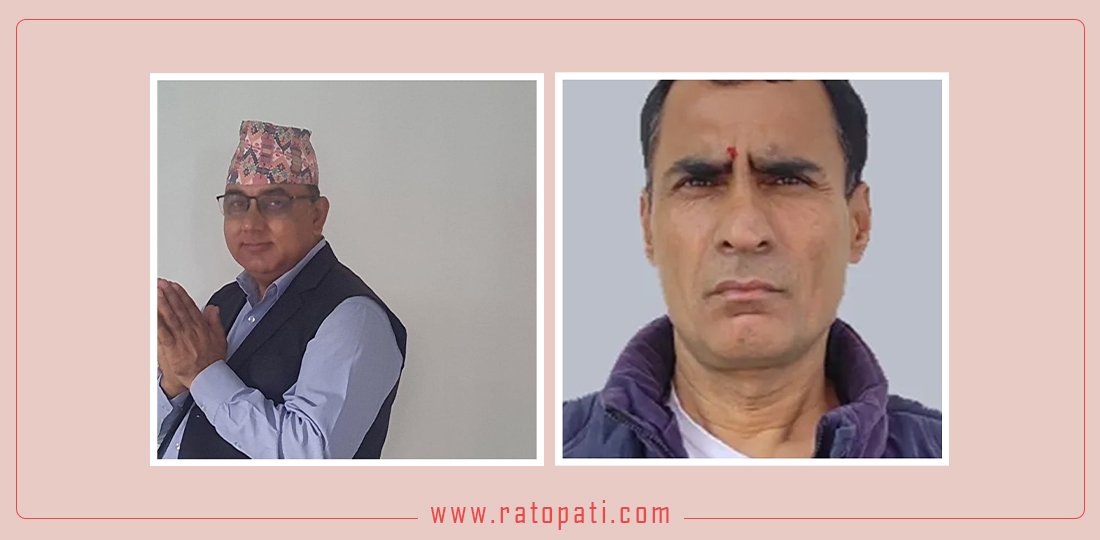
After the investigation commission was formed under the chairmanship of Rajendra Kumar Bhandari, a working committee member of the Former Judges Forum, former judges held a meeting and announced that they would not submit their asset details. Chandi Raj Dhakal, a working committee member of the Forum, is also on the investigation commission.
While the Former Judges Forum is stating that it will not submit its asset details to the government-formed asset investigation commission, about 100 former judges have taken asset details forms by Thursday. Shambhu Kumar Khadka, General Secretary of the Former Judges Forum, told Ratopati that after the deadline for submitting asset details was extended by one month, the meeting of the Former Judges Forum held on Asar 4 concluded that former judges who retired compulsorily on Jestha 17 would not have to submit asset details.
According to former judge Khadka, the investigation commission will forward the case to the Commission for Investigation of Abuse of Authority based on the investigation, and therefore, they have decided not to submit asset details, concluding that they do not fall under its purview. Khadka informed that they have concluded that former judges do not fall under the scope of investigation as per Article 239 of the constitution, which states that investigations will only be conducted for those who fall within the work, duties, and jurisdiction of the Commission for Investigation of Abuse of Authority.
Legally, there is no provision for judges to submit asset details to any body other than the Judicial Council, which is why former judges have refused to submit their asset details. They have also raised the question of how many times they will have to submit asset details, as asset investigation commissions are formed with every change of government.
As per the decision of the Former Judges Forum, many have still not submitted their asset details. Former Supreme Court judge Ishwar Prasad Khatiwada publicly questioned the asset investigation commission through the media on Wednesday. He also announced that he would not submit his asset details.
Former judge Khatiwada has made his asset details public through the media. He claimed that according to Article 132, Sub-section (2) of the constitution, it is not appropriate for any person who has served as a judge to work in government commissions formed based on executive decisions of the Council of Ministers, such as the asset investigation commission.
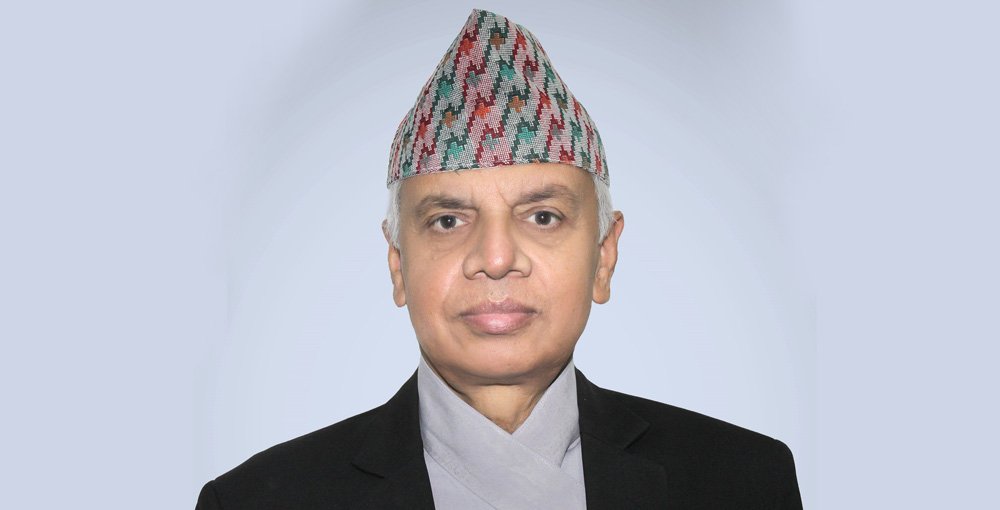
Khatiwada mentioned that Article 132 (2) of the constitution clearly states that 'a person who has served as Chief Justice or a judge of the Supreme Court shall not be eligible for appointment to any government post, except as otherwise provided in this Constitution.'
Former judge Khatiwada said, 'Joining a commission formed by an executive decision of the Government of Nepal and drawing a salary from the state treasury is holding a government post, which is against the spirit of the constitution.' He stated that in the past, he had received offers from various ministers and prime ministers to lead investigation or study commissions, but he had rejected all such proposals due to constitutional integrity. He clarified that not submitting details to the commission does not mean hiding assets, and he made his asset details public through the media for transparency.
- Former Judges' Argument - Asset Investigation Only Upon Removal From Office
According to a former judge who is not submitting asset details, asset investigation should only occur if a judge has been penalized for lack of performance or malicious conduct. 'There should be no compulsion for former judges to submit details to the asset investigation commission,' the former judge told Ratopati.
According to him, Article 142, Sub-section 1 (c) of the constitution provides for the removal of a Chief Justice or judge based on lack of competence, misconduct, failure to perform duties honestly, malicious conduct, or serious violation of the code of conduct, upon the recommendation of the Judicial Council. 'Asset investigation is appropriate for those removed from office, but if retired judges are to submit assets, they submit them to the Judicial Council; why should they submit them to the asset investigation commission?' he questioned.
Article 149, Sub-section 6 (c) has a similar provision for district judges. Likewise, Article 239, Sub-section (1) states that the Commission for Investigation of Abuse of Authority may investigate or cause to be investigated, in accordance with the law, any person holding a public office for abuse of authority through corruption. The same sub-section states, 'However, this sub-section shall not apply to officials for whom a separate provision is made in this Constitution or for whom a separate special provision is made by other laws.'
Sub-section (2) of the same article states that in the case of persons removed from office due to impeachment, judges removed by the Judicial Council, and persons subjected to action under the Army Act, investigation may be conducted or caused to be conducted in accordance with federal law after their removal from office. Article 28 deals with the right to privacy. It states, 'The privacy of any person's life, residence, property, documents, data, correspondence, and character shall be inviolable except in accordance with law.'
- Investigation Committee Formed Under Bhairav Prasad Lamsal in 2058 BS
Although the Former Judges Forum is refusing to submit its asset details to the asset investigation commission, a similar commission formed under the leadership of Bhairav Prasad Lamsal in 2058 BS had investigated the assets of former judges. Since the Prevention of Corruption Act also stipulates that removal from office can lead to corruption charges, there is no legal provision to prevent those who have been removed from office from submitting asset details.
In the past, the Lamsal Commission investigated the assets of judges and corresponded with the Judicial Council for recommendations for action. The current commission will also send cases of judges with suspicious assets to the Judicial Council for further investigation. In accordance with the principle of judicial independence, proceedings will be initiated through the Judicial Council rather than direct investigation by the police or the CIAA. All individuals who fall under the definition of public officials and receive benefits from the state treasury will be subject to investigation.
- What Does the Prevention of Corruption Act Say?
The Prevention of Corruption Act, 2059 BS, stipulates that persons holding public office should not acquire illegal assets. The law provides that if it is found that they have accumulated assets illegally or are living an unnatural lifestyle, they will be prosecuted for acquiring illegal assets.
Section 'Gha' of the Prevention of Corruption Act, 2059 BS, defines a public servant as a person holding a public office. It states that a person holding a position where they can exercise any public authority or are obligated to perform duties under the prevailing law, or under the decision, order, or agreement of a relevant body or official, shall be considered a public servant.
It also includes individuals appointed, nominated, or elected to receive remuneration or any other financial benefit from any government fund, as well as individuals who receive salary, allowances, or remuneration from the Government of Nepal, Provincial Government, or Local Level, or any public body, or any entity wholly or partially owned by the Government of Nepal, Provincial Government, or Local Level, or any public body, in accordance with an oath taken before the President, the Government of Nepal, Provincial Government, or Local Level, or an agreement, commitment, or condition made with such entities, or in the course of performing public duties.
This law may not apply to individuals who do not hold public office, but if their assets are found to be unnatural, they may be investigated for money laundering. For that, evidence of some other crime committed by them must also be found.
This specific news has been automatically translated by AI. As a result, there may be some inaccuracies or language errors.