US Ends Naval Blockade on Iran; Khamenei Approves Deal

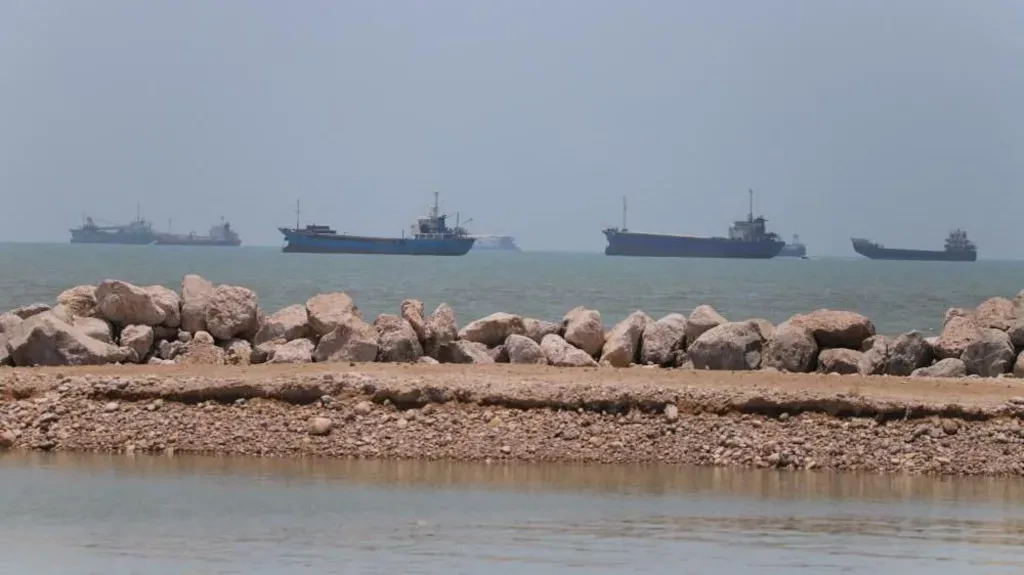
Washington DC. America has ended the naval blockade imposed on Iran. The US Central Command (CENTCOM) confirmed the blockade was lifted at the direction of President Donald Trump, stating that some American ships would remain in the region.
Meanwhile, Iran's Supreme Leader Mojtaba Khamenei has reacted publicly for the first time regarding the US-Iran agreement. He stated that although he personally held a different opinion, he approved the agreement after President Masoud Pezeshkian assured that the rights of the Iranian people would be protected.
Khamenei accused Trump of being hasty in brokering the deal, using all kinds of pressure and influence. He clarified that although direct talks between Tehran and Washington might occur in the future, it would not mean accepting the enemy's stance. This is Khamenei's first public reaction since taking office in March. He came to leadership after his father and former Supreme Leader Ayatollah Ali Khamenei was killed in a US-Israel attack on Iran on February 28.
According to the 14-point Memorandum of Understanding (MOU) between America and Iran, both sides will try to reach a final agreement within a maximum of 60 days. There is also a provision to extend this period by mutual agreement. The main points of the agreement include the re-operation of the Strait of Hormuz, ensuring Iran will never develop nuclear weapons, establishing a $300 billion fund for Iran's reconstruction and economic development, destroying Iran's enriched uranium stockpile, and commitments not to provide financial assistance to regional armed proxy groups.
However, America is not obligated to contribute directly to the reconstruction fund. The formal signing ceremony for the agreement was scheduled to take place in Switzerland. But according to Pakistan, which played a mediating role, the ceremony has been canceled as the agreement has already been signed via telecommunication. US and Iranian representatives are expected to meet in Switzerland for further technical talks.
US Vice President JD Vance stated that the agreement has come into effect and the 60-day negotiation period has begun. Although he was said to be traveling to Switzerland for talks, the trip has reportedly been postponed for now. Trump's Iran policy and the agreement are facing criticism from within America, especially from some leaders in the Republican Party.
Republican Senator Bill Cassidy criticized it as the worst foreign policy mistake in decades. According to him, Iran's nuclear ambitions have not been stopped, and the message has been sent that threats to close the Strait of Hormuz are effective. However, Vice President Vance stated that Iran will not receive any economic relief or sanctions relief until it fulfills its obligations under the agreement.
Even though the US-Iran agreement has been made public, attacks and counter-attacks continue between Israel and Iran-backed Hezbollah. Three people were reportedly killed in some attacks in Lebanon on Thursday. Israeli Prime Minister Benjamin Netanyahu reiterated the importance of close relations with America, stating that Washington has fully supported Israel during the war. Vice President Vance, however, stated that Israel must respect the peace process with Iran and that attacks like those resulting in civilian casualties in Beirut, the capital of Lebanon, are unacceptable. attacks are unacceptable.
This specific news has been automatically translated by AI. As a result, there may be some inaccuracies or language errors.