Nepal's Tea Industry Faces Crisis Amidst Indian Trade Barriers and Domestic Policy Lapses

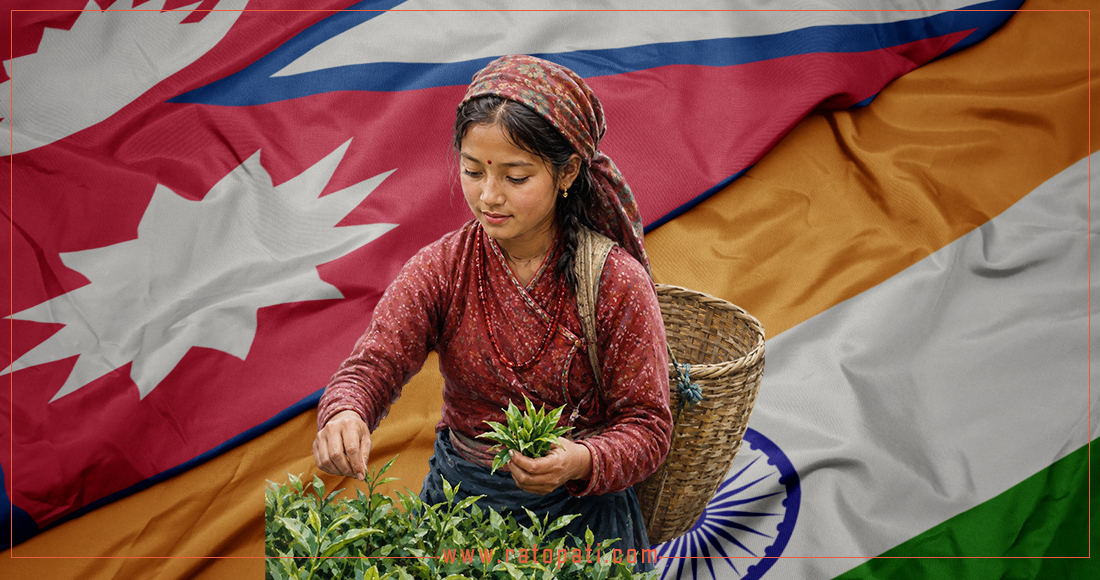
Biratnagar. 53 tea industries in Ilam have been shut down since Asar 1. With the industries closed, 1.1 million kg of tea is being destroyed daily in that region. That means a loss of approximately 55 million rupees daily.
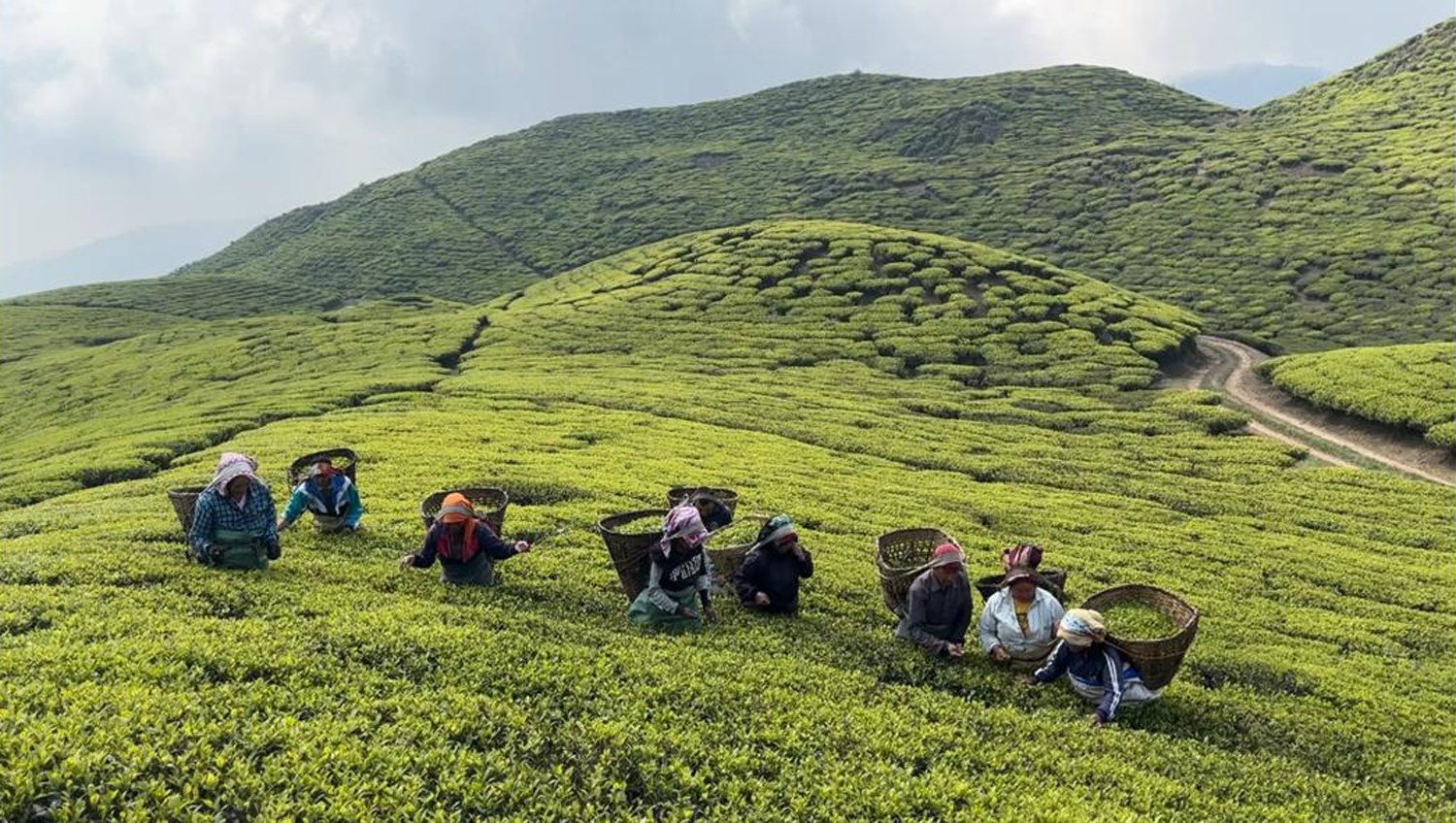
Farmer Chandrakala Pokhrel of Suryodaya Municipality-5 said that she has suffered a lot due to not being able to pluck tea leaves. '1500 kg of leaves come daily. Tea is the source of all our expenses for food, clothing, and educating our children. How will we manage expenses now?' she said.
She was already troubled by monkeys destroying crops like paddy, maize, and vegetables, and now another problem has arisen with tea not being sold. Not just Pokhrel, but 15,132 tea farmers like her and about 60,000 workers depend on the tea sector for their livelihood.
The history of Nepali tea cultivation, which began in 1920 BS when the then Bada Hakim of Ilam, Colonel Gajraj Singh Thapa, established a tea command in Ilam, has now completed 161 years. In this journey of more than a century and a half, Nepali tea has gone through many ups and downs. However, the Nepali tea sector is currently facing a major crisis.
According to the data of the National Tea and Coffee Development Board for the fiscal year 2081/082, tea has been planted on a total of 20,602 hectares of land in Nepal. During this period, 26.1 million kg of processed tea has been produced, which contributes significantly to Nepal's economy.
Currently, 15,132 farmers are involved in tea cultivation in Nepal, and 170 large tea estates and 120 small and medium-sized tea processing centers are in operation. The board's data shows that the tea sector has created approximately 60,000 direct and indirect jobs in Nepal.
According to the latest data from the Department of Customs, in the fiscal year 2081/082 alone, Nepal earned foreign currency worth 4.59 billion rupees by exporting 15.6 million kg of tea. This data clearly shows that tea is not just an agricultural product for Nepal but also a major and sustainable source of foreign exchange reserves.
The irony is that 86 percent of the total tea exported by Nepal is only to the neighboring country India. This dependency is the biggest curse and security risk for Nepali tea at present.
- Obstacles at the border and a wave of industry closures
In recent days, the Indian side has created obstacles in the export of Nepali tea. The Indian Customs and Tea Board have implemented a strict policy requiring separate laboratory testing (sampling) for each lot of tea sent from Nepal and not allowing the goods to proceed until the report is received. Due to this non-tariff barrier from India, Nepali tea that has already been cleared by customs is stuck in warehouses on Indian soil.
On one hand, customs duties are collected for clearance, and on the other hand, the Indian Tea Development Board is creating obstacles by holding back cleared goods in warehouses for re-testing.
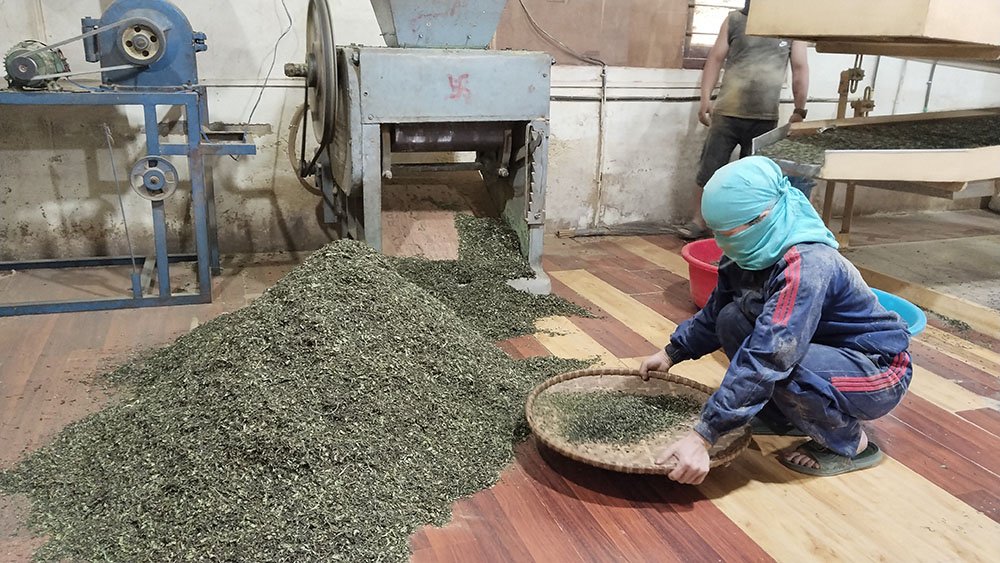
The direct impact of this obstruction has already begun to be felt in tea gardens and processing centers. Most tea industries in Ilam, the main tea-producing district of eastern Nepal, have already closed down, and tea industrialists in Jhapa have also formally announced the closure of their industries. With the green tea leaves not being sold and the processed tea getting stuck in warehouses, industrialists are on the verge of bankruptcy.
According to the Jhapa Tea Producers Association, if the industries are closed, investments worth millions will be like water in the sand. In Jhapa alone, 30 to 32 large tea industries are in operation, with an average investment of more than 150 million rupees per industry.

- Livelihoods of 60,000 families in crisis
With industries closing down one after another, the first and biggest blow has fallen on the tea workers. According to Saikumar Rai, a leader of the tea workers' organization, out of the 60,000 workers dependent on the tea sector, about 20 to 25,000 workers are fully dependent on work in the tea gardens. 'Our workers' daily wage is only 565 rupees. Working 26 days a month, they barely earn 13 to 15,000 rupees. Now, with the closure of industries, even that meager wage has been snatched away. With the closure of the basis for feeding their children and affording medicine, workers are forced to protest on the streets,' he said.
Another tea worker, Santakumar Rai, also shares the pain of gardens and processing centers being closed. 'We have no land or alternative income. The closure of tea gardens means the extinguishing of our hearth and the end of our lives,' he said.
The condition of tea farmers is no different from that of the workers. According to Harka Tamang, chairman of the Small Farmers Tea Cooperative, farmers were just recovering from an insect infestation and trying to revive their gardens. 'Farmers worked hard to control the insect infestation and the tea started to grow in the gardens. Now is the main season for tea, but with the industries closed, the green leaves have to be cut and thrown away in the gardens. If this obstruction is not resolved soon, there will be an economic loss of approximately 10 to 11 billion rupees in the tea sector,' he said.
Tamang stated that discussions are underway regarding the closure of processing industries established by small farmers with an investment of about 120 million rupees through cooperatives.
- Darjeeling's commercial conspiracy
Although India claims that the obstacles at the border are due to the quality and excessive use of pesticides in Nepali tea, Nepali tea entrepreneurs reject this. Tea exporter Shivkumar Gupta considers the envy and pressure from Indian tea industrialists as the main reason behind this obstruction.
Joint Spokesperson of the Ministry of Agriculture Lal Kumar Shrestha and Executive Director of the Tea and Coffee Development Board Surendra Subedi claimed that discussions are being held with India through diplomatic channels at the ministerial and secretarial levels, but no impact has been seen.
'The Indian Tea Board is harassing Nepali tea by violating its own rules. Nepali tea is of high quality and much cheaper than Darjeeling tea in India. Because of this, local producers there cannot compete with Nepali tea in the Indian market. To block the entry of Nepali tea, tea industrialists there have created such obstacles by pressuring their government and the Tea Board,' he said.
According to tea entrepreneur Uday Chapagain, Indian gardens are misusing Nepali tea. 'Darjeeling's famous Okayti Tea Garden buys Nepal's green leaves and tea at throwaway prices, mixes it with their own, and sells it worldwide as Darjeeling tea at a high price, but when we process it ourselves, they stop us saying the quality failed. This is a blatant conspiracy by Indian business houses,' Chapagain said.
- What is the government doing?
Industrialists believe that the Nepali government and the policy helplessness and inefficiency of Singha Durbar are more responsible for this crisis than India. There was an agreement between the governments of Nepal and India years ago. Under this, India was supposed to recognize the lab tests of Nepal's Department of Food Technology and Quality Control, but because the Nepali government could not upgrade its laboratory, India has been rejecting the reports from Nepali labs.
Tea entrepreneur Uday Chapagain expresses anger over the government's working style. He said, 'A mutual recognition agreement (MRA) was made between Nepal and India, and the then Director General Dr. Matina Joshi completed all the procedures and sent the file to the Ministry of Agriculture for upgrading the Nepali laboratory, but no one knows in which corner of Singha Durbar that file got lost. We don't have a government, just an administrative unit whose job is only to collect revenue and present budget speeches, with no vision to save the national economy.'

Joint Spokesperson of the Ministry of Agriculture Lal Kumar Shrestha and Executive Director of the Tea and Coffee Development Board Surendra Subedi claimed that discussions are being held with India through diplomatic channels at the ministerial and secretarial levels, but no impact has been seen. Industrialists allege that diplomatic initiatives are limited only to formality.
Minister of Industry, Commerce and Supplies, Gauri Kumari, said that diplomatic efforts are underway to resolve the problems seen in Nepali tea exports. Speaking during the discussion on ministry-wise budget in the House of Representatives on Wednesday, she said, 'The ministry is making efforts through diplomatic channels to resolve the technical and trade obstacles seen in tea exports.'
However, Joint Spokesperson of the Ministry of Agriculture, Forest and Environment, Lal Kumar Shrestha, said that it might take some time to see positive results. 'Discussions are currently ongoing through diplomatic channels. Efforts are being made at the level of secretaries and ministers to resolve this problem. Work is being done with interest not only at the administrative level but also at the highest political and administrative leadership. Discussions have also been held with the team of the Tea and Coffee Development Board and the tea industry sector,' Shrestha said.
Executive Director of the Tea and Coffee Development Board, Surendra Subedi, clarified that a unified effort is being made by various ministries and the private sector. 'In the current problem, the Ministry of Industry, Ministry of Foreign Affairs, Prime Minister's Office, and Ministry of Agriculture are all making unified efforts. Efforts are also being made by the private sector. Discussions through diplomatic channels are progressing positively, although concrete results are yet to come,' he said.
Subedi stated that a sustainable and permanent solution to such recurring obstacles in Nepali tea exports is necessary. 'For its sustainable solution, we need to strengthen our laboratory (lab) of the Department of Food Technology and Quality Control, get it mutually recognized, and ensure our quality. There is no alternative to increasing our own lab's capacity for a long-term solution,' he said.
- Tea tourism in Ilam in crisis
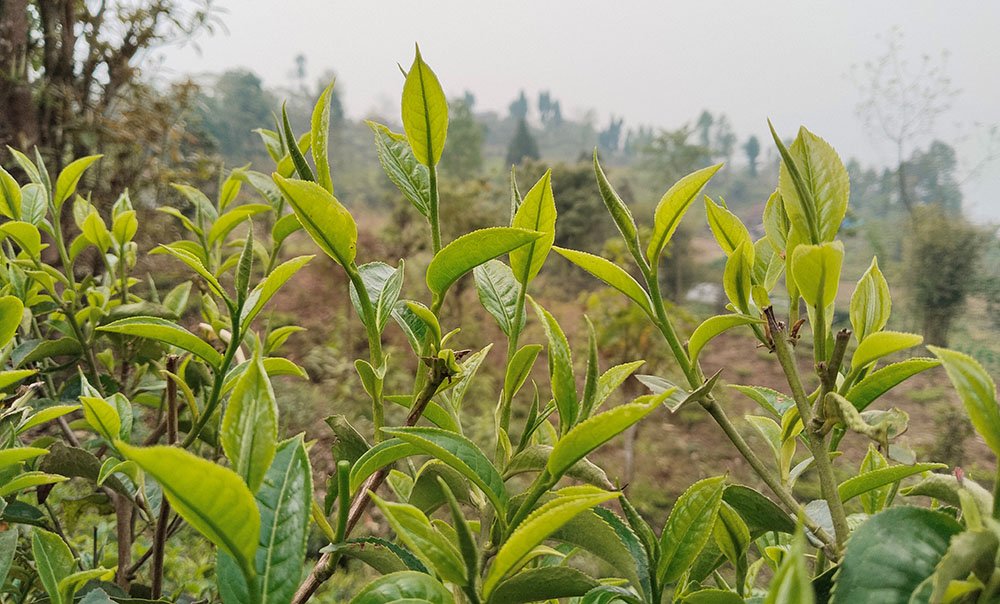
Experts say that the halt in tea exports will have a multifaceted impact on 'tea tourism' and the hotel business, which are considered the pride of Ilam. Although millions of tourists from home and abroad visit Ilam annually to see the green and scenic tea gardens, tea tourism expert Rajendra Baral says that the tourism sector will be severely affected by the closure of gardens and industries dependent on them.
'The main basis of tourism in Ilam is the green tea gardens. If the gardens are not properly protected or become desolate due to protests and crises, tourists will not come to see the bare hills of Ilam. The crisis in the gardens means the collapse of Ilam's entire hotel business and tourism industry. The state must take this seriously and bring special packages for tea farmers and tourism entrepreneurs,' he said.
- Diplomats' suggestion: Let's find a solution diplomatically
Former Nepali Ambassador to India and senior diplomat Nilambar Acharya says that this problem should be viewed from the perspective of trade principles and non-tariff barriers. He refuted the suspicion that India retaliated against tea because Nepal recently tightened pesticide testing on Indian bananas and mangoes.
'The trade relationship between Nepal and India has always been imbalanced. We import 90 percent and export only 10 percent. Even in such a situation, it is unfortunate that obstacles are created in a primary product like tea, but it cannot be called retaliation for importing bananas or mangoes,' Acharya said.
He argues that no one can play with public health. He said, 'India also does not allow the sale of contaminated mangoes in the market. This is a question related to the principles and practices of our trade relations, which must be resolved permanently through diplomatic means.'
Another diplomat, Jayaraj Acharya, also suggests that Nepal cannot ignore the issue of quality and that the state must formulate a long-term policy for this. 'We cannot deny that there is excessive use of chemical fertilizers and pesticides in our tea. International trade is not possible merely by diplomatic talks without strengthening quality,' he said.
Therefore, he emphasized that the government should encourage and provide subsidies to farmers for the use of organic fertilizers to get Nepali tea certified as organic. 'Both the provincial and federal governments should be active in this,' he said.
- What are the alternatives?
Dependency on the Indian market for 86 percent is Nepal's biggest weakness. As long as Nepal does not diversify its tea market, the policy and trade blackmailing by the Indian side will continue. Entrepreneur Uday Chapagain emphasizes the need for Nepal to increase trade with third countries.
'Our neighboring country Pakistan alone imports 210 million kg of tea annually. Pakistan is not very far either. We need to improve the quality of our tea, get organic certification, and formulate a policy to export directly to Pakistan, Europe, Japan, and the Gulf countries. For this, the Government of Nepal should prioritize tea diplomacy,' he said.
Experts say that Singha Durbar must show proactivity to preserve the heritage of Nepali tea, which has been maintained since historical times, save the livelihoods of 60,000 workers, and prevent the loss of billions in foreign currency. For this, they say, upgrading Nepal's food laboratory, high-level diplomatic talks with India, and exploring markets in third countries are necessary.
Former mayor of Suryodaya Municipality in Ilam, Ranbahadur Rai, emphasized taking the current problem as an opportunity to improve quality. 'Industries should have processed tea as long as it was sold. Farmers were also giving whatever tea the industries took. That's why the problem arose. We didn't pay attention to quality improvement,' Rai said. 'The current crisis is just the beginning. Our tea lacks quality. It also lacks aroma. If we can make quality tea, we can sell our brand anywhere in the world.'
He said that tea industries should not be closed immediately. 'Industries should say they will process if quality tea is brought. If it's quality, it will be sold. Right now, there's just a lot of noise. Tea can be sold elsewhere too. If the tea is of quality, Indians will come themselves. Nepal should not be solely focused on the Indian market. It can also be sent to Russia,' he said.
Stakeholders say that the government must provide a long-term solution to the problem by removing the obstacles seen in tea exports.
This specific news has been automatically translated by AI. As a result, there may be some inaccuracies or language errors.