Nepal Student Union Faces Existential Crisis Amidst Political Turmoil

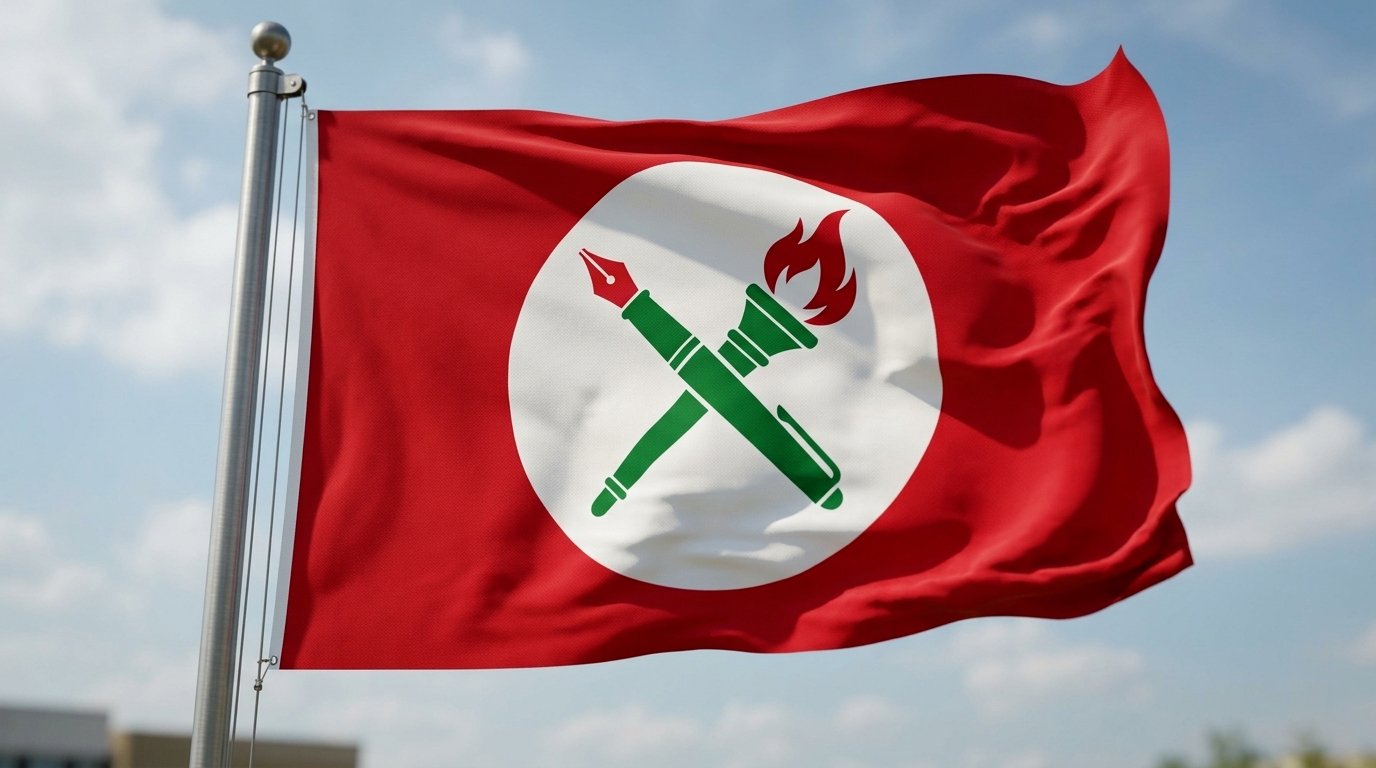
Established on Baisakh 6, 2027 BS, the student organization of the Nepali Congress, Nepal Student Union, is entering its 57th year. Once a rapidly moving force, the Nepal Student Union is now moving at a tortoise's pace. The political developments in Nepal after the Janji movement, the special general convention within the Nepali Congress, and the current government's stance on student politics have had a direct impact. Moreover, since the 11th general convention in 2073 BS, the Nepal Student Union has been surviving solely on nominated members. This has led to the creation of leaders through connections rather than active participation in organizational matters and welfare within the Nepal Student Union.
The Nepal Student Union, which should have had 28 service periods, is limited to 11. In 2076 BS, Rajiv Dhungana was nominated as the president with the responsibility of conducting the general convention. After failing to fulfill his responsibility, Dujang Sherpa was given the responsibility in 2078 BS. That committee also failed to hold a general convention for 5 years. Finally, in the history of the Nepal Student Union, Karuna Katuwal has been nominated as the ad-hoc committee chairperson, becoming the first female president.
Previously, the number of ad-hoc committee members was 752. That is, nominations were made as needed without stopping. This initiated a journey that would end the dignity of the Nepal Student Union rather than leading to leadership development.
The transformation of the Nepali Congress is being tested by the size of the committee to be formed under the newly nominated Karuna Katuwal. Following the indication from the new committee of the Nepal Women's Association, the committee will now consist of 151 members according to the Nepal Student Union's statute. If the Congress has transformed, the committee will hold its general convention within 6 months.
The current ad-hoc committee is facing the most challenges in the history of the Nepal Student Union. It will have to face the serious challenges of a transformed Congress, a strong presence among students after the Janji movement, and the decisions made by the Balen government regarding student organizations. If it cannot face the challenges of this time, there is no doubt that the Nepal Student Union will move from the ICU to a ventilator.
In addition, there is a moral pressure to break the history of forming ad-hoc committees with up to 752 members and limit it to a committee of 151 members. At a time when the Prime Minister was 36 years old, there is a separate pressure to save the existence and importance of the Nepal Student Union from leadership under 35 years of age.
In a situation where there were not a few who agreed with Balen government's recent announcement to abolish student organizations, there will be an equal challenge to save the real student politics and the existence of the Nepal Student Union. The issue of abolishing student organizations is currently sub-judice in the Supreme Court.
However, student politics should now be like that of students. The Nepal Student Union should not be of the Gagan Thapa, i.e., Karuna Katuwal faction. The Nepal Student Union should not be limited to 752, but should fit within 151 members. The Nepal Student Union should now be clear about which policy is correct, rather than which faction is bigger. The Nepal Student Union should now be suitable for the digital age, not just on the streets.
The Nepal Student Union should not be communist, but democratic. The Nepal Student Union should not just be a party organization, but one that is felt by the public and students. The Nepal Student Union should join the campaign to end the tragic situation of being unemployed even after studying, not engage in politics by extorting money. The Nepal Student Union should be able to remember its glorious history in movements like the 2036 BS referendum, the 2046 BS People's Movement, the 2062/063 Democratic Movement, and university and student rights movements. The organization of students should be in the hands of students.
A democratic organization like the Nepal Student Union respects different opinions, encourages debate, and accepts competition in leadership selection. The ad-hoc committee was supposed to be a means of crisis resolution, but in the Nepal Student Union, ad-hocism itself has developed as a culture. The situation where leadership management has been prioritized over organizational building must end. The real challenge for the Nepal Student Union is not just to hold a general convention, but to create an environment where students once again consider the Nepal Student Union as their own organization.
For an organization with a 57-year history, the question now is not just about existence, but also about relevance. If the Nepal Student Union cannot transform itself in time, only the glory of history will remain. Furthermore, the ability to lead the future will be lost.
This specific news has been automatically translated by AI. As a result, there may be some inaccuracies or language errors.