Debate Intensifies Over Non-Partisan Local Elections Following Constitutional Amendment Discussions
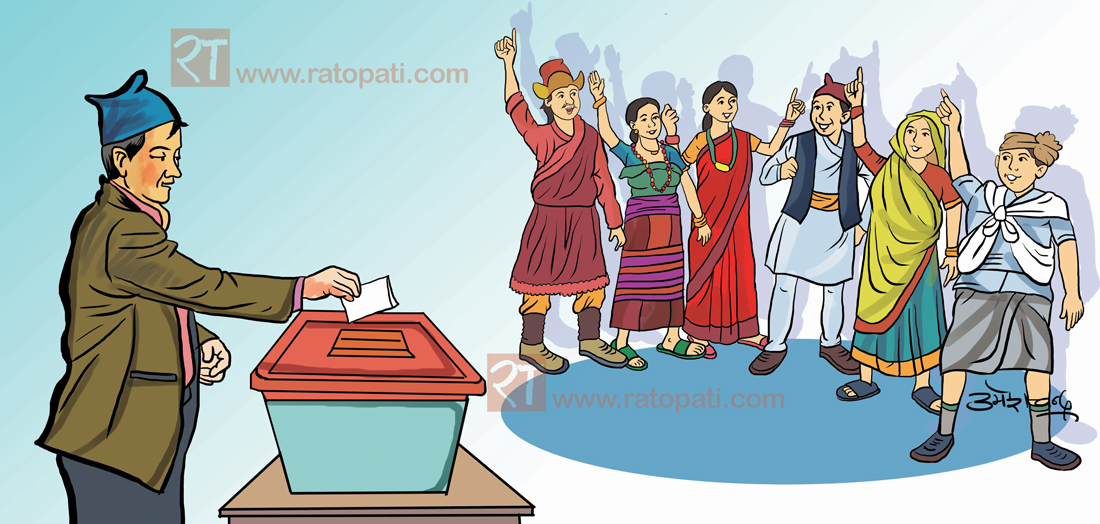
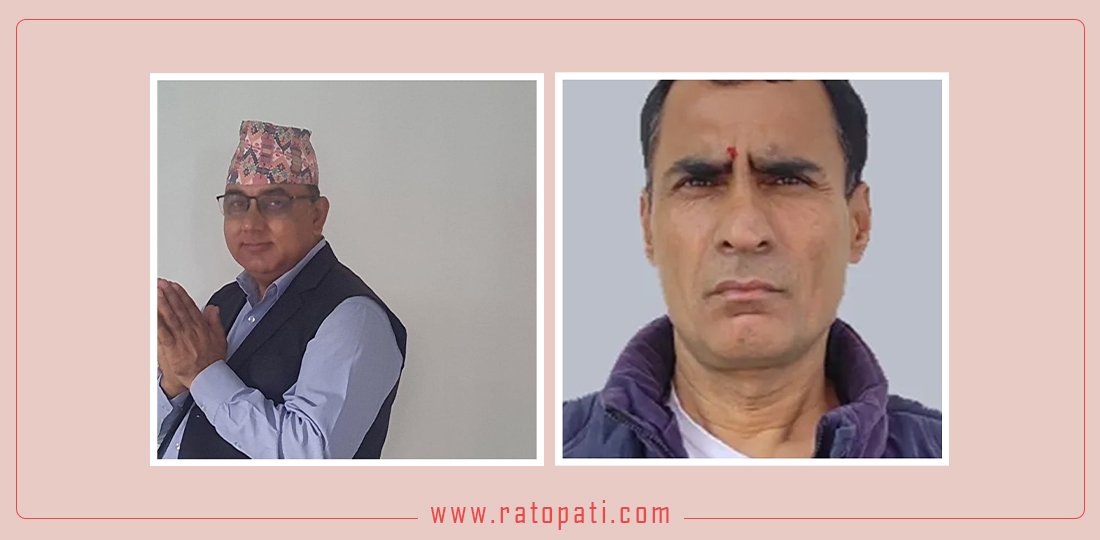
Kathmandu. The debate on constitutional amendment has intensified since the government led by senior Rastriya Swatantra Party (RSP) leader Balen Shah was formed on Chaitra 13. The 'Constitutional Amendment Debate Paper Task Force', formed under the leadership of Prime Minister Shah's political advisor Ashim Shah, is actively collecting suggestions from stakeholders on which issues to amend the constitution. Besides this, various political parties are also carrying out internal homework for constitutional amendment. The task force led by Shah was recently given a 21-point suggestion by the Election Commission, which included making local level elections non-partisan. With the suggestion to 'arrange for local level elections to be non-partisan' becoming public, interest has further peaked on whether local level elections will be non-partisan or partisan. Some are saying that if the constitution is amended according to this suggestion, it will resemble the Panchayat system. Others, however, say that non-partisan elections at the local level are necessary for independent service delivery. Nevertheless, in a multi-party system, questions naturally arise as to why a constitutional commission made such a suggestion? Has the Election Commission failed to accept the current system and framework? When contacted for answers to these questions, from the acting chief election commissioner to the commission's spokesperson, they evaded the issue, stating they would not comment. 'No comment on this matter,' was the uniform response from spokesperson Narayan Prasad Bhattarai to the commissioners. It is the ruling Rastriya Swatantra Party (RSP) that has recently put forward the issue of non-partisan local elections. As the RSP mentioned non-partisan local level elections in its election manifesto, some believe the commission might have given suggestions to support it. 'Our manifesto states non-partisan local level elections,' said RSP MP and advocate Mohanlal Acharya. 'The government has brought a 100-point agenda to implement that manifesto. As the agenda mentions forming a task force for constitutional amendment, the task force is preparing the debate paper.' According to Acharya, who represents the RSP in the task force, the RSP has not yet formed a clear opinion on this matter. Acharya says this is because if an opinion is formed beforehand, the debate would lose its purpose. 'The local level is a service delivery level. A service delivery level should not lean towards any political party,' Acharya told Ratopati. 'For example, there is also a judicial committee at the local level. The judicial committee is supposed to deliver justice. It is not good if justice is delivered with a partisan eye.' Acharya claims that more than 90 percent of the suggestions to the task force have been in favor of non-partisan elections. 'Many understand that when it is partisan, we have become partisan in some aspects of service delivery. Most people accept this, and about 90 percent or more have said it should be non-partisan,' Acharya said. However, he mentioned that some have suggested that local governments should remain partisan. 'Given that there are structures of all parties from the center downwards, there is a suggestion to be cautious about the danger of panels forming even if it is called non-partisan,' he said. He added that there is a fear of panels forming even if it is called non-partisan and a non-partisan symbol is taken. *JSP and Janamat's Different Stance* RSP leader Acharya's argument is also agreed upon by Janata Samajbadi Party Nepal (JSPN) spokesperson Manish Suman. He says that amending the constitution to make local levels non-partisan could be a 'turning point'. 'Previously, Congress, UML, and Maoist did not agree. Now the time is appropriate,' said JSPN spokesperson Suman. 'The local body is purely a development body.' Suman states that his party's stance is that local bodies should be non-partisan because they prioritize development work over policy and law-making. 'Because they prioritize development work, it has been observed that elected representatives in those bodies work with favoritism and bias, favoring their own or others,' he said, explaining the reason for it to be non-partisan. 'Having experienced this, we have been saying for a long time that local bodies should be purely non-partisan or elected without belonging to any party, and we remain firm on this.' Janamat Party chairman Dr. CK Raut says that constitutional amendment is not necessary to hold local elections without partisan symbols. Dr. Raut states that the constitution does not mention 'party' anywhere for the formation of local governments. 'Only because the spirit of the constitution is multi-party competitive democracy, it is not appropriate to prohibit parties from participating, but local elections can be held without partisan election symbols,' said Chairman Raut. According to Dr. Raut, the current law shows arbitrariness among local representatives even though they are elected from parties. 'Elected from a party but not considering the party, not having to follow any directives, and not being punished even when joining any other party or campaigning for another party (precedent of the court) means that representatives elected from parties are not responsible to the party,' Raut said. 'But again, if any wrong is done, the party gets a bad name.' In such a situation, Raut says, either local representatives should be kept within the scope of party discipline after being elected from a party, or local elections should be held without partisan election symbols. *UML, Congress, and NCP's Bottom Line* Leaders of old political parties do not agree with the argument that local levels should be non-partisan. They call such practices 'non-partisanship' and say that such systems cannot be accepted in a multi-party system. Nepali Congress General Secretary Pradeep Poudel, the second-largest party in parliament, says that the issue of what local level elections should be like in terms of constitutional amendment will be based on a common consensus. 'We first need to identify what can be changed within the constitutional framework. It's not about this or that right now,' said General Secretary Poudel. 'Let's have a logical debate and get into the agenda. Let's amend whatever needs to be amended by consensus.' CPN UML's Publicity and Publication Department Chief Niraj Acharya argues that local governments are the pillars of the democratic system, and bodies that provide citizens with a direct experience of democracy cannot be non-partisan. 'The multi-party competitive democratic system adopted by the Constitution of Nepal is the main guiding principle of state operation,' Acharya said. 'Any attempt or debate to transform local levels into a non-partisan structure is not only a matter of concern from the perspective of democratic stability but also unfortunate, as it goes against the preamble of the constitution, its core spirit, and democratic values and norms.' Acharya said that suggestions from a dignified and independent constitutional body like the Election Commission that weaken the foundation of multi-party competition or narrow the role of political parties are a matter of concern for democratic stability and are unfortunate. 'There is a serious risk of weakening political accountability, institutional leadership, and public responsibility at the grassroots level by adopting a policy of separating local governments from political parties,' Acharya said. He emphasized the need to keep the partisan structure of local levels intact to strengthen the federal democratic republic and make the electoral system more transparent, inclusive, and dignified. 'We firmly believe that the partisan structure of local levels must be equally strong to keep parliamentary practice vibrant and make parties ideologically strong,' he said. CPN leader Rajendra Prasad Pandey says that local level elections cannot be non-partisan. 'Local levels should not be non-partisan. Even now, when local representatives are under the control of parties, many irregularities have appeared in terms of character, economics, etc.,' Pandey told Ratopati. 'Making them non-partisan will further increase anarchy and complexity.' Pandey, who is also a former minister, said that making local levels non-partisan is nothing but an attempt to bring back the Panchayat system. 'Are we going back to a non-party system, to the Panchayat system brought by King Mahendra? No,' Pandey said. 'This issue is also related to law-making. Laws are made through those representatives, through the parliament.' Instead, Pandey said, thought should be given to making local representatives more accountable to the public. 'We can have legal provisions for the concerned party to give admonitions, warnings, and even recall them to make them more responsible ethically, constitutionally, and financially,' Pandey said. *'Need for Purity in Conduct and Tendency'* Constituent Assembly member and local governance expert Krishna Prasad Sapkota says that whether local level elections are partisan or non-partisan is not an ultimate solution in itself. 'This is just a technical aspect. The main thing is that our political conduct and tendencies should become pure,' Sapkota told Ratopati. 'As long as there is no law-based budget system, guarantee of good governance, and federalization of parties, the debate on system change alone cannot bring about change in people's lives.' Sapkota suggests focusing the debate on changing tendencies and strengthening laws rather than changing the system. 'The main need of the hour is for elected representatives to treat both those who vote and those who don't equally, and for parties to instill a culture of making their representatives accountable to the public,' he said. Sapkota believes that if these things are not improved, the result will be the same whether local levels are made partisan or non-partisan. Federalism expert and former National Assembly member Khimlal Devkota says that even though the RSP mentioned non-partisan local level elections in its manifesto, the RSP itself might back down from it. 'Yesterday they just threw a card, but my analysis is that they will back down at the time of implementation,' Devkota said. He added that he does not believe that simply writing 'non-partisan' in the constitution will make the influence of parties zero, and legal provisions alone will not make much difference unless political awareness and culture change. Emphasizing that local levels are the foundation of democracy and federalism, he clarified that the preamble of the 'Local Government Operation Act, 2074' also talks about strengthening local democracy. He suggested that if the RSP and other parties are honest, the 'non-partisan model' can be tested in a specific area in the upcoming elections. 'If the RSP or other parties are truly honest, the non-partisan model can be tested in a specific area in the upcoming elections. The constitution does not prevent this,' Devkota suggested a middle-ground solution.
This specific news has been automatically translated by AI. As a result, there may be some inaccuracies or language errors.