MP Scholarship Program 2083 Faces Questions
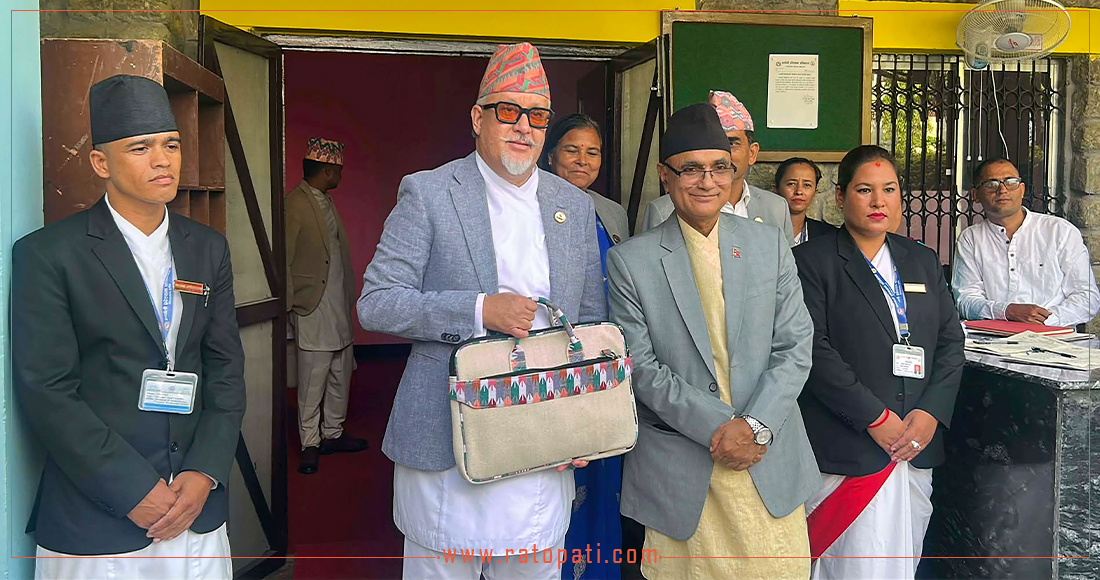
Kathmandu. Questions have been raised over the 'MP Scholarship Program 2083' launched by House of Representatives member KP Khanal, targeting talented, poor, and underprivileged students who have passed SEE and wish to study in Class 11.
Questions have arisen regarding the process after Khanal, elected from Kailali-2, proposed the program to provide scholarships directly to schools.
He has not clarified whether this scholarship program is to be implemented through the local government or if MP Khanal is coordinating with the concerned schools or colleges for its implementation. By rule, scholarships in schools are provided in coordination with the local level.
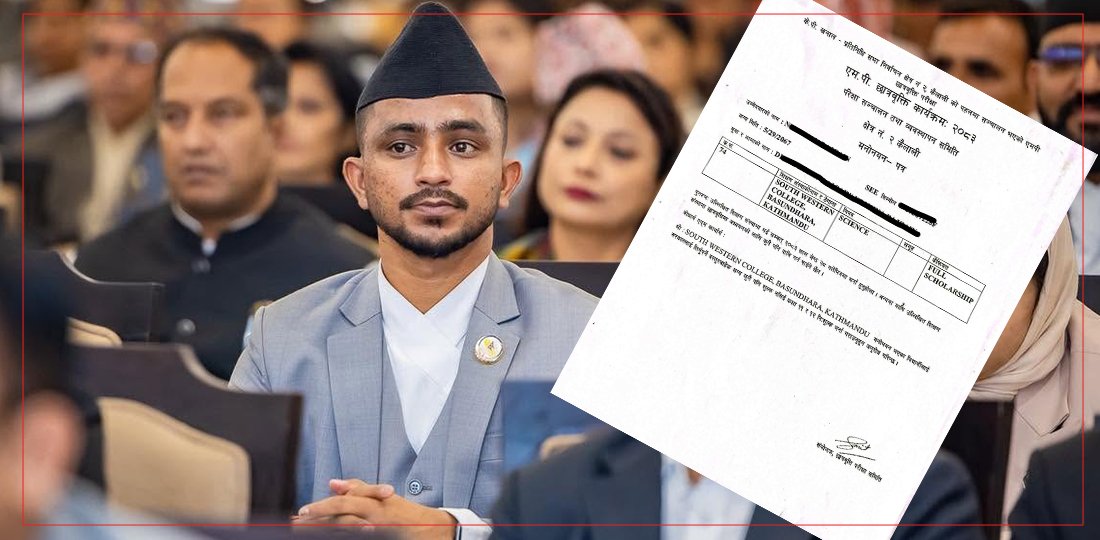
A letter recommending full scholarship for the science stream at South Western College in Basundhara, Kathmandu, has also been made public. According to the nomination letter signed by the coordinator of the 'MP Scholarship Program' Scholarship Examination Committee, the scholarship recipient student was supposed to get admitted to the designated educational institution by Jestha 28.
Furthermore, the nomination letter states that the committee has urged the concerned college not to charge any additional fees other than the government-mandated fees and to arrange for admission to Class 11 and 12 completely free of charge.
A principal of a college in Kathmandu said, 'The honorable member had requested me to provide scholarships to some students. Accordingly, I am thinking of giving scholarships to one or two students.' He also stated that he only provided technical support for this program.
What happened?
The scholarship program run by MP Khanal is named 'MP Scholarship Program 2083'. For this program, 435 students who passed SEE from Kailali had applied. Out of those who applied, 345 participated in the examination. The examinees were asked objective questions worth 100 marks, with 25 marks each from Science, English, GK (General Knowledge), and Mathematics. An interview was also conducted for those who passed the exam. According to Khanal, the questions were in English medium. The examination was conducted on Jestha 16 from two examination centers in Kailali and one in Kathmandu.
Examination centers were set up at Kalika Secondary School Lamki and Basanta Murari Secondary School in Kailali, and Everest College in Kathmandu. To systematize the scholarship program, an Examination Management Committee and a Technical Management Subcommittee were formed. Dharmaraj Devkota, a member of the Technical Management Subcommittee, said that 120 students were selected for the scholarship out of those who applied. Arrangements have been made for the selected students to study in colleges in Kathmandu and Kailali.
However, MP Khanal also stated that this is a positive program and there is no reason to oppose it. He said, 'We have said that we will provide scholarships to poor, underprivileged, and talented students. Is this a bad thing? We have not done anything wrong. We will discuss this further when I come to Kathmandu; I am in Kailali right now.'
When asked if this scholarship program was being carried out in coordination with your municipality, Sushila Shahi, the Mayor of Lamkichuha Municipality in Kailali, which falls under MP Khanal's constituency, said, 'We have no information about the scholarship program run by the honorable member. We should be coordinating.'
Former President of the Guardians Federation, Subhrapratap Bhandari, said that there would be no problem if a college voluntarily provided scholarships. Bhandari said, 'Scholarships can be provided by requesting a college personally or at one's own expense. However, an individual cannot interfere with scholarships provided by the government.'
RB Katuwal, General Secretary of PABSON, said that if a scholarship program is implemented without the coordination of the local government, it would be an incorrect procedure. Katuwal said, 'As per Section 16, Subsection 2 of the Education Act 2028 and Rule 151 of the Education Regulations 2059, for scholarships to be distributed for the new academic session, students from underprivileged, talented, Janajati, Dalit, Madhesi, and oppressed categories among the applicants published by the school, considering the attached list, are to be provided scholarships in the current academic session. In this manner, MP KP Khanal may have requested the scholarship in coordination with the local government. Otherwise, if the scholarship program is run arbitrarily, it could be an incorrect procedure.'
He stated that scholarships should be provided only within the criteria. Katuwal added, 'Every school has a School Management Committee. The Management Committee includes representatives of the local government, the local level's education branch representative, 2 guardian representatives, a teacher representative, and one member from intellectuals. This committee holds meetings regarding scholarships and assigns responsibility to the scholarship selection committee. The coordinator of the scholarship selection committee is the principal, and it includes a representative from the local level's education branch, a guardian representative, and an intellectual member.'
Before providing scholarships, schools are required to publish a notice for applications. It is stipulated that the scholarship recipients should be selected after scrutinizing the received applications. The provision also allows for inviting representatives from organizations representing backward communities in the district to the meeting for selecting students.
Namraj Dhakal, Chief of the Education Department of Kathmandu Metropolitan City, said that it is permissible for any student to be sponsored by a donor to study at any college or school at their own expense. Dhakal said, 'It is permissible for any organization or individual to contribute or bear expenses to help students. This provides additional opportunities for students.'
What is in the Education Regulations?
The Education Regulations 2059 clearly stipulate provisions regarding scholarships and free education. Schools are required to provide scholarships to the first and second-place students in each class by waiving 100% and 50% of the fees, respectively.
The regulations mention that institutional schools must provide scholarships to at least 10% of the total student population, including poor, disabled, female, Dalit, and Janajati students. Stakeholders have expressed the view that the scholarship program would be more effective if it were carried out in coordination with the local government.
This specific news has been automatically translated by AI. As a result, there may be some inaccuracies or language errors.