Poverty of Budget Hinders Cleaning of Halakhoria Pond in Parsa National Park

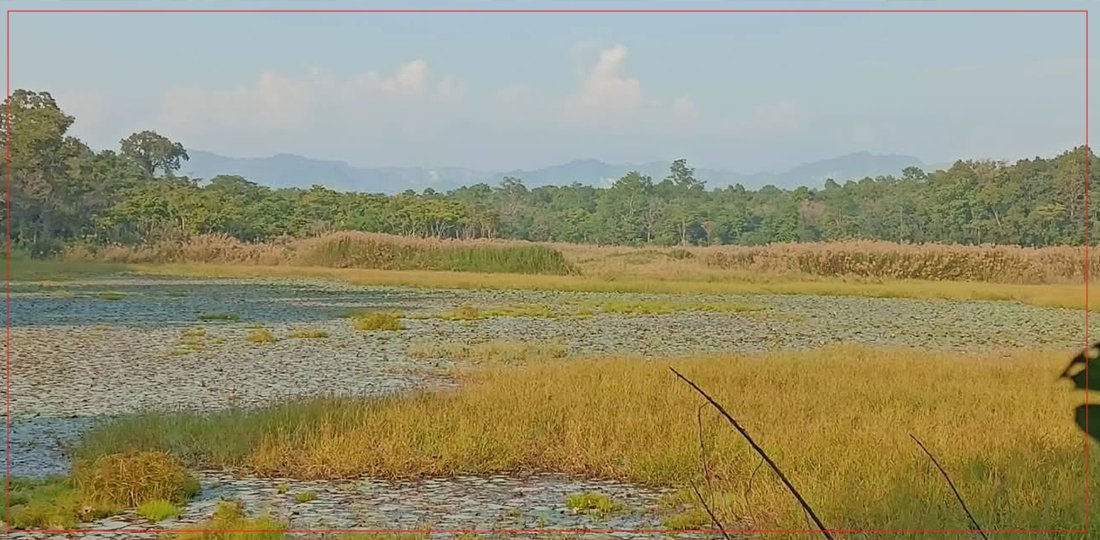
बारा । Poverty of budget has made it difficult to clean Halakhoria pond, considered the main source of water for wildlife inside Parsa National Park. The Halakhoria pond, located 17 kilometers east of the park office, covers an area of more than 15 hectares.
This area, which is the main habitat of the rare Bengal tiger, is visited by wild elephants and many birds to enjoy the pond. However, as the pond has not been cleaned for the last 3 years, it has been covered by floods from the Chure and turned into a grassland.
Ramchandra Khatiwada, Chief Conservation Officer of Parsa National Park, said that it would cost more than 1 crore rupees to clean the Halakhoria pond. He also said that cleaning has not been possible for 3 years due to lack of budget.
‘Without a budget of 1 crore, the work cannot even start. If there is an amount of 3 crore, it can be solved in the long term after working continuously for 3 years,’ said Chief Conservation Officer Khatiwada, ‘Invasive species of grass and rainwater have filled the pond by washing away soil and gabions.’
Although the Halakhoria pond, which has immense potential for tourists as well as drinking water for wildlife, has now become a grassland. However, the Terai Madhesh Buffer (Lake) Program has repaired and cleaned some natural water sources within the park. According to Chief Conservation Officer Khatiwada, non-governmental organizations invest a lot in small and fragmented work. ‘NGOs do not want to spend 1 crore on the same work,’ Khatiwada said, ‘With 1 crore, they can show 20 programs.’
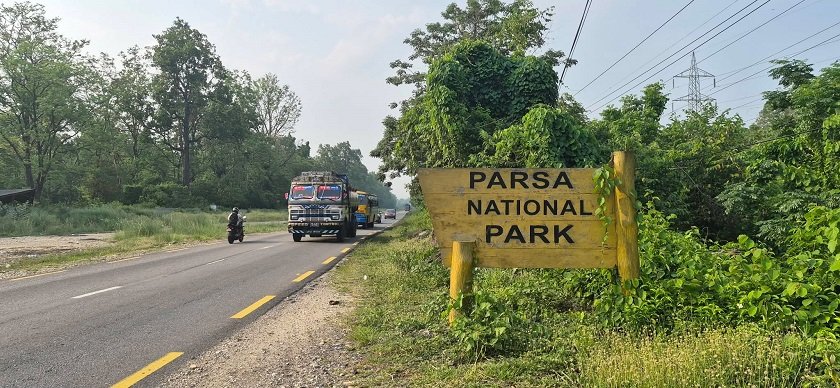
As this pond, located within the only national park in the Madhesh Province, starts to dry up, wildlife is facing a shortage of drinking water. There is a big problem of drinking water for wildlife inside the park. This pond, located north of the East-West Highway along the banks of the Pasaha River, deep inside the forest, is also considered important from the perspective of eco-tourism. The park has constructed machans along with the pond for tourists to observe wildlife.
This area, which has been a wetland with water throughout the year, is mainly the habitat and playground for wildlife such as birds, gaur, Bengal tiger, and prey species of tigers. Parsa National Park is home to 37 species of mammals such as rare Bengal tiger, bear, rhino, elephant, spotted deer, barking deer, leopard, wild dog, nilgai and gaur, 490 species of birds, 13 species of reptiles and 31 species of butterflies. In search of water, the wildlife of the park goes to neighboring India's Valmiki National Park and Chitwan.
Chief Conservation Officer Khatiwada complained that the federal government provides budget and programs only to those who generate the most revenue from the national parks, causing them to be overlooked.
The park's Information Officer Santosh Bhagat said that water is being transported by tankers to 3 dozen man-made small ponds within the park to feed the wildlife throughout the dry season. The geographical structure here is also different from other national parks as it is a Chure Bhaver region.
There are natural water sources here such as Kamini pond, Kali pond, Tin Kuwa, Pani Ghat, Sano Halakhoria, but as the dry season begins, these ponds also dry up, causing wildlife to go to settlements in search of water. As a result, human-wildlife conflict arises, said Information Officer Bhagat.
This specific news has been automatically translated by AI. As a result, there may be some inaccuracies or language errors.