Rabi Lamichhane's India Visit Discussed by Anil Giri

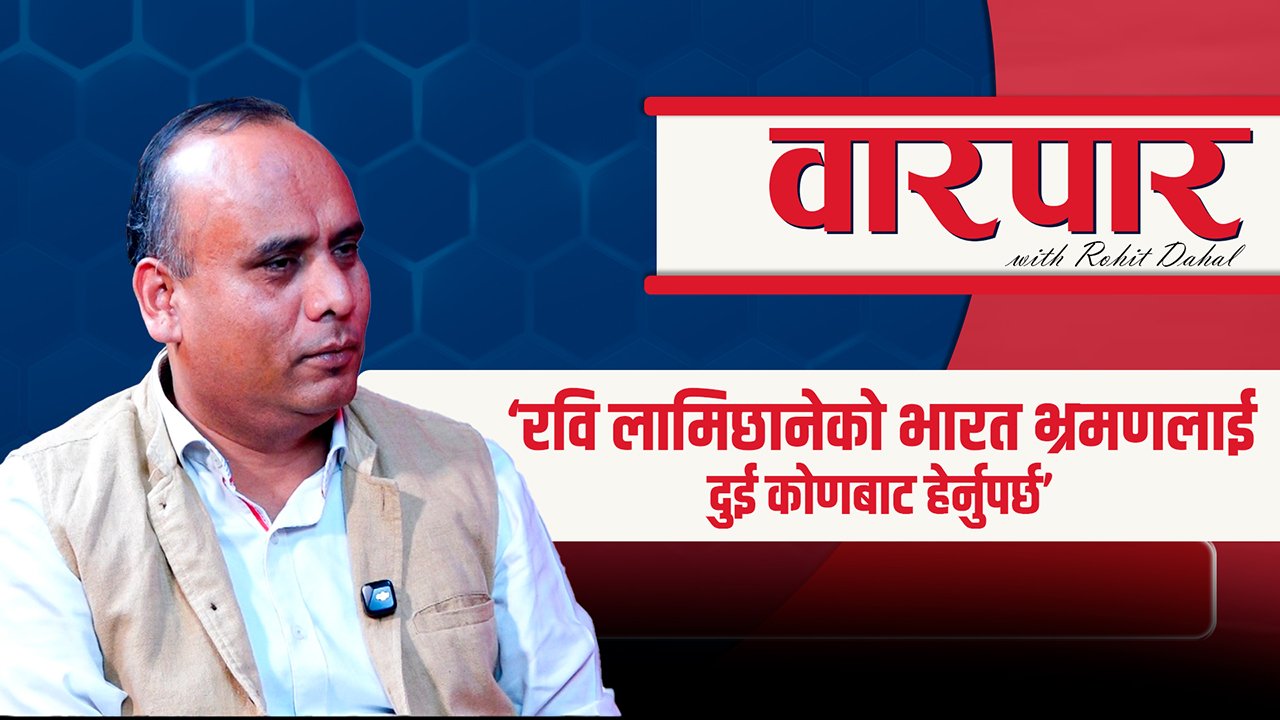
Kathmandu. Rastriya Swatantra Party President Rabi Lamichhane has returned home after completing his India visit. His visit to India has been widely discussed. There are various comments from different angles on how this visit will affect Nepal-India relations.
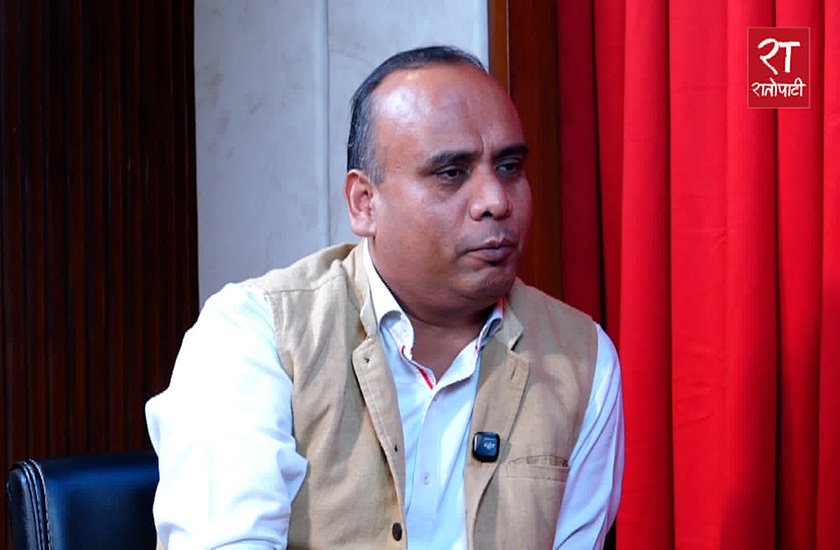
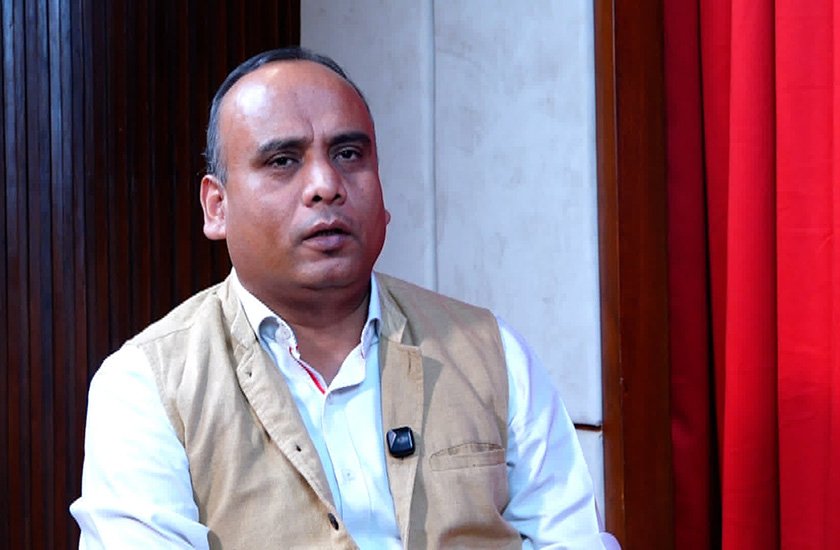
In RatoPati's 'Warpar' with journalist Anil Giri, who has been writing on foreign affairs for a long time, a conversation was held about the political and diplomatic impact of Rabi Lamichhane's India visit and the current political situation in Nepal. Here is the edited part of the interview (detailed video can be watched and listened to):
What is the main meaning and significance of Rastriya Swatantra Party (RSP) President Rabi Lamichhane's recent visit to India?
Rabi Lamichhane's India visit can be viewed from two important angles. First, the rise of RSP has been very rapid. In just four years, this party has emerged as a major political force in Nepal. This party is in government with a two-thirds majority. The Indian side understands that RSP will remain a decisive force in Nepal's politics for the next 15 to 20 years. Therefore, they want to engage with Lamichhane from now on.
Second, RSP does not have any 'political baggage' like the old parties (Congress, UML, or Maoist). They want to move forward with a new approach, which is also an opportunity for India.
What kind of respect did India give to Rabi Lamichhane? Was it similar to what other leaders receive?
The respect Lamichhane received in India this time appears to be of a very high level. He was grandly welcomed at the headquarters of the Bharatiya Janata Party (BJP), where there was even a shower of flowers. The national president of BJP held a meeting with him. Similarly, a 'dinner' with distinguished personalities was organized for him in Delhi. Diplomatically, most importantly, Lamichhane met with India's Home Minister Amit Shah, Foreign Minister S. Jaishankar, and ultimately Prime Minister Narendra Modi.
According to Indian media and journalists, Amit Shah rarely meets foreign leaders, but meeting Lamichhane clarifies how much importance India gives him. Looking at the picture of the meeting with Prime Minister Modi, it looked like a meeting at the level of a government delegation rather than a meeting of a leader of a single party.
It is said that in India's diplomacy, there are no permanent enemies or permanent friends, only permanent interests. Did India give Lamichhane respect only for its own interests?
This is a bitter truth in international relations and politics. India had also given similar respect to Girija Prasad Koirala, Prachanda, or Sher Bahadur Deuba in the past. When Girija Prasad Koirala went to Delhi after the 2006 People's Movement, the then Prime Minister Manmohan Singh himself went to the airport to receive him. But two years later, when it came to the presidential election, India did not support Girija Babu. Similarly, the craze that Prachanda and Baburam Bhattarai had in India did not last forever.
India's main concern is its security and regional influence. If RSP does anything that harms India's interests, this respect can change immediately. India is currently investing in Lamichhane, seeing him as an emerging force.
How can Rabi Lamichhane's Ayodhya visit be analyzed? Is there any religious or political agenda behind it?
There are some important aspects behind the Ayodhya visit. Firstly, a large section of Lamichhane's 'constituency' and RSP supporters in Nepal hold 'rightist' ideologies and want to see Nepal as a Hindu nation. Lamichhane has never spoken against the Hindu nation. Therefore, by going to Ayodhya, he has tried to send a positive message to his supporters.
On the other hand, a major dream of the current government of India (BJP and RSS) is to connect Ayodhya and Janakpur with a railway service. This railway service is important for cultural and religious tourism. By visiting Ayodhya, Lamichhane has also shown his interest and support for this project.
What is the concept of Development Diplomacy proposed by Lamichhane?
In Nepal, large projects like BRI, MCC, or Pancheshwar have recently fallen into geopolitical disputes. According to the concept put forward by Lamichhane, cooperation should be on purely development projects rather than projects involving strategic or security interests. He has proposed building an IT corridor from Kathmandu to Bangalore. His argument is to work in the fields of hydropower and technology from a purely commercial and developmental perspective. India also seems to have taken this positively, as it does not create any major political or strategic disputes.
What is the diplomatic meaning of Prime Minister Balendra (Balen) Shah's recent statement in Parliament that Nepal has also encroached on India's land?
The Prime Minister's statement is quite controversial, and some have called it immature. In reality, this issue is related to the cross-holding of property. According to the Boundary Working Group report, some Indian citizens' land has fallen into Nepal, and some Nepalis' land has fallen into India. According to the data, about 1250 hectares of India's land has fallen into Nepal, and 1200 hectares of Nepal's land has fallen into India. This means that more than 50 hectares of India's land appears to have fallen into Nepal.
However, when the Prime Minister said that we have also encroached, it seemed to underestimate the seriousness of the border dispute with India. In diplomacy, every word has meaning, and the Prime Minister showed a bit too much 'overconfidence' in this matter.
How true is it that the Government of Nepal does not have official copies of the Sugauli Treaty and the 1950 Treaty and has to request them from Britain?
This is a very unfortunate matter. Former Foreign Minister Pradeep Gyawali had stated in Parliament that the Government of Nepal does not have the original official copies of the Sugauli Treaty and the 1950 Treaty. At the time of the Sugauli Treaty, it was British India, so that document might be in the British Museum or London, but it is a diplomatic weakness of ours that a country like Nepal cannot even preserve the official copies of its historical treaties. Having a lack of evidence when discussing borders or treaties with India weakens our stance.
Amidst the narrative that America is dominant in Nepal's politics, has India become more active in this regard?
Geopolitical competition is intense in Nepal right now. High-ranking US officials (up to Under Secretary level) are visiting Nepal one after another, and they are trying to engage with the new government. China is also increasing its activity through its mechanisms. India might be thinking that if it steps back, the influence of America or China will increase further. Therefore, India wants to win over a new and influential leader like Lamichhane early on or understand his thinking. India, China, and America all seem to be very vigilant about how RSP will function and its relationship with foreign powers.
What is the difference in India's approach towards Prime Minister Balen Shah and Rabi Lamichhane?
The interesting thing is that Balen Shah's 'craze' in India is many times more than Rabi Lamichhane's. Balen Shah is portrayed as a 'hero' in the Indian media and social media, but diplomatically, India seems to give more importance to Lamichhane.
What impact will Lamichhane's visit have on Nepal-India relations?
This visit has created a 'momentum'. Lamichhane has tried to present himself as a mature and development-oriented leader.
India has also sent a message that it wants to build relationships with the new generation of leaders, but the real results will only be seen in the agreements and implementation of projects in the coming days. In diplomacy, results matter more than pictures and welcomes.
Video/Photo: Manoj Khadka/RatoPati
This specific news has been automatically translated by AI. As a result, there may be some inaccuracies or language errors.