Government Announces Policy Reforms in Hydropower Sector, Private Sector Expresses Concerns

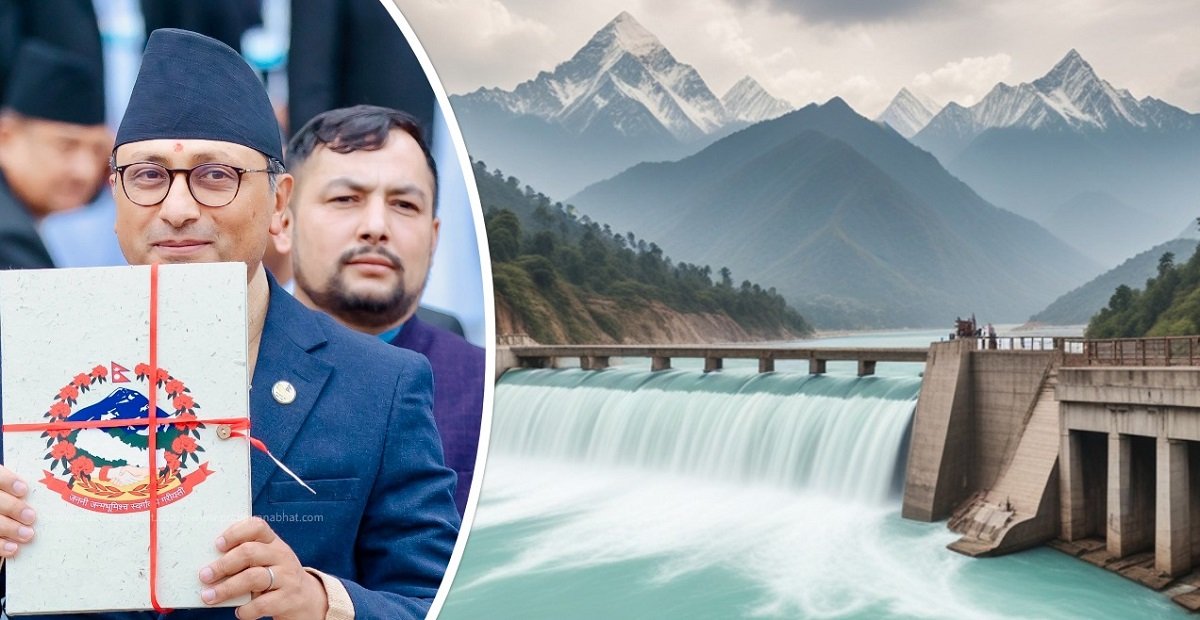
Kathmandu. The government has announced various policy reforms in the budget to make a policy leap in the hydropower sector. Finance Minister Dr. Swarnim Wagle announced in the budget speech for the fiscal year 2083/084 the significant decision to restructure the long-unresolved Electricity Authority and open up PPA and electricity trading to the private sector.
Finance Minister Wagle has introduced attractive incentives for tax and customs on the import of hydropower equipment, with a strict policy on Power Purchase Agreements (PPAs). Through the budget, the government has announced the cancellation of permits for projects that have already signed PPAs but have not started construction.
For those projects, arrangements will be made to enter into new PPAs under the 'take or pay' method. Competitive PPA during the dry season. The government has announced that PPAs will be signed at a competitive rate to meet the demand for electricity during the dry season.
It has been stated that private sector will be allowed to build transmission lines and trade electricity directly in the international market by paying wheeling charges, but energy producers complain that clarity has not been provided on the long-standing issue of Power Purchase Agreements (PPAs).
They stated that opening up for them to produce and trade electricity themselves, but imposing strict conditions on PPAs, has created further problems. They commented that the budget's silence on whether to enter into 'take or pay' PPAs for projects with a capacity of approximately 15,000 megawatts has plunged the entire sector into uncertainty.
Mohan Dangi, Senior Vice President of the Independent Power Producers' Association, Nepal (IPPAN), said that the budget for the upcoming fiscal year has created great uncertainty regarding PPAs (Power Purchase Agreements) in the hydropower sector.
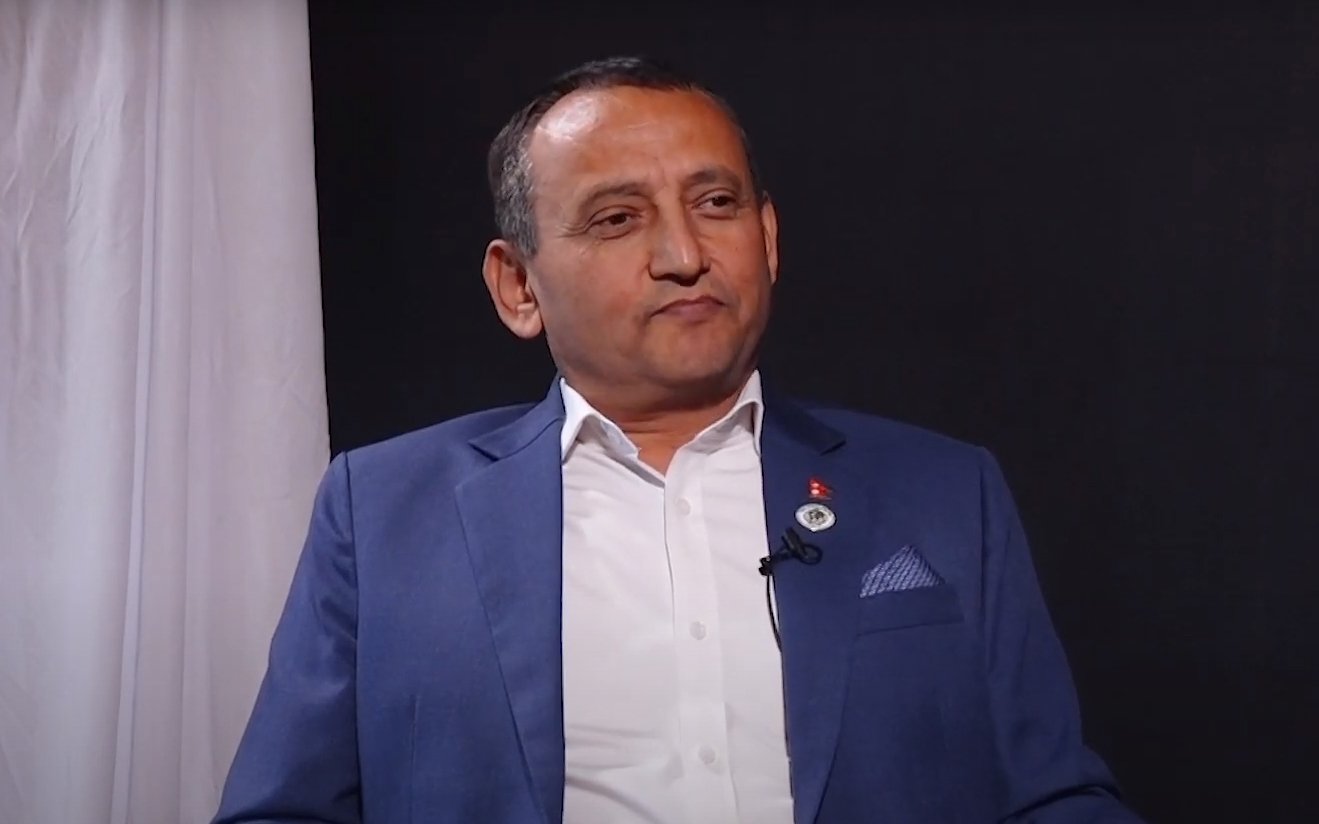
He stated that the budget for the upcoming year has come in a direction contrary to the government's policies and programs, the election manifesto of the Rastriya Swatantra Party, and the 100-day agenda. He believes that the budget has failed to clarify the issue of Power Purchase Agreements (PPAs), which have been stalled for a long time.
Although the government has set a target of producing 30,000 megawatts of electricity in the next 10 years, Dangi said that the policies introduced in the budget are completely contrary to it. He mentioned that the budget has pushed projects above 10 megawatts into uncertainty by stating that only projects up to 10 megawatts will have their PPAs opened.
'Currently, there are projects with a capacity of approximately 16,000 megawatts waiting for PPA at the authority. Of these, the capacity of projects smaller than 10 megawatts is only about 1,000 to 1,200 megawatts,' said Senior Vice President Dangi. 'The budget's silence on whether to enter into 'take or pay' PPAs for the remaining projects with a capacity of approximately 15,000 megawatts has plunged the entire sector into uncertainty.'
Similarly, Prakash Dulal, Deputy Secretary-General of IPPAN, also stated that the government's policy on PPAs has created uncertainty. He asserted that although the government announced immediate PPAs on a 'take or pay' basis for projects up to 10 megawatts, it remained silent on projects larger than that.
He stated that the government's silence on projects with a capacity of approximately 16,000 megawatts, which have been waiting for PPAs for a long time, has created further uncertainty.
Deputy Secretary-General Dulal also claimed that issues contrary to the election manifesto of RSP, the government's commitment, and the 100-day agenda have appeared in the budget regarding energy sector policy.
Budget Policy to Marginalize the Private Sector
Businessmen complain that the current government has adopted a policy to sideline the private sector in hydropower production.
According to IPPAN Senior Vice President Dangi, the government cannot produce 30,000 megawatts on its own by sidelining the private sector. He clarified that in the last 114 years of hydropower history, the government has produced only 668 megawatts, and currently, the private sector contributes 85 percent to the country's total installed capacity.
Similarly, Dulal also said, 'Instead of creating an investment environment, the budget seems to have been brought with the intention of weakening and discouraging the private sector.'
'Instead of creating an investment environment, the budget seems to have been brought with the intention of weakening and discouraging the private sector,' said Dulal. 'If the private sector is not allowed to work like this, the development of the hydropower sector will come to a standstill.'
Projects Above 10 Megawatts in Uncertainty
The budget has made arrangements to immediately open PPAs only for hydropower projects up to 10 megawatts. Currently, projects with a capacity of approximately 16,000 megawatts are waiting for PPAs. Of these, small projects up to 10 megawatts have a total capacity of only 1,000 to 1,200 megawatts.
The 963rd meeting of the Authority's Board of Directors had decided to sign PPAs with run-of-river (ROR) and partially reservoir (PROR) hydropower projects up to 10 megawatts. With that decision, the quota system in PPA was also abolished. However, the current government appears to be silent on projects above that capacity.
The budget is silent on whether to enter into 'take or pay' PPAs for projects with a capacity of more than 10 megawatts, approximately 15,000 megawatts. The Electricity Authority had decided in February 2080 to open Power Purchase Agreements (PPAs) for projects with a capacity of up to 10 megawatts to attract domestic small investors to the hydropower sector. At that time, Kulman Ghising was the Executive Director of the Electricity Authority.
The 963rd meeting of the Authority's Board of Directors had decided to sign PPAs with run-of-river (ROR) and partially reservoir (PROR) hydropower projects up to 10 megawatts. With that decision, the quota system in PPA was also abolished. However, the current government appears to be silent on projects above that capacity. Therefore, there is no clarity on what to do with projects above 10 megawatts.
In the current fiscal year, the previous government had a policy of only signing PPAs on a 'take and pay' basis, causing uncertainty. The current government has remained silent on the issue of 10 megawatts without mentioning either 'take and pay' or 'take or pay'.
Objection to the Policy of Cancelling Licenses
The private sector has objected to the budget provision of cancelling licenses for projects that have PPAs but have not progressed.
IPPAN Deputy Secretary-General Dulal objected to the budget announcement of cancelling licenses for projects with PPAs that have not progressed. He stated that delays in project construction are often due to government bodies, but the blame is being placed on the private sector to discourage them.
According to him, the promoter is not solely responsible for delays in project construction. Issues such as court cases delaying files for 8-10 years, delays by government bodies in land acquisition and tree cutting, obstruction by locals, and the inability of projects to produce electricity due to the authority not building transmission lines on time are reasons for project delays, he argued.
'Instead of managing all these governmental and administrative hassles, unilaterally blaming the private sector and threatening to cancel licenses is a game to scare and discourage investors,' said Dulal.
Dulal pointed out that projects could not proceed with construction due to local obstructions and the Nepal Electricity Authority not building transmission lines and substations on time.
Tax and Customs Facilities in Hydropower
To reduce the cost of hydropower projects and accelerate construction, the government has provided special exemptions in various taxes, customs duties, and value-added tax (VAT) through the economic bill for the fiscal year 2083/084.
Projects that have received in-principle approval for capacity enhancement or design changes in hydropower projects will be able to clear goods by depositing bank guarantees equal to the customs duty, excise duty, and VAT payable on the import of construction machinery, equipment, and penstock pipes. The bank guarantee will be released after final approval for capacity enhancement is obtained.
A customs duty of only 1 percent will be levied on the import of machinery, equipment, tools, penstock pipes, steel plates, and explosives required for the construction of hydropower and transmission line projects operated by the Electricity Authority or the private sector. The government has made arrangements for this to be approved by the Ministry of Energy or the Investment Board through a master list.
Projects that have received in-principle approval for capacity enhancement or design changes in hydropower projects will be able to clear goods by depositing bank guarantees equal to the customs duty, excise duty, and VAT payable on the import of construction machinery, equipment, and penstock pipes. The bank guarantee will be released after final approval for capacity enhancement is obtained.
VAT Exemption for Large Reservoir Projects
Hydropower projects with a capacity of more than 200 megawatts that have completed financial management by the end of March 2082 will receive a full exemption from Value Added Tax (VAT) on imported construction equipment, machinery, tools, penstock pipes, and steel plates.
Significant customs duty exemptions (only 1 percent customs duty) have been provided for the import of machinery, equipment, and tools required for the production of green hydrogen.
Target of 30,000 Megawatts
The government has set a target of producing 30,000 megawatts of electricity in the next 10 years, but energy producers claim that this target cannot be achieved by the government alone by sidelining the private sector.
In the last 114 years of hydropower history, the Government of Nepal alone has built projects with a total capacity of only 6,068 megawatts. Whereas, out of the country's current total installed capacity of approximately 4,300 megawatts, the private sector holds an 85 percent share.
IPPAN estimates that to produce 30,000 megawatts in 10 years, an investment of more than 75 trillion rupees will be required, including more than 52 trillion for generation, 19 trillion for transmission lines, and 8 trillion for the distribution system. However, the government has allocated only 85 billion rupees for the energy sector in the upcoming budget. After deducting administrative expenses, only about 71-72 billion will go towards development expenditure. This budget indicates that the government itself will not be able to build even 12,000 megawatts in 10 years.
This specific news has been automatically translated by AI. As a result, there may be some inaccuracies or language errors.