Zimbabwean Police Crackdown Threatens Rural Women's Livelihoods with E-Tricycle Confiscations

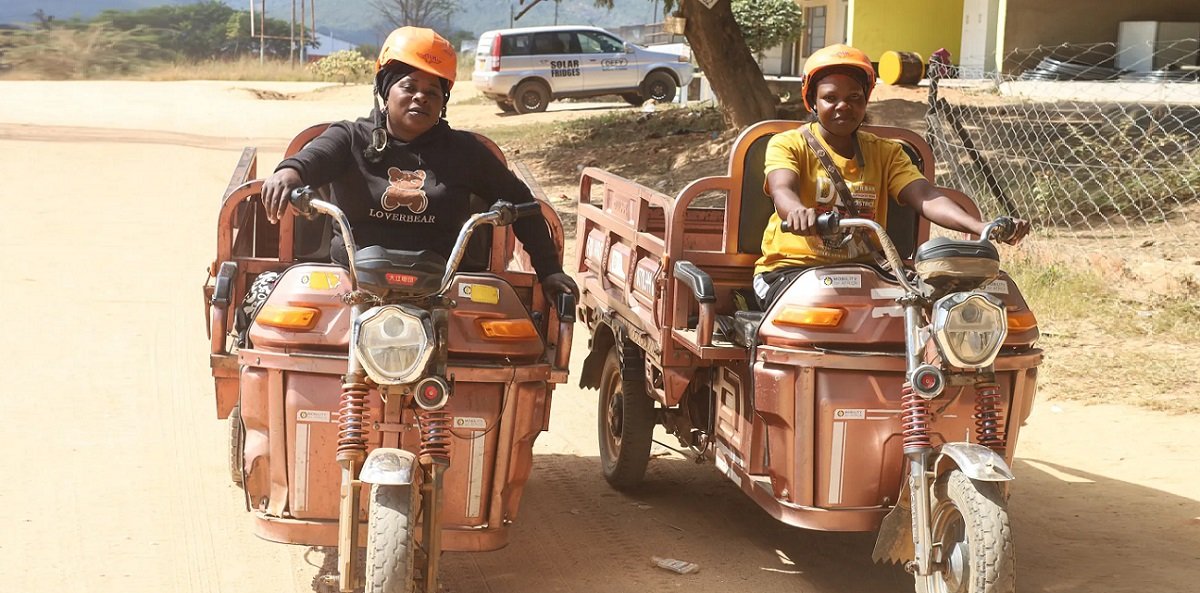
Zimbabwe. Last month, while carrying a customer and some groceries on her electric tricycle (three-wheeled vehicle) on a dusty and unpaved road in the eastern part of Zimbabwe, Dairis Mutamangira was arrested by traffic police.
Police officers demanded to see the tricycle's registration certificate and driver's license, but she had neither document. She tried to negotiate, but the police fined her 15 US dollars on the spot.
'It was a very frightening experience,' she recounted, 'I was driving outside the shopping center and far from the highway. I never thought they would be so strict even in such a situation.'
This example highlights the increasing police action against electric tricycles in rural areas like Manicaland province's Hauna and Chipinge in Zimbabwe. The annual registration and license fees can reach up to 500 US dollars, an amount far beyond the reach of 300 rural women who ride e-tricycles. Most of them are single mothers or widows struggling to make a living.
These e-tricycles, powered by lithium batteries and capable of speeds up to 25 kilometers per hour, were deployed across the country to economically empower rural women.
Source of Income
Mutamangira is one of 40 women who received an e-tricycle named 'Hamba' in May 2024. 'Hamba' is a Shona word that means approximately 'Go'. These tricycles were provided to them to operate a small transport business in Hauna. One tricycle can carry loads up to 450 kilograms.
This facility is particularly useful for Hauna, which is about 55 kilometers from Mutare, Zimbabwe's third-largest city, and its community is dependent on agriculture. Farmers here need to transport fresh produce like bananas, tomatoes, and onions from the fields to the highway, where they are loaded onto trucks going to Mutare or the capital, Harare. They also rely on e-tricycles for transporting groceries and agricultural materials.
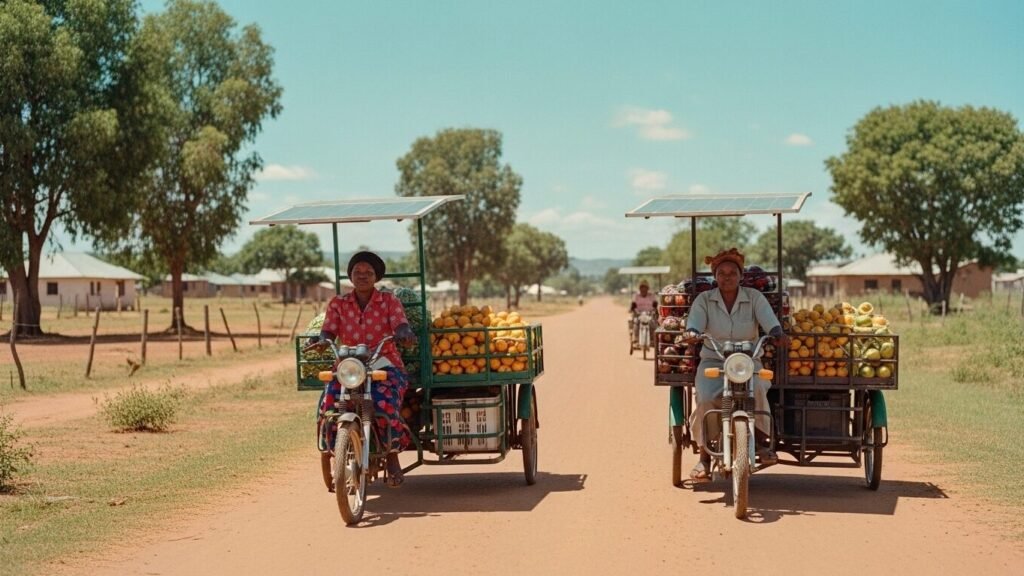
Mutamangira says she transports goods for a fee. 'When things are good, I used to earn about 250 dollars profit per month. My husband is unemployed, so the responsibility of running the family is on my shoulders,' she said with a smile.
She pays all household expenses and provides food, clothing, and education for the couple's four children.
In emergencies, the community also uses these e-tricycles as temporary ambulances. This vehicle is used to transport pregnant women or sick people to the hospital. Zimbabwe has a long-standing shortage of ambulances, and rural areas like Hauna often have only one ambulance, which is mostly in a broken-down state.
Under this project, run with the support of local startup 'Mobility of Africa', women pay a small fee at the Hauna charging center to exchange batteries. Additionally, they have to pay another installment fee until the tricycle comes into their ownership.
For Mutamangira, the e-tricycle is not just a source of income, but also a symbol of economic empowerment and self-reliance.
'It feels great to be able to contribute financially to my marriage as a woman. I am not just a stay-at-home parent, I am bringing something for the family, so I also receive respect from my husband,' she said.
Police Action Cripples Women's Business
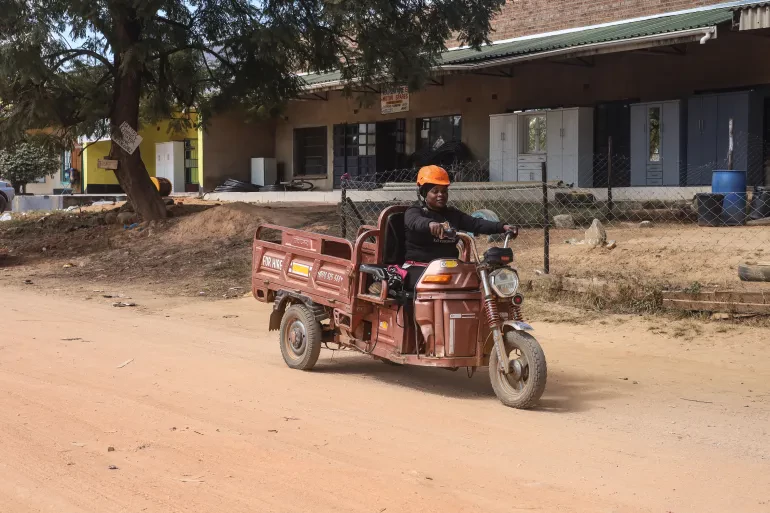
But everything changed in February 2025. Previously, e-tricycles were allowed to operate freely in Hauna and Chipinge, but the police suddenly started confiscating them. They began demanding registration certificates and driver's licenses.
Zimbabwe still uses traffic laws from the Rhodesian era. Government bodies classify e-tricycles in the motorcycle category, which requires drivers to have a license, registration, and road operating permit.
However, the law does not distinguish between petrol or diesel-powered tricycles and low-speed electric tricycles operated by rural women.
Sikhangezile Dubhe, Hauna site coordinator for Mobility for Africa, said that after some tricycles were confiscated by the police, they discussed with the relevant authorities but were told to comply with the law.
'We had to stop operations,' she said.
'In June 2025, we submitted documents to the Zimbabwe Revenue Authority and the Central Vehicle Registration Office to register some tricycles. But there has been no progress so far.'
According to Dubhe, the police return the confiscated tricycles only after a fine of 90 dollars is paid.
Mutamangira said that the police pressure prevented her from working, and it became difficult to make a daily living thereafter.
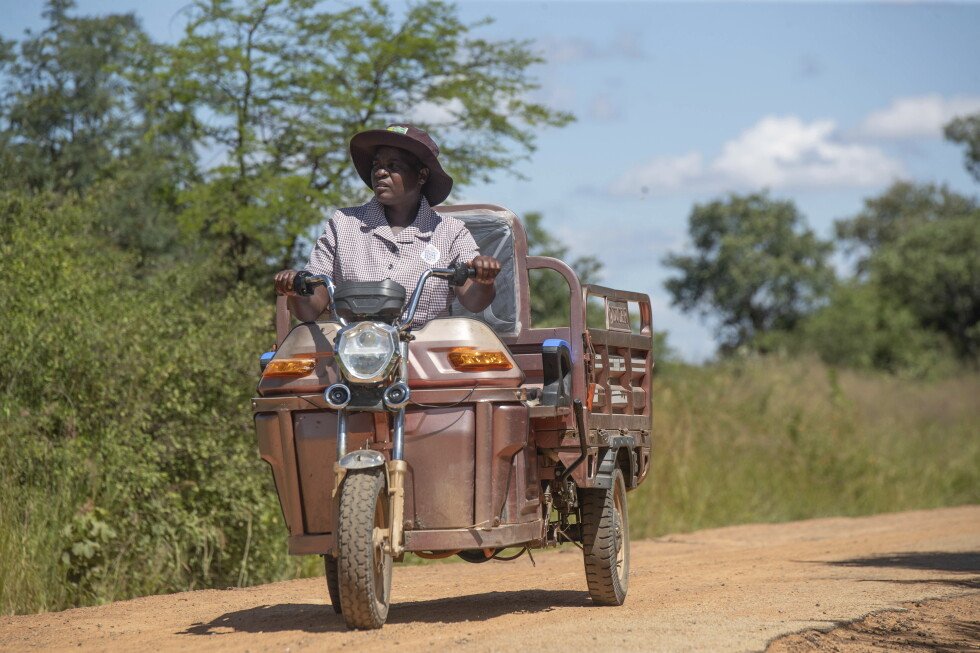
'It was very difficult. I had to struggle to pay my children's school fees. Our lifestyle changed. Earlier we used to eat three meals a day, later we started eating only once,' she said.
Rejoice Mandipedza, another e-tricycle operator from Hauna, said that the police action plunged her into significant debt.
'School fees and house rent debt kept increasing. This was my only source of income,' she said.
After the service was suspended for three months in 2025, the women bravely resumed operations. But since then, the police have intensified their actions.
According to Mandipedza, the police often follow them into their settlements, raid shopping centers, and demand licenses and registration documents.
'We have adopted the strategy of hiding the tricycles and bringing them to the market only when a customer arrives,' she said.
Due to this 'cat and mouse' game with the police, income has been continuously declining. Both Mutamangira and Mandipedza say they consider themselves lucky if they can now earn a profit of 70 dollars per month.
'I am now living on a hand-to-mouth basis. I cannot even save money for a license,' Mandipedza said.
Women need about 500 dollars for driver's licenses, tricycle registration fees, permits, and insurance. 'This is an extremely large amount. I cannot afford it,' she said.
Government Mechanism Says – Difficult to Address Demand
Mutamangira and her colleagues have been demanding that the government introduce new legislation recognizing low-speed clean tricycles that improve rural mobility. They have also proposed reducing license and permit fees. However, this process is not easy.
The Ministry of Transport regulates highways, while rural district councils manage feeder roads leading to schools and health centers. The Ministry of Finance determines license and vehicle fees. The police only enforce the law.
Between 2024 and 2025, Mobility for Africa sent numerous letters to the Ministry of Finance to reduce fees and to the Ministry of Transport for regulatory changes.
In a letter dated January 2025, Joy Makumbe, Secretary for the Ministry of Transport, stated that the proposal to reduce license and registration fees was under consideration. In another letter, she requested the police to grant exemptions for licenses for women using e-tricycles on rural roads connecting homes, schools, and health centers.
However, even after that, police in Hauna and Chipinge have continued to arrest women operating tricycles on rural roads.
According to Shanta Bloemen, founder of Mobility for Africa, forcing a rural woman to travel to a big city to register a low-speed tricycle, qualify for a motorcycle license, and pay hundreds of dollars in fees and travel expenses is practically impossible.
'This creates a barrier to entry for the target market, i.e., the rural community, who are already struggling to get their agricultural produce to market and access services,' she said.
According to Bloemen, as the world moves towards green transportation, current transport policies and regulations need to be reviewed.
'We need to rise above the old historical rules made to limit the mobility of the people of Zimbabwe. We need to rethink the transport system and create policies that benefit the majority of the population and especially support the economic development of smallholder farmers,' she said.
Farai Shawn Matiashe/From Aljazeera
This specific news has been automatically translated by AI. As a result, there may be some inaccuracies or language errors.