Information and Communications Minister Dr. Vikram Timilsina Highlights Literature's Enduring Role


Kathmandu. Information and Communications Minister Dr. Vikram Timilsina has stated that even in the current world guided by technology, artificial intelligence, and 'algorithms', literature continues to serve as a powerful fundamental medium for understanding human civilization and life.
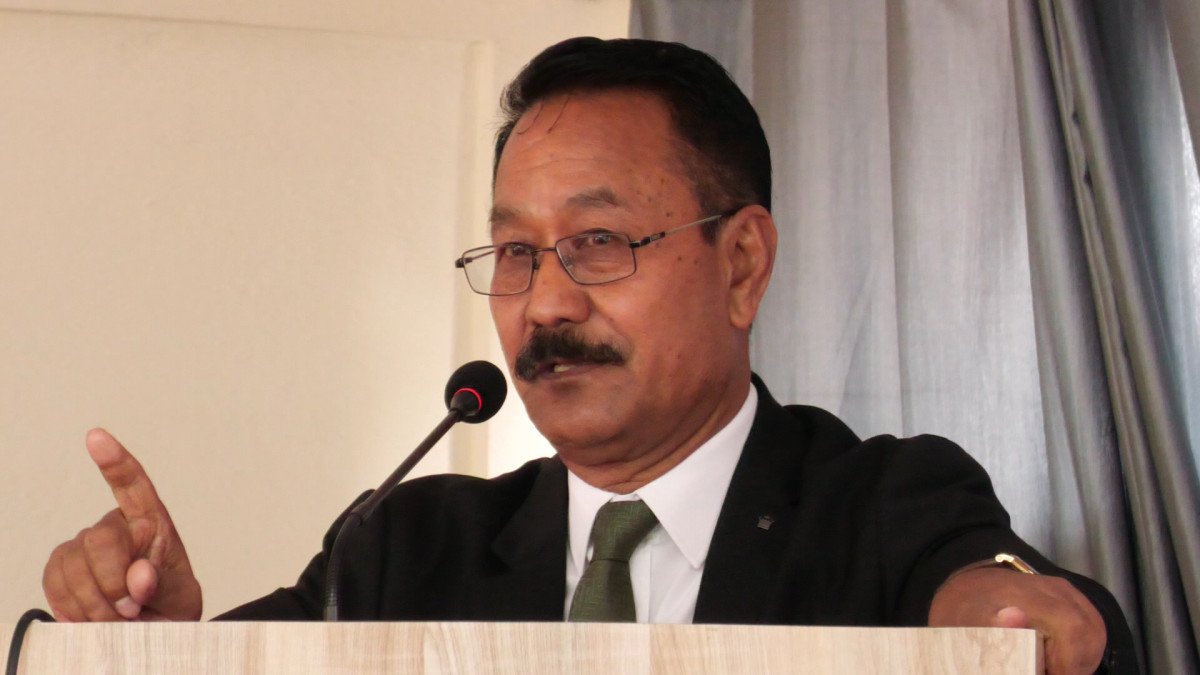
Speaking at the 'Himalayan Literature Festival and Writers Workshop' organized here today, he said that literature connects society and people through self-reflection and human emotions. "Why do people still write poetry in a world shaped by algorithms, data, and speed? Why do they keep telling stories? Because literature is the most powerful medium for human civilization to achieve self-awareness," he said.
Noting that this year's festival theme is relevant, Communications Minister Timilsina said that amidst rapid changes in global politics, economy, and technology, people are still searching for meaning, respect, identity, and hope.
"In the age of information technology, we are more connected than ever, but we understand each other less than ever. This is why literature becomes indispensable. Literature forces the fast-running world to stop for a while," he said.
Discussing the role of poetry, novels, and translation, he said that writers are not just creating texts but are preserving humanity. Sharing his experience of running a radio program focused on Nepali literature and music for nearly a decade, he said that literature and music can expand relationships to places unreachable by politics, geography, and social divisions.
Discussing the country's cultural diversity and linguistic heritage, he mentioned that more than 120 languages are spoken in Nepal, and each language has its own uniqueness. "Every language carries its own worldview. The stories, folklore, myths, and memories of every community have enriched our shared identity," he said.
Stating that even before the development of modern communication systems and social media, storytelling, folk songs, and oral traditions connected society, Communications Minister Timilsina said that literature has been continuously refined along with the development of human civilization.
Discussing his literary journey, he shared that he published a collection of Nepali ghazals in 2006. He stated that poetry can express truths that cannot be conveyed by statistics, policies, and formal speeches.
Discussing the Nepali literary tradition, he said that creators from Adikavi Bhanubhakta Acharya to Mahakavi Laxmi Prasad Devkota connected local realities with universal human thought. He said that the current generation of writers, journalists, translators, and creators are carrying forward this tradition by connecting it with new challenges.
Discussing the importance of various literary festivals and gatherings, he said that such platforms help ideas travel across borders and freely around the world. He expressed confidence that the gathering of international writers in Kathmandu will help bring Nepal's Himalayas, heritage, culture, languages, and stories to the global community.
Communications Minister Timilsina said that imagination, language, culture, and memory play as important a role in building a society as infrastructure, institutions, and the economy. "The government can build infrastructure. Institutions can create systems. The economy can provide prosperity, but writers, artists, poets, and storytellers build the inner life of the nation," he said.
He stated that literary festivals play an important role as a platform for meaningful dialogue, creative collaboration, and exchange of experiences among creators.
This specific news has been automatically translated by AI. As a result, there may be some inaccuracies or language errors.