Nepal-India Border Dispute Reignites After PM Balen Shah's Statement


Kathmandu. The Nepal-India border dispute has flared up again. The controversy has been fueled by the statement made by Prime Minister Balendra Shah (Balen) in response to questions from members of the House of Representatives.
The controversy is being interpreted and analyzed from various angles after Prime Minister Balen's statement in parliament that not only India but also Nepal has encroached on India's border, and that discussions are ongoing with England (Britain) to resolve the India-Nepal border dispute.
However, Prime Minister Balen had expressed that the border problem would be resolved through diplomatic dialogue. India has also been emphasizing diplomatic dialogue to resolve the problem.
In a regular press conference of the Indian Ministry of External Affairs, Ministry spokesperson Randhir Jaiswal clarified that the border dispute between Nepal and India would be resolved through established bilateral mechanisms. Claiming that about 98 percent of the border demarcation work between the two countries has been completed, he said that border demarcation issues remain to be resolved in some areas.

Various mechanisms have been formed to resolve the Nepal-India border dispute. Joint working groups have been formed under the Ministry of Home Affairs and the Ministry of Foreign Affairs. A joint working group on border management and a Nepal-India border working group have been formed for border management.
In addition, there are joint working groups, the Nepal-India Joint Commission, the Nepal-India Border Survey Committee, and other committees. Joint District Level Coordination Committees for Nepal-India border management also exist in various districts.
According to the Ministry of Foreign Affairs, the Nepal-India Border Management Joint Working Group has held 13 meetings, while the Nepal-India Border Working Group has held its seventh meeting. A joint secretary from the Ministry of Foreign Affairs said, 'There is no fixed schedule for the meetings of various committees and working groups formed between the two countries; meetings are held based on necessity. Meetings have been held accordingly so far, and they should be called regular meetings.'
The seventh meeting of the Nepal-India Border Working Group was held in India in July 2025. No meeting has been held since then. The sixth meeting was also held in India, while the fifth meeting was held in Nepal in 2018. After a long gap since the sixth meeting in 2019, the seventh meeting was held. Meetings were not being held due to COVID and the border dispute that arose between the two countries at that time. The Nepal-India Border Working Group, formed in 2014, held regular meetings until 2019.
According to information provided by the Ministry of Foreign Affairs, this working group is responsible for tasks such as constructing and maintaining border pillars. This working group is responsible for preparing a joint inventory of encroachments in the no-man's land and keeping the no-man's land clean.
It also conducts GPS surveys of border pillars and prepares data on citizens' cross-border property. This working group is also responsible for preparing a joint inventory of farmlands belonging to citizens of one country in the other country and finding ways to resolve such problems.
A Survey Official Committee and a Field Survey Team have also been formed to assist this working group, but it cannot make decisions regarding the highly disputed areas of Susta and Kalapani. Rather, it can provide necessary assistance and coordination to the secretary-level mechanism of the Ministry of Foreign Affairs.
The seventh meeting of the working group was held after seven years. According to the Ministry of Foreign Affairs, that meeting approved an updated modality for the inspection, maintenance, and protection of border pillars along the Nepal-India border. It also agreed to use modern technology to make border surveying and mapping more effective, swift, and result-oriented.
The Nepal-India Border Working Group is a joint mechanism formed by the governments of Nepal and India in 2014. It is responsible for the construction, restoration, maintenance of border pillars, and other technical tasks related to the border. The eighth meeting was also scheduled to be held in Kathmandu, but it has not been held yet, according to the Ministry of Foreign Affairs.
_153pogJQQz.jpg)
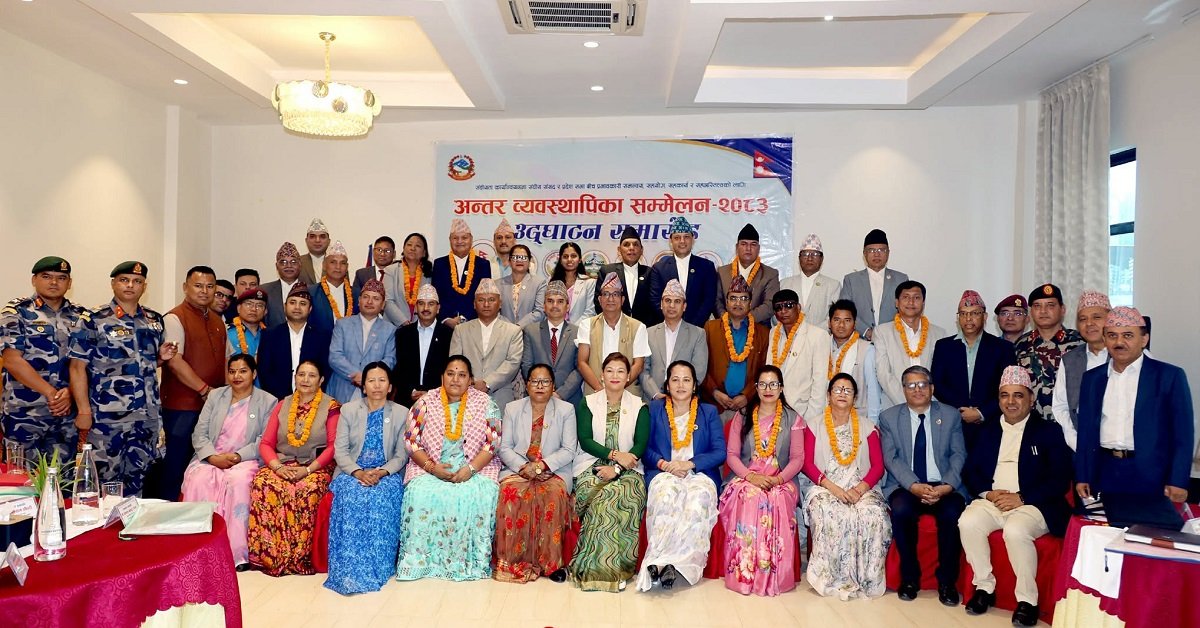
The 13th meeting of the Nepal-India Border Management Joint Working Group was held in Pokhara in March 2025. The meeting was co-chaired by Joint Secretary and Home Spokesperson Ramchandra Tiwari from Nepal and Joint Secretary Mihir Kumar from the Indian Ministry of Home Affairs, who looks after border-related matters. The meeting also discussed progress on the maintenance, protection, and management of border pillars.
According to a press release issued by the Indian Embassy in Nepal after the meeting, discussions were held on controlling cross-border criminal activities, strengthening integrated check posts, roads and rail networks, and other border infrastructure.
Both sides agreed to hold regular meetings of the Joint Working Group on Border Management, and the 14th meeting was to be held in India. India had invited the Nepali delegation to participate in the meeting at the same time, but that meeting has not been held yet.
On November 1, 1981, both countries formed the Nepal-India Joint Technical Border Committee. It completed 97 percent of the work towards resolving various border issues. However, it could not carry out border demarcation in areas with major disputes such as Susta and Lipulekh-Limpiyadhura-Kalapani.
Indian Ministry of External Affairs spokesperson Jaiswal stated that based on this, 98 percent of the border demarcation work has been completed. By mentioning that some demarcation remains, he hinted at areas like Susta, Lipulekh, Kalapani, and Limpiyadhura. The Ministry of Foreign Affairs has also issued a statement confirming that the demarcation of these areas has not been completed.
A Foreign Ministry official said, 'After 98 percent of the work was completed, the border demarcation work was stopped in 2007. The Nepal-India Joint Technical Border Committee was also disbanded after the border demarcation work stopped.' Except for a few places, there were no border disputes elsewhere.
When Indian Prime Minister Narendra Modi visited Nepal for the first time in 2014, the Nepal-India Border Working Group was formed after some border issues were raised. Regular meetings were held from 2014 to 2019. It progressed by resolving problems as they arose. It has been carrying out tasks such as constructing pillars, cleaning the no-man's land, and managing the farming activities of the people of both countries in the no-man's land.
Officials from Nepal and India state that apart from Susta and Limpiyadhura, Kalapani, and Lipulek, there is no other place where border demarcation remains. In various meetings, it has been agreed that apart from areas with major disputes, there is no remaining border demarcation or mapping work.
There are eight thousand five hundred fifty-three border pillars separating the international border between Nepal and India. Approximately two thousand of them have been found to be missing. Efforts are underway to find and replace them. About fifteen hundred border pillars are in a state of disrepair, and work is underway to repair them, according to the Ministry of Foreign Affairs.
This specific news has been automatically translated by AI. As a result, there may be some inaccuracies or language errors.
-1780761623189_v_HD5Pdcbrzy.webp)