US Forces Conduct Airstrikes on Iran, Citing Self-Defense Amid Escalating Tensions

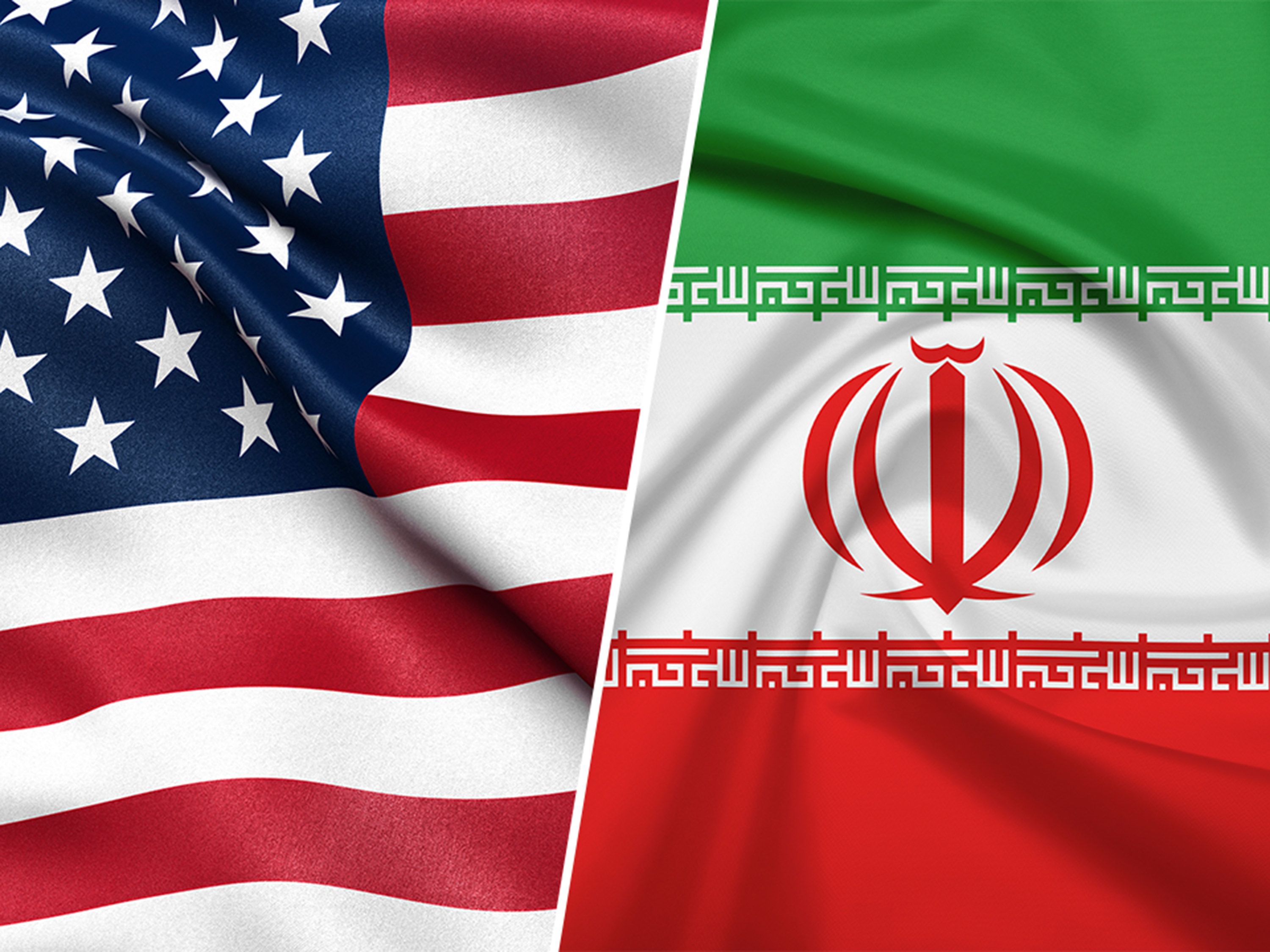
Washington D.C. US forces have launched airstrikes on Iran, citing 'self-defense'. Additionally, the US side claims to have intercepted ballistic missiles and drones launched by Iran targeting Gulf countries and ships.
This attack by US forces on Qeshm Island in the Strait of Hormuz is a response to Iran's attempted attacks across the Middle East, according to the US Central Command (CENTCOM). Iran, on the other hand, claims to have retaliated with missiles and drones targeting US military bases and helicopters in a 'regional country'.
According to CENTCOM, Tehran launched two missiles towards Kuwait and three towards Bahrain. Some of these fell en route, while others were destroyed in the air. Tensions have resurfaced between the two countries immediately after the ceasefire talks aimed at ending the months-long conflict failed.
The US military clarified that it targeted an Iranian military ground control center on Qeshm Island. The US also stated that three Iranian drones, targeted at 'civilian sailors' legally traveling through international waters, were shot down.
Meanwhile, the Iranian Islamic Revolutionary Guard Corps (IRGC) has warned that aggressive US forces will pay a heavy price if they disrupt the security of the Strait of Hormuz. The US stated that missiles targeting its military bases in Kuwait and Bahrain were immediately neutralized by US and Bahraini air defense forces.
Earlier, CENTCOM reported on April 13 that as part of Washington's naval blockade in the Strait of Hormuz, an empty oil tanker heading towards Iran was attacked and disabled. The US aircraft fired a Hellfire missile into the engine room of the vessel named 'M/T Lexi', flying the flag of Botswana, after its crew ignored repeated warnings.
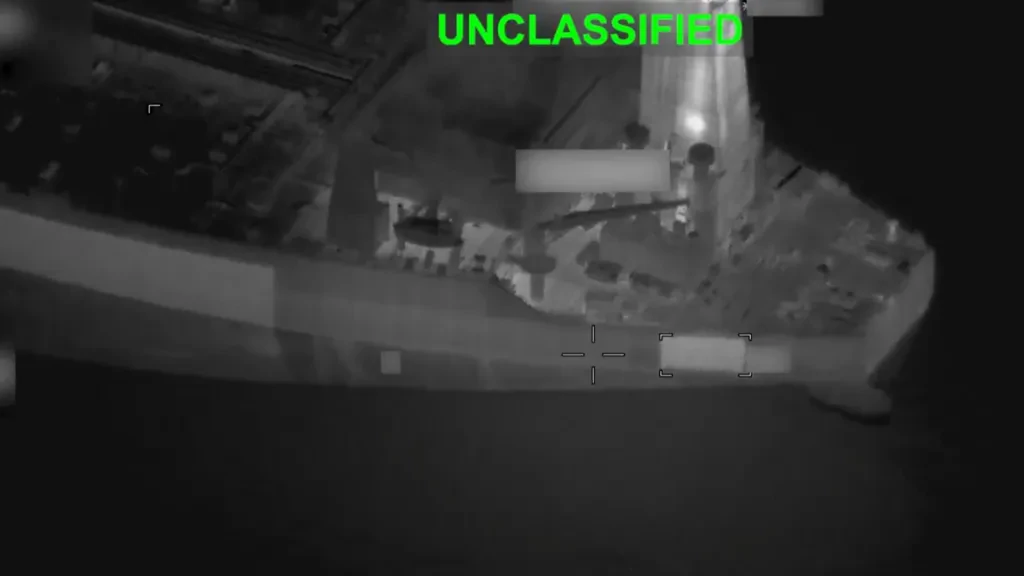
CENTCOM also released video footage of the attack on the tanker on Tuesday. The US military claims that since the implementation of this blockade, six commercial ships have been disabled and the routes of 122 others have been altered.
This military tension occurred shortly after US President Donald Trump urged his critics to 'shut up'. Trump had claimed that Iran genuinely wanted to make a deal, which would be in America's interest. However, US media reported that Trump demanded modifications to the terms of a potential peace deal after a meeting with senior aides regarding expanding the ceasefire framework.
These changes are said to be related to the Strait of Hormuz, removing highly enriched uranium from Iran, and resuming negotiations on Iran's nuclear program. Iran's Foreign Ministry spokesperson, Ismail Baghei, however, accused Washington of constantly changing its stance and putting forward contradictory demands.
Meanwhile, for the first time since the conflict began, US Secretary of State Marco Rubio publicly testified before Congress. He clarified that US negotiators have not offered any sanctions relief to Iran in exchange for reopening the Hormuz. According to Rubio, all discussions with Iran are conditional, meaning sanctions will not be lifted until improvements are made to the nuclear program that led to the sanctions.
When lawmakers questioned the US strategy to end the war in a congressional committee, Rubio angrily claimed, 'This war is over.'
This specific news has been automatically translated by AI. As a result, there may be some inaccuracies or language errors.