House of Representatives Rules Implemented, Sparks Opposition


Kathmandu. The 'House of Representatives Rules 2083' has come into effect from Monday. The rules, passed on Sunday amidst tension and encirclement of the well by opposition parties, have been implemented from Monday.
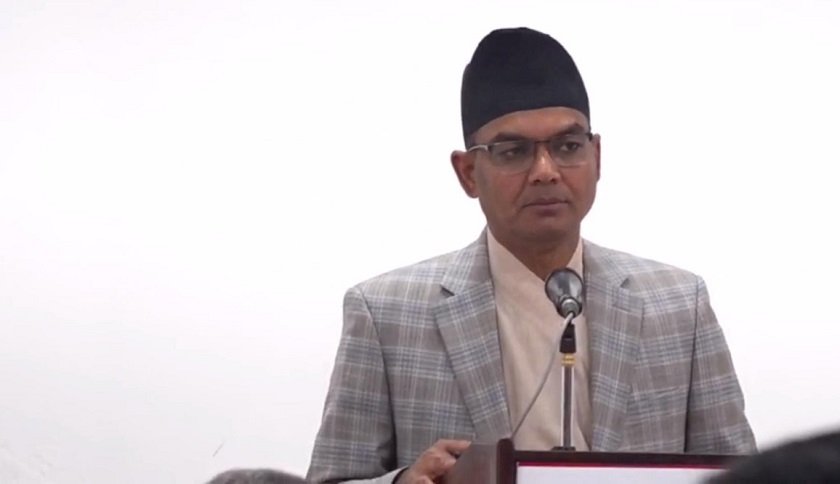
In Monday's House of Representatives meeting, Speaker Dol Prasad Aryal announced the formation of a probe committee in accordance with Rule 33, Sub-rule 4 of these rules. The rules have been given the status of a federal special law. The rules have added some new provisions to make parliamentary practice more dignified, technology-friendly, and inclusive.
Opposition parties Nepali Congress, CPN-UML, Nepal Communist Party, Labour Culture Party, and Rastriya Prajatantra Party are displeased with Speaker Aryal and the ruling party, Rastriya Swatantra Party, due to the provision in Rule 259 of the rules. Rule 259 states that the rules shall be recognized as a federal special law.
Sub-rule (1) of Rule 259 gives the rules a special place above other prevailing laws. 'Notwithstanding anything written in the prevailing laws, these rules shall apply as a special law in the capacity of a federal law concerning the House, committees, and members.' This means that in case of conflict between other laws and these rules regarding the functioning of parliament, committee operations, or the role of members of parliament, the rules will prevail. This grants supremacy to the rules in parliamentary autonomy and procedures. The opposition is protesting this very provision, stating that rules cannot supersede acts.
Sub-rule (2) of the same rule contains provisions for special privileges. This sub-rule links the rules to the special privileges of members of parliament. The sub-rule states, 'These rules shall be considered as the special privileges of the members of the House of Representatives.' This can be interpreted as the procedures and arrangements stipulated by the rules not only being legal rights of the members but also their 'parliamentary privileges.' According to the rules, any violation of these provisions will be considered a breach of the privileges of the parliament and its members. This provision appears to strengthen parliamentary supremacy by discouraging intervention from courts or other bodies in the internal procedures of the House.
Rule 259 is also connected through Rules 260 and 261. Rule 260 states that the final authority to interpret the rules lies with the Speaker, and that decision shall be final. Rule 261 designates the proceedings of the House and committees as 'internal proceedings' and prohibits questioning them in any court.
Based on these provisions, Rule 259 appears to grant this set of rules the legitimacy of a powerful 'special federal law,' rather than merely being rules for the operation of parliament.
In addition, the rules have introduced some changes compared to the past regarding parliamentary discipline, women's participation, and the use of technology. To establish the principle of inclusion at the leadership level, the rules mandate that 33 percent of the chairpersons of parliamentary committees under the House of Representatives must be women. Rule 176, Sub-rule (13) of the rules makes it mandatory to have at least one-third (33 percent) women when selecting chairpersons of thematic committees under the House of Representatives.
The rules also include a provision that if there is vandalism during parliamentary or committee meetings, the member who caused the vandalism will have to pay for the damages. This provision has been included in the rules to prevent unruly behavior and physical damage in the House. Rule 33, Sub-rules (1) and (4) stipulate that if a member engages in destructive acts or causes physical damage within the meeting hall, the Speaker can suspend such a member for up to 15 days. The rules also empower the Speaker to order the concerned member to compensate for the damages caused during vandalism.
For members expelled from the meeting hall by the Speaker, Rule 31, Sub-rule (3) states that they will not be allowed to participate in any meeting of the House or any committee for the subsequent three days.
Mobile phones must be kept strictly on silent inside the parliamentary meeting hall, and video recording or audio recording is completely prohibited. This is stipulated in Rule 20 'Ta' of the rules.
The rules also provide for the legalization of virtual meetings. With the objective of ensuring that parliamentary work does not stop even in abnormal situations such as natural disasters or pandemics, Rule 245 includes a provision for 'conducting meetings using technology.' The rule allows for virtual meetings to be held as per the Speaker's decision, provided at least one-fourth of the members of the House agree.
The rules clearly state that if a member is accused in a criminal case punishable by three years or more imprisonment, and is in custody for pre-trial detention or is absconding, their salary, service, and facilities will be suspended. This provision is made in Rule 247. This rule also includes a provision for automatic suspension of the member for the entire period of their imprisonment.
The rules establish an 'Ethics Monitoring Committee' chaired by the Speaker to monitor the conduct of members, thereby upholding parliamentary dignity. This provision, found in Rule 220, is stated to establish new standards of accountability and transparency.
This specific news has been automatically translated by AI. As a result, there may be some inaccuracies or language errors.



-pm-office_YZG9ToBodL.jpg)