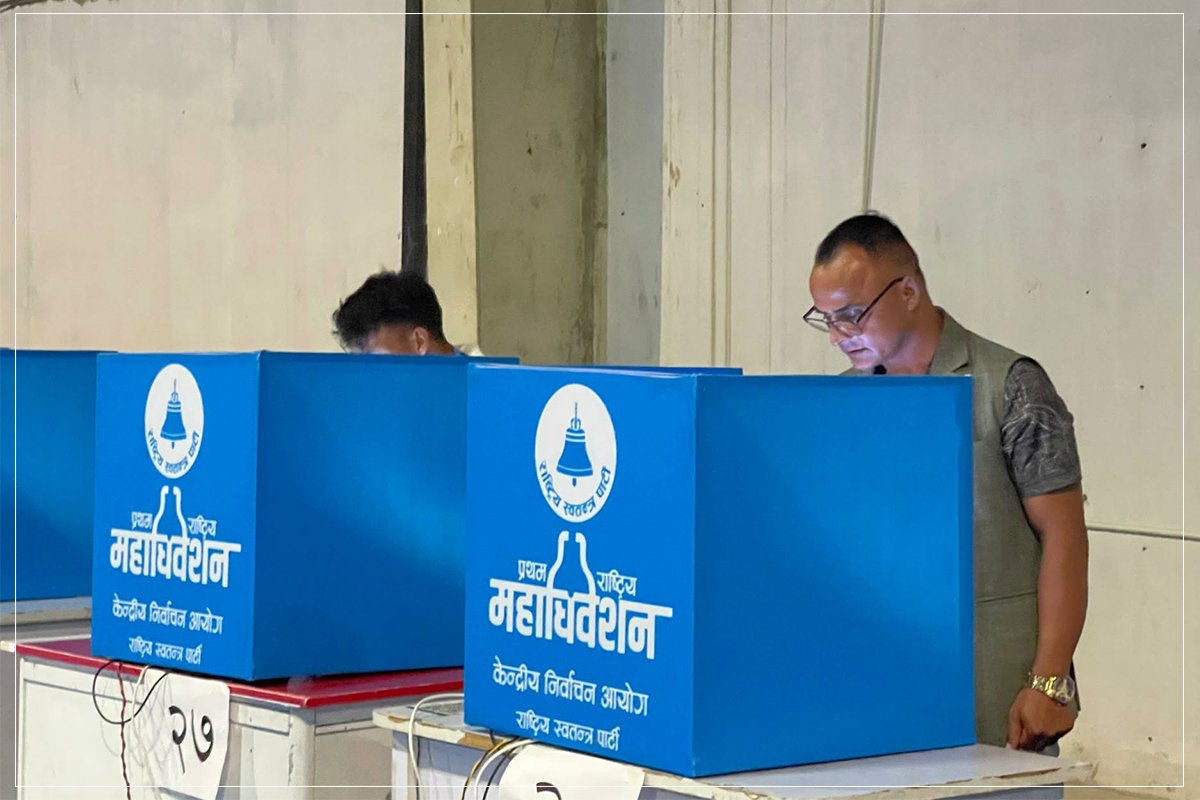
Rabi Lamichhane Returns to Nepal After India Visit, Proposes Joint Chemical Fertilizer Factory

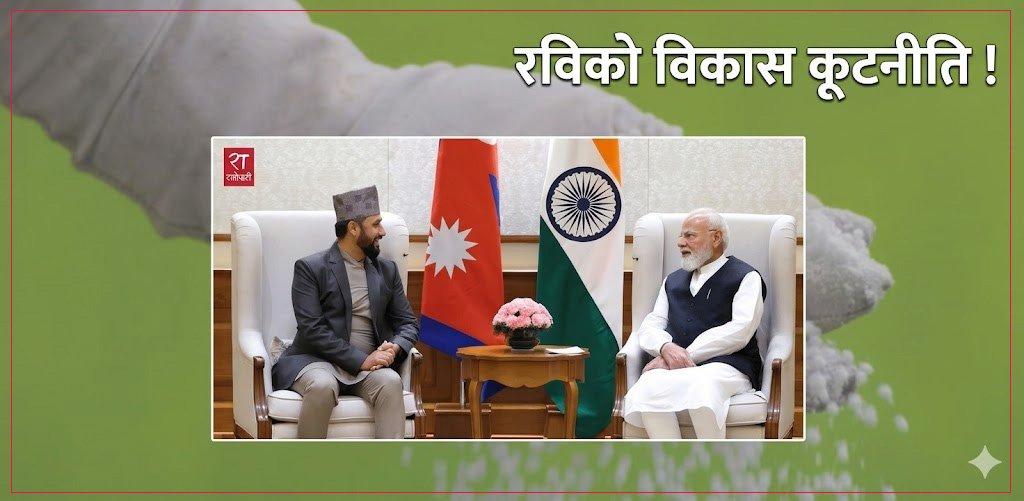
Kathmandu. The Chairman of the Rastriya Swatantra Party (RSP), Rabi Lamichhane, has returned to the country after completing a five-day visit to India. This is his first official visit to India as the chairman of the largest party after the formation of the government with the RSP's single majority. During this visit, he held meetings with Indian Prime Minister Narendra Modi and the President of the ruling Indian Janata Party, Nitin Naveen.
Earlier, through his article published in the Indian newspaper 'Hindustan Times', he proposed the establishment of a joint chemical fertilizer factory in the border area between Nepal and India. Lamichhane himself has termed this as development diplomacy. He stated that Nepal-India relations should be given a new direction based on this diplomacy. He mentioned that immediate cooperation between the two countries is necessary to solve the perennial severe shortage of chemical fertilizers faced by Nepali farmers in the long term.

He mentioned in the article that if such a factory can be opened in the border area, drawing inspiration from the industrial infrastructure of India's Gujarat state, it will contribute to the economies of both countries and play a decisive role in increasing agricultural productivity.
Fertilizer Factory: The First Step of Development Diplomacy
The issue of a fertilizer factory has been a long-standing discussion in Nepal. Every year, discussions intensify as the monsoon begins. These discussions also arise before the budget statement regarding the large subsidy allocated. However, technically and economically, this issue has remained impractical until now. Associate Professor at Kathmandu University, Biraj Singh Thapa, states that there are two methods for producing urea, the most commonly used chemical fertilizer. The first is by splitting water, and the second is by using natural gas.

According to the first method, water is split into hydrogen and oxygen through chemical reactions. This is mixed with nitrogen from the air to produce ammonia. When this is mixed with carbon dioxide and subjected to a chemical reaction, urea fertilizer is formed. This is called electrolysis technology. In the method using natural gas, methane (CH4) is broken down into carbon and hydrogen. The hydrogen produced is mixed with nitrogen to form ammonia. When this is mixed with carbon dioxide, urea fertilizer is formed.
Here, methane gas is primarily needed to produce urea. Urea is made by mixing gas obtained from industries that emit a lot of carbon dioxide, such as cement and steel industries. He states that with 55 cement industries currently in Nepal, this can also help reduce the impact of greenhouse gas emissions.
Dr. Thapa mentions that most countries in the world currently produce urea from natural gas. However, Paraguay has started producing fertilizer using the water-splitting method.
Which Method is Suitable for Nepal?
Associate Professor Thapa, who is also the head of the Green Hydrogen Lab, states that the water-splitting method (electrolysis method) is the most suitable and sustainable for establishing a chemical fertilizer factory in Nepal. In a conversation with Ratopati, he said that there is no alternative to producing urea fertilizer by using domestic electricity to produce hydrogen and ammonia to end the long-standing fertilizer crisis in Nepal. He mentions that currently, it costs around 30 units of electricity to produce one kilogram of hydrogen, which makes it easier to utilize the electricity that goes to waste during the monsoon season.
He states that although the method of producing hydrogen from natural gas is easy, it is not feasible for Nepal. Thapa says that obtaining natural gas in Nepal incurs significant costs, making it comparatively less cost-effective. He claims that as the world moves towards green energy, the future lies in green hydrogen.
The Need for India's Cooperation in Fertilizer Production
However, Nepal alone is in a limited position to establish a fertilizer factory. There are two reasons for this: first, lack of investment, and second, market access. Even if favorable conditions are created for opening a fertilizer factory in Nepal, it requires substantial investment. While it is possible to build a factory for 50 billion to 100 billion rupees technically, large-scale production is necessary to make it cost-effective. India can be a major investor in this regard.
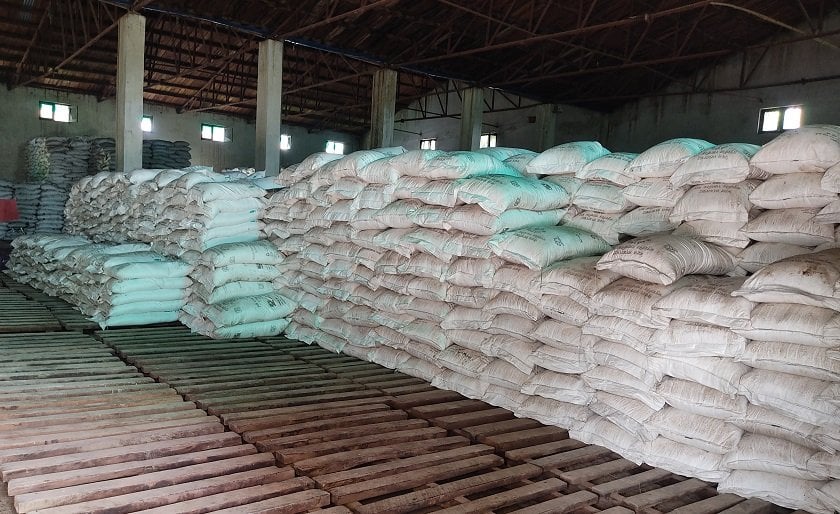
However, Thapa says there is no need to worry about the investment itself. He states that if favorable conditions are created, investors from around the world are ready to invest trillions of dollars. There are revolving funds for large projects in the global market. With the global pressure of climate change, funds investing in fossil fuels are being diverted towards green energy.
Thapa mentions that mandatory international standards like carbon penalty taxes will be implemented after 2028, which will further increase the potential. This means that industries emitting carbon will have to pay a penalty, and that money will be mandatorily invested in green energy infrastructure. Therefore, he states that investors are looking for green energy projects, and Nepal needs to create a suitable and legally secure investment framework to attract them.
More importantly, there is the market. According to the Ministry of Agriculture's estimate, Dr. Ramkrishna Shrestha, Joint Secretary and Chief of the Agricultural Development Division, states that to operate a fertilizer factory in Nepal profitably, at least 3 million metric tons of fertilizer must be produced annually. However, Nepal's annual requirement for fertilizer is only 1.2 to 1.4 million metric tons. Therefore, a cost-effective industry must be export-oriented.
India itself is a net importer of chemical fertilizers. Therefore, a supply of cheap and easily accessible fertilizer is also necessary for India. However, to provide market access for fertilizer produced in Nepal, diplomatic relations must be strong. Although India has sufficient electricity supply, electricity produced from projects developed by foreign investors and contractors other than India is not permitted in India. He states that without cordial diplomatic relations with India, the market for such produced fertilizer will find it difficult to gain easy access, making cordial relations with India essential.
An Unfulfilled Dream for Four Decades
The discussion about opening a fertilizer factory in Nepal is 40 years old. The Japan International Cooperation Agency (JICA) conducted the first study in 2041 BS (1984 AD). Since then, although this issue has been included in the policies, programs, and budgets of every government, it has not been implemented.
The task force formed under the coordination of the then Finance Minister, Bishnu Poudel, submitted a report estimating the cost of a natural gas-based factory at approximately 103 billion rupees. Last year in Jestha (May/June), the Investment Board meeting decided to form a task force to review the report of Germany's 'DIAG Industrie GmbH'. However, the political course changed after the political upheavals in Bhadra (August/September) and the 'Gen Z movement'. The issue has been discussed again after the new government came into power.
Producing DAP is More Difficult Than Urea
The management of raw materials and security sensitivity required for fertilizer production is another complex issue. According to the ministry, raw materials like ammonia required for urea production and rock phosphate and sulfuric acid required for DAP are not fully available in Nepal. Although limestone is found domestically in some quantities, other chemical elements have to be imported, which can always put the raw material supply chain at risk. Furthermore, the production, storage, and transportation of ammonia gas are extremely sensitive and risky tasks, requiring a high-level security mechanism and skilled technical manpower. The ministry understands that even a small lapse in security can lead to a major accident.
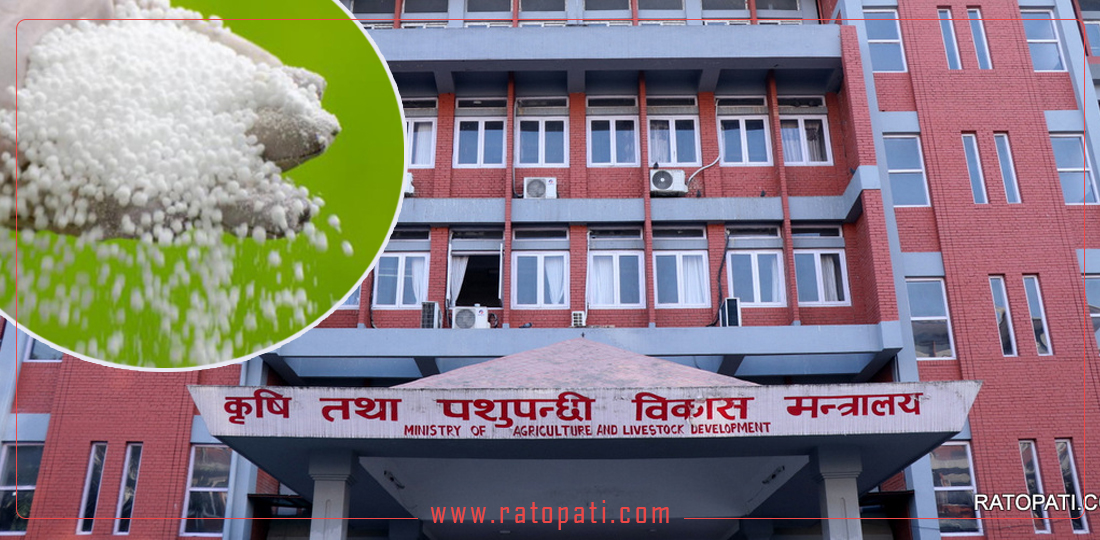
According to a high-ranking official from the ministry, the government is moving forward with various 'investment modalities' and technical studies through the Investment Board for the establishment of a chemical fertilizer factory in Nepal. The official from the ministry states that if land acquisition, environmental impact assessment, and policy clarity attractive to the private sector can be achieved, this project is not impossible in Nepal.
In this situation, if Lamichhane's development diplomacy works, stakeholders say it is possible to transform Nepal from an import-dependent country to a net exporting country within a few years.
This specific news has been automatically translated by AI. As a result, there may be some inaccuracies or language errors.

_sVPoPmyQBl.jpg)
_QZuk60cL2q.jpg)
_GOnEFa1Iut.jpg)