Deepak Gyawali Discusses Decline of Leftist Movement in Nepal


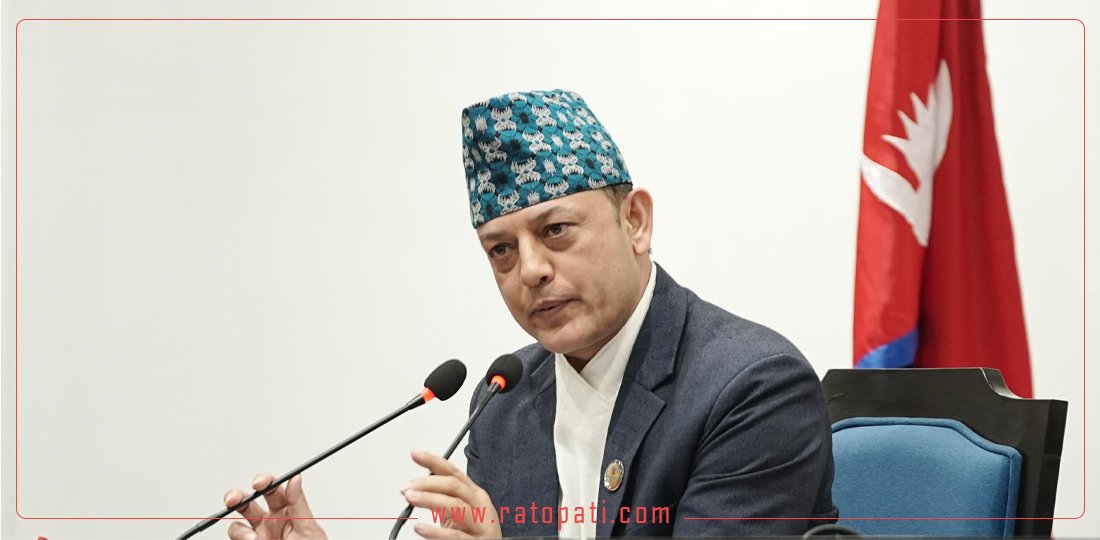
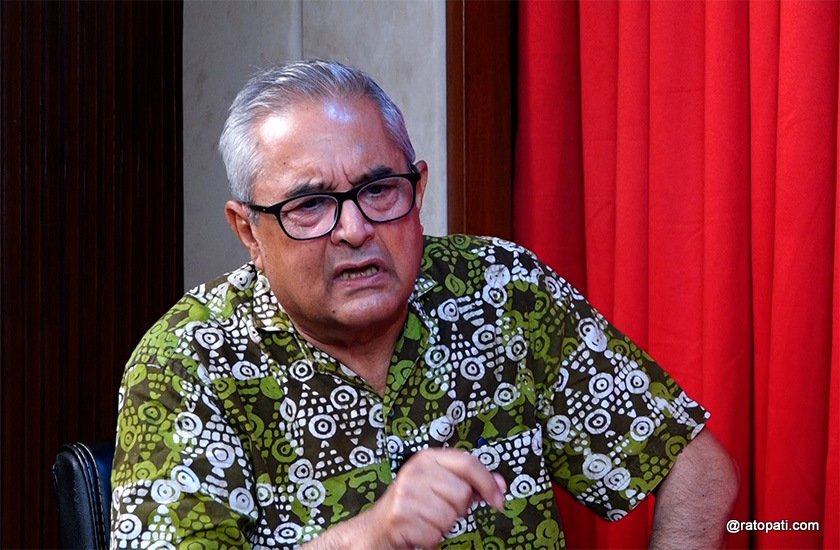
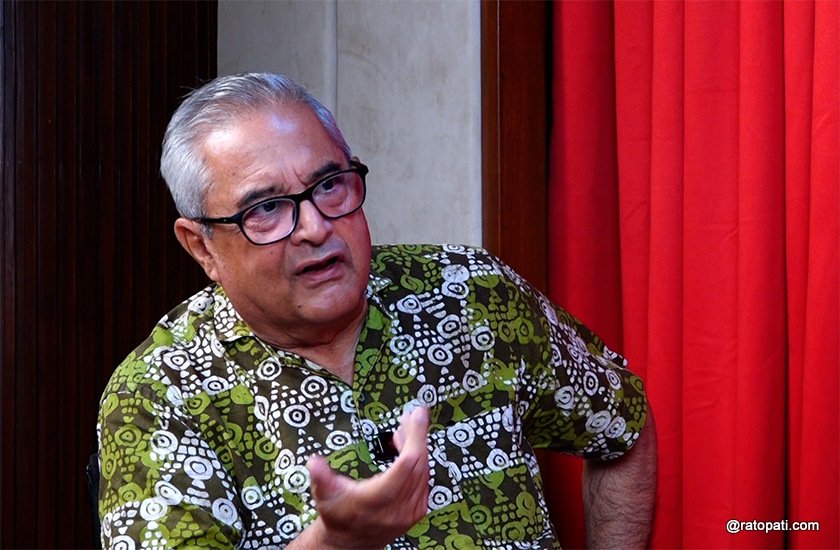
Kathmandu. Deepak Gyawali is proficient in multifaceted fields. Former Water Resources Minister Gyawali is an expert in water resources. Gyawali is a personality who can be identified by any word such as scholar, expert, academician, or analyst. He advocates for the necessity of monarchy in Nepal, but he is not a royalist. Although he studied in Russia, once the world's largest communist country, for a long time, he is not a communist or leftist. However, Gyawali has deeply studied the philosophies of global leftist leaders and communist leaders like Marx, whom they consider their guru.
Where, why, and how did Nepal's leftist movement falter? What should Nepal's leftist movement do to organize itself? How will the achievements brought by the leftist movement in terms of inclusivity, participation, and societal progress move forward? A conversation with scholar Gyawali on Rato Pati's 'Warpar' has been conducted on these topics. The edited excerpt of the interview is presented here (detailed video can be watched and listened to):
After this election, have only the leftists lost, or is it a situation where everyone else has lost because Rastriya Swatantra Party (RSP) has won?
Everyone is currently feeling the heat. Looking at the current situation, even the Nepali Congress has to be called leftist. Has Rastriya Prajatantra Party (RPP) also become leftist after winning the election with KP Oli's blessings? The main thing is that active members of the traditionally organized leftist parties themselves did not vote for their own party in the election but voted for 'Ghanti' (RSP). This result has come precisely because of the alienated votes from the leftist parties.
How did Nepal's leftists reach this state, where did they falter?
The first generation of leftist leaders in Nepal, such as Manmohan Adhikari, Nirmal Lama, and Tulsi Lal Amatya, were honest. Some of them came from the proletariat, while others, even if they came from landlord families, were loyal to their ideology. But the later generation of leftists fell into imitation. They did not come from the proletariat; rather, they came from the lower middle class. They only had envy towards the upper class. Leaders like Ho Chi Minh lived such simple lives, but our leaders, as soon as they reached power, started enjoying palaces and helicopters. Although they chanted the name of principles, they proved to be fake in practice.
Which Marxist principle did they implement while in power?
Initially, during Manmohan Adhikari's tenure, they introduced a good program called 'Build Your Own Village'. But after that, they did not implement any concrete principles. They completely fell into marketism.
In a poor country like Nepal, education, health, and electricity are basic human rights; these are not things only the wealthy should have access to. But our leftists, by following businessmen and moneylenders, commercialized the education and health sectors.
Has the relevance of both types of leftists in Nepal, armed leftist and parliamentary leftist, ended?
Prachanda sometimes says he will return to the jungle. If he returns to the jungle, I am ready to lay out a red carpet for his welcome. Regarding the armed conflict they waged, former Indian Army Director Ashok Mehta himself has written - 'For 8 out of 10 years of the People's War, you stayed in Delhi.' They gave big dreams to the people but betrayed them in practice. It took the Nepali people 20 years to understand this dishonesty. Now, the relevance of leftists who came through both parliamentary and armed paths is gradually diminishing.
Historically, the leftist movement has contributed to social transformation. If they disappear, what will society lose?
If they disappear, there is a danger of only right-wing marketism dominating society. In a country plagued by poverty, a force that raises the voice of social justice is always needed. Just as communists were wiped out in India's West Bengal and Kerala after becoming corrupt, the same is happening in Nepal. If there is no credible force to raise the issue of social justice, great instability and rebellion can arise in society.
While you were studying at a university in Russia, the influence and ideology of the leftist movement were strong worldwide. What could be the reason for the weakening of that movement worldwide today?
I was in Russia in the 1970s. Although it appeared strong from the outside, the Soviet Union was rotten from within. Corruption and black marketing were rampant. A new communist elite class called 'Nomenklatura' was born there. They had separate shops and facilities, but ordinary people had to stand in line for hours to buy goods. Banned books were sold on the black market right in front of the KGB headquarters. That system collapsed precisely because of dishonesty and corruption towards principles.
Has a similar neo-feudal class been born within the parties in Nepal as well?
A new class that exploits the state machinery has been born in Nepal too. During the Panchayat era, only 8.5 percent of revenue was spent on administrative expenses. Now, 70 to 80 percent of the funds are consumed by administrative expenses (salaries, allowances, vehicles, etc.). Development expenditure is extremely low. They are exploiting the state treasury to sustain their cadres.
According to economist Karl Polanyi's theory, should the market control society or should society control the market? Where did the communists falter on this issue?
Capitalism makes society a slave to the market. In America, billionaires buy politicians, but in China, the state keeps billionaires under control. Our leftists, instead of controlling the market, got caught in the clutches of comprador capitalism themselves. They sold off industries and factories and became content with sending the country's young laborers abroad for remittances.
What is the existence of 'class' as Karl Marx described in today's Nepali society?
Where is the real working class or peasant class in Nepal today? Those who call themselves labor leaders have already sold off factories. Land is lying fallow, and farmers are not found in the villages.
Most of the youth have gone to the Gulf countries and become 'labor slaves'. When the class structure of society itself has been disrupted, raising the slogan of class struggle is merely a pretense.
How do you view the Bhadra (September) Genji movement?
This movement is a result of the frustration born from the corruption and failure of traditional parties and those calling themselves leftist. Young people, seeing no future for themselves in the country, have taken to the streets in search of alternatives.
Will new parties like RSP bring about some change in the country?
It is not possible to say for sure at this moment; it remains to be seen. The tendency to rush to power and ministerial positions as soon as possible, despite being in politics for a short time, has been observed in them too. Their clear policy for national development and their blueprint for social justice are not yet clear. If they repeat the same mistakes as the old parties, the public will soon reject them as alternatives as well.
When the leftists were strong, the constitution was made, and provinces were formed. Now that they are weak, what will happen to these structures?
This constitution was formed because other parties followed the Maoists' agenda. As for the provinces - have you seen any of the seven provinces do even one exemplary job so far? The presence of provincial governments was nowhere to be seen during the earthquake or the COVID pandemic. This is merely a 'white elephant' created to exploit state funds by making their cadres ministers and MPs. It has done nothing but add to the country's financial burden.
What do you find to be the role of constitutional bodies like the Human Rights Commission?
Such commissions are mostly ineffective. They have not been able to take concrete action in major corruption and human rights violation cases. They have only become centers for parties to recruit their own people through power-sharing. The work of transitional justice has not yet been concluded even after years have passed.
How likely do you see the return of monarchy?
I am not a monarchist, I am a democrat. But I am a royalist. In a football game, it's not enough to have only players; a 'referee' is needed to control the game. In Nepal, there is a felt need for a non-political head of state, above the parties, like in Britain, when disputes or crises arise among political parties. The king has not fled anywhere; he is right here. Due to the current chaos and lootocracy of the parties, the relevance and necessity of the monarchy seem to have increased in the country.
Video/Photo: Manoj Khadka/Rato Pati
This specific news has been automatically translated by AI. As a result, there may be some inaccuracies or language errors.