Dr. Jagdish Kumar Chhetri Returns to Nepal to Implement Geriatric Care Expertise

Kathmandu. It is human nature to want to live in advanced and well-equipped places. But for some people, it is not convenience and advanced technology that always attracts them, but the fragrance of the soil and culture in which they were born. Geriatrician (elderly health specialist) Dr. Jagdish Kumar Chhetri was also not always attracted by the advanced systems and facilities of developed countries; the urge to implement the knowledge and skills he learned in his own country brought him back to Nepal.
Currently, Dr. Chhetri is the Director of the Nepal Geriatrics Center under Manmohan Memorial Medical College and Teaching Hospital. He is the one who conceived the idea of 'Nepal Geriatrics Center', established for the first time in Nepal with the objective of providing complete treatment to the elderly.
Dr. Chhetri, who studied from MBBS to PhD in China, and completed fellowships, worked, and taught in various hospitals in France and America, has a very inspiring educational background and work experience. He is the only Nepali to have a doctorate in Geriatrics, the health of the elderly. Having spent 25 years abroad for study and work, Dr. Chhetri wanted to bring the knowledge he learned there to Nepal. As a result, after a long struggle, he succeeded in establishing the Nepal Geriatrics Center.
In the beginning of the interview on Rato Pati Podcast 'Talk Forward', he was asked - you spent 25 years abroad and returned to your country. While many experts are migrating abroad, why did you return?
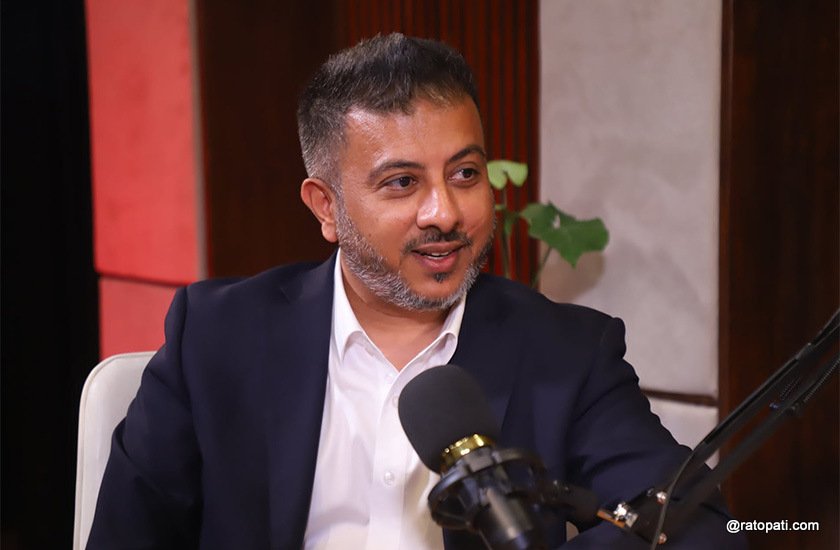
After pondering this question for a while, he replied, 'Many people ask me this question. Actually, my specialty is elderly health, or geriatrics. I went to China at the age of 18 and spent about 25 years in various universities and hospitals abroad. I was given a 'Golden Visa' in China and was working as Vice HOD and Associate Professor at Peking University. But one thing always played in my mind - when will this field I studied be useful for the parents and elderly citizens of my own country?'
He continued, 'Serving foreigners while living abroad is one thing, but seeing the parents of my own land suffering due to lack of health services was disheartening. In 2017, I returned from France and tried to do something in Nepal, but due to government procedures and some technical reasons, the first attempt was not successful. Then I went back to China for my PhD. Finally, during the time of COVID, I returned to Nepal completely. My objective is to start a new and systematic approach in elderly healthcare.'
Although many Nepalis have heard of 'Pediatrics', the word 'Geriatrics' itself might sound new to them. This is because specialized health institutions for the elderly were not available in the country before.
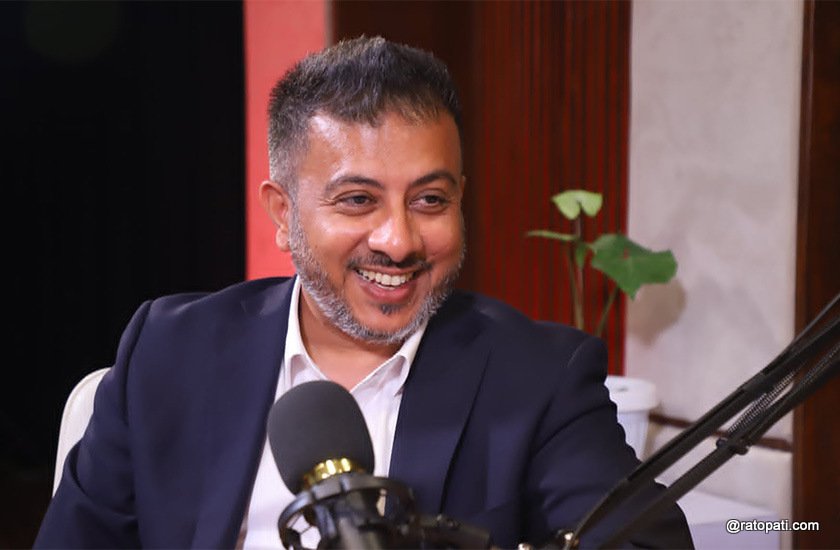
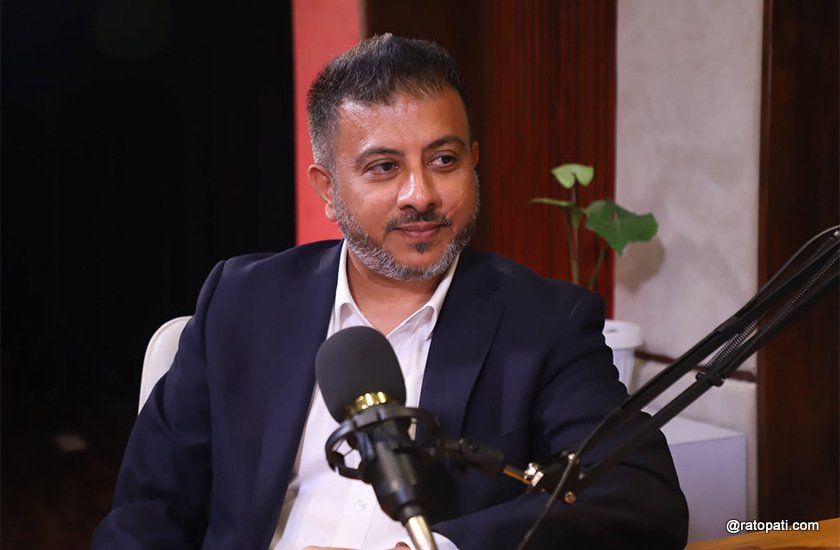
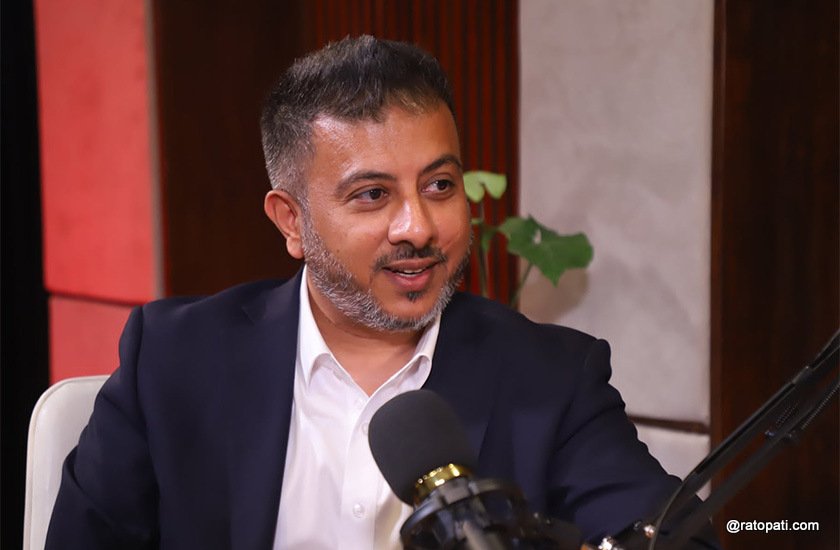
Dr. Chhetri, a Geriatrician, was interviewed about the health problems of the elderly, the story of establishing the Geriatrics Center, Nepal's health system and the problems faced by the general public, as well as the hustle and balance of medical life. Here is the edited part of the interview (detailed video can be watched and listened to):
What is the difference between how a general physician treats a patient and how a specialist in elderly health like you treats a patient?
This is a very important question. Our current medical system is primarily designed for the young and adult population. In MBBS, we learn to treat one disease at a time. But this model does not work for the elderly. When an elderly person comes to the hospital, they usually have at least four or five intertwined health problems. They don't just have diabetes and blood pressure; they also have memory loss (dementia), muscle weakness, nutritional deficiencies, and mental stress.
The medication given to treat one of their diseases might be affecting another organ. We call this the 'polypharmacy' problem. Geriatrics views the patient not just as a disease, but as a complete 'human being'. Their eyes, ears, mobility, balance, and brain function are all evaluated in an integrated manner before treatment.
Under your leadership, the 'Nepal Geriatrics Center' has been established and started providing services at Manmohan Memorial Medical College and Teaching Hospital. What treatment process is followed when a patient comes here?
At our center, we prioritize 'Comprehensive Geriatric Assessment'. After the patient arrives, we conduct not only their medical history but also a detailed physical and mental examination. We have brought AI-based 'Eye Scan' technology to Nepal for the first time. This technology predicts future health risks based solely on the patient's eye scan.
In addition, we also check the patient's muscle strength, risk of falls, and nutritional status. Our team of geriatricians, nurses, nutritionists, and geriatric pharmacists work together to create an integrated 'care plan' for the patient. We help reduce unnecessary medications that elderly patients are taking, as too many medications can themselves become a disease.
The hospital has a very attractive slogan - 'Strong at 60, Active at 80, and Independent at 100'. Can you explain this a bit?
The average life expectancy in Nepal is currently 72 years, but in Kathmandu and other big cities, many people live to be 80-85 years old. Our philosophy is to strengthen our health at the age of 60 through timely check-ups. By the age of 80, let's live actively, not confined to a corner of the house. By the age of 100, let's be independent, not needing assistance for basic bodily functions. This is possible only if we do not ignore weaknesses. If we address even minor weaknesses, old age can be very pleasant. But currently, our society views old age as 'worthless', which we need to change.
Due to foreign employment, elderly people are isolated in homes across Nepal. Children are abroad, only elderly parents are at home. How does this 'loneliness' affect the mental and physical health of the elderly?
This is a very serious problem. We have a tradition of living in joint families. Parents who were surrounded by grandchildren and children until yesterday suddenly find themselves alone at home, leading to mental and emotional problems. Loneliness not only increases depression but also the risk of dementia. Abroad, there are concepts like 'Circle of Friends', where elderly people meet, chat, and stay active in groups. In Nepal too, we need to introduce concepts like 'Senior Citizen University' for the elderly.
Even after retirement, they should have the opportunity to learn new things, make friends, and share their experiences. Active centers like these are needed at the ward level.
Speaking of policy, there used to be a separate Ministry for the Elderly, but after the new government came, this name was removed and changed to something else. How do you view this?
I feel that by merging the Ministry for the Elderly with other ministries, their distinct identity and sense of belonging have been lost somewhere. Currently, the ministry includes women, children, youth, and gender and sexual minorities, but the term 'elderly' seems to have been removed. In Nepal, about 12 percent of the population is above 60 years of age. The state should have shown more guardianship towards such a large and respected population.
How can the allowance provided by the state to the elderly be linked to their health improvement?
Currently, the state provides grants of up to one lakh or one and a half lakh rupees to elderly patients with serious illnesses. If we encourage them to get comprehensive health check-ups once or twice a year with their monthly allowance of 4,000 rupees, diseases can be detected before they reach a critical stage. Detecting diseases early means saving hospital costs and also saving the state's budget.
Investing in preventive healthcare is the most beneficial thing for the state. If all elderly people become bedridden in the future, the state cannot bear the burden. Therefore, making them self-reliant and active is also wise from an economic perspective.
What is your opinion on the accessibility of the general public to Nepal's current health system and the overcrowding in government hospitals? How can quality healthcare be made accessible to all?
There is an unbearable crowd in government hospitals now. Standing in line for hours for an elderly person is a great hardship in itself. In my opinion, the solution lies in strengthening 'Community Health Centers'. Community health centers are very strong in China, where patients receive initial treatment. Only then are they referred to larger hospitals if necessary. In Nepal too, health posts at the ward level need to be modernized.
Another point is that the Social Security Fund should be systematically linked with health insurance for the elderly. The situation where people cannot get treatment due to lack of money must end.
What are your future dreams and plans for elderly health?
My dream is very big. I want to establish a 'World Class Geriatric Institute' in Nepal, where all facilities for treatment, study, research, and rehabilitation of the elderly are available under one roof. I am seeking cooperation from the government not for money, but for a conducive working environment and, if possible, land. In the next 20 years, Nepal is becoming an 'aging society'. If we do not prepare now, we will not be able to cope with the future health challenges.
I want specialized hospitals for the elderly to be built in every province. Skilled manpower should be produced to work in this field.
Do you have any special message for the elderly, their families, and the Ministry of Health?
My message to the respected elderly citizens is - take control of your health yourself, be active, and get checked as soon as any problem arises. My request to family members is - pay attention to your parents' health in time, not just when they fall ill, and involve them in all household activities. And my suggestion to the Ministry of Health is - keeping in mind the future 'aging crisis', policy and infrastructure preparation should start now. Let's build the dam before the flood comes, so that no one has to regret it later.
Video/Photos: Manoj Khadka, Ayush Dhami/Rato Pati
This specific news has been automatically translated by AI. As a result, there may be some inaccuracies or language errors.