Pokhara Bus Park Land Encroachment and Mismanagement

Pokhara. In 2031 BS, then Zonal Chief Shankarraj Pathak envisioned an international-level bus park at Prithvi Chowk in Pokhara. He not only envisioned it but also initiated the land acquisition process.
According to the notice published in the Nepal Gazette on Falgun 18, 2032 BS, the government had acquired 205 ropanis of land for the bus park. Since then, the construction of the Pokhara Bus Park has been a priority in the manifestos of all subsequent elections. Even though those who were not even born at the time of land acquisition have become MPs, ministers, and mayors, the Pokhara Bus Park could not be built.
Currently, the condition of the bus park is dire. The Pokhara Valley Town Development Committee, the owner of the bus park land, formed dozens of study committees, and the committees submitted reports. Decisions to build the bus park were made many times. Sometimes, consultants were even appointed. However, the bus park has not been built yet.

- Where is the bus park land?
The report of the subcommittee formed in 2070 BS under the convenership of Bajirman Shrestha, a member of the Valley Town Development Committee, has prepared an updated detail about the bus park land. According to that report, out of the acquired 205 ropanis of land, only about 81 ropanis are left. It was concluded that about 68 ropanis of land along the Seti River bank have become unusable due to cracks and slopes.
Similarly, instead of providing compensation to the landowners affected by the acquisition and those displaced from the airport at that time, 40 ropanis of land were plotted and distributed. About 21 ropanis of land have been lost due to the standards of the Prithvi Highway and internal roads. The Town Development Committee itself decided in 2034 BS to rent out 11 annas of land within the bus park for 10 years to Kalyani Bhari's Pancharatna Petrol Pump. Later, that land was transferred by resignation.

- How was the land fragmented?
The encroachment of the bus park land seems to have started in 2033 BS. Then Zonal Chief Ramchandra Bahadur Singh decided on Kartik 29, 2033 BS, to provide alternative plots of land within the bus park instead of cash compensation to those whose land was acquired. From that time, the fragmentation of the bus park land began.
After that, in 2044 BS, when Surya Bahadur KC was the Chief, even more land was encroached upon. He arbitrarily distributed land to his cronies and influential people who were not even on the official list of 2033 BS. Initially, if a family missed out, they were given up to 5 plots, while affluent individuals with concrete houses also occupied land by claiming to be landless.
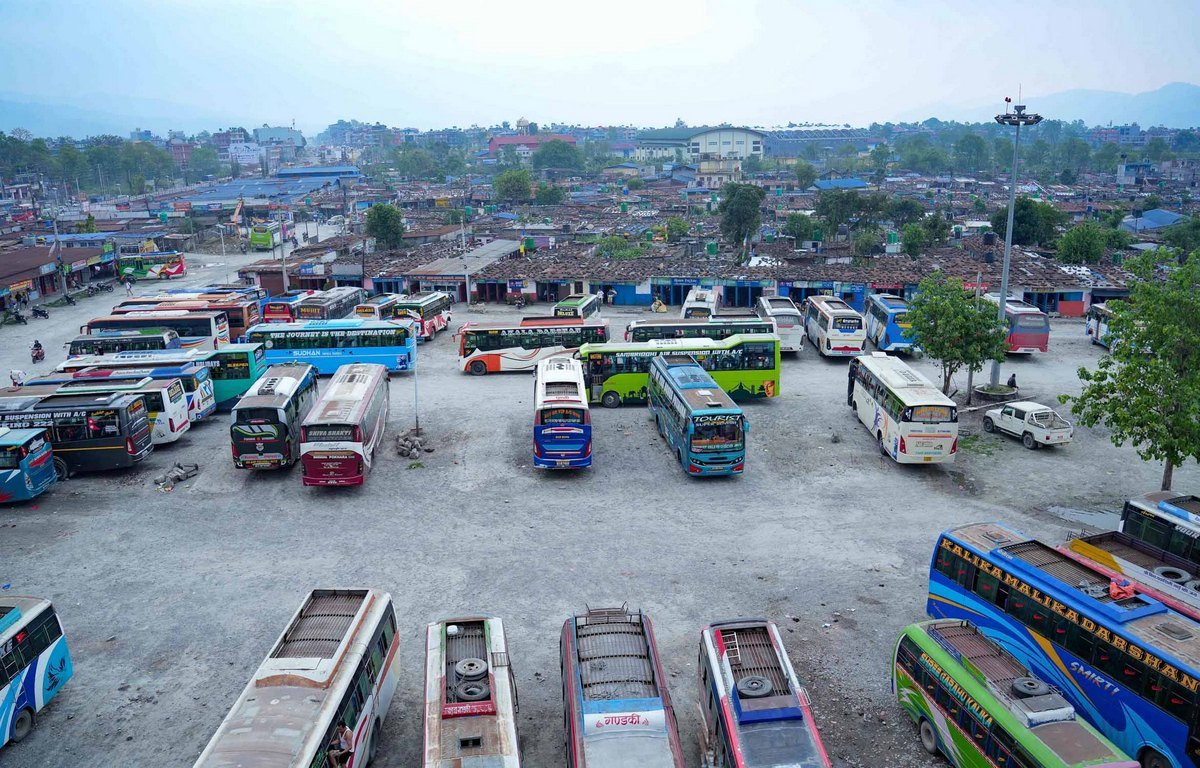
Most of the land distributed by the committee with the condition that it could not be sold for 15 years began to be bought and sold for millions after 2060 BS. From Baishakh to Ashwin, 2044 BS, land was arbitrarily distributed to those not on the official record in the name of providing alternative plots to those displaced from the airport.
There was a condition that the land distributed in 2044 BS could not be sold for 15 years, but affluent businessmen and those with concrete houses in Pokhara entered. Some influential people grabbed up to 5 plots by showing them as separate for families in the same household. When the 15-year period ended in 2060 BS, the land began to be bought and sold rapidly. It is still discussed that a single plot was traded for millions.
‘The way the Pokhara Bus Park land was manipulated shows a bad intention from the beginning. Under the pretext of insufficient budget to build the bus park, a scheme was devised to sell valuable land at throwaway prices and provide alternative plots,’ said Prakash Mohan Khanal, former chairman of the Town Development Committee. ‘The cunning and influential have benefited more than the actual landless. The government should now return this land without delay and build the bus park.’

According to the study, about 60 ropanis of the acquired land fell towards the Seti River bank and became unusable due to landslides and cracks. Subsequently, 40 ropanis of land were distributed to the landowners instead of providing compensation. About 3 ropanis of land were given to hotel businessmen and petrol pumps, while 21 ropanis were lost due to highway and internal road standards.
In 2064 BS, when Bishwaprakash Lamichhane was the chairman, a committee was formed under his leadership to investigate the land. The report submitted by the committee led by Krishna Bahadur Gurung identified individuals who sold land in violation of the 15-year condition. The report recommended canceling the illegal recommendations and resignations for such lands, but no action was taken. Before that, when Ashok Palikhe was the chairman, preparations were made to build the bus park on 81 ropanis instead of 205 ropanis. Six companies were shortlisted with an estimated cost of 44 crore. Due to conflicting interests within the Town Development Committee, a complaint was filed with the Commission for Investigation of Abuse of Authority (CIAA) alleging that the contract was being awarded to those with lower scores. Following the CIAA's letter, the tender was canceled.
During Palikhe's tenure, the process of providing alternative plots or land to hotel businessmen in the bus park area was intensified. It was decided to give 1 ropani of land for every 4 ropanis of public land in the bus park map to hotel businessmen and landowners.
However, Palikhe claims that the decisions he made did not obstruct the construction of the bus park. ‘Some decisions were made in the past regarding alternative plots or land distribution, but after I took office, no new alternative plot distribution has occurred. I am in favor of building the bus park and managing the necessary land for it,’ he said. ‘The construction of the bus park is not stopped due to alternative plots. It is a process.’
He claimed that his intentions were not problematic as he did not sell land. Initially, when he was chairman, the decision to sell plots was made. Subsequently, when Chhetra Bahadur KC and Bishnu Prasad Bastola were chairmen, records show that 42 plots were sold at Rs 3 lakh each and 32 plots at Rs 1.80 lakh each.
Alternative plots within the bus park were given to those who fell under the road standards of the Prithvi Highway and some old landowners. In 2070 BS, when Prakash Mohan Khanal was chairman, another committee was formed under the convenership of Bajirman Shrestha. The committee recommended building the bus park by providing various options. Based on this, the Regional Administration Office directed the clearing of the bus park area on Mangsir 3, 2071 BS.
On Mangsir 15, 2071 BS, the committee issued a notice stating that if the temporary structures were not removed within 15 days, they would be demolished by bulldozers according to the law, and the cost would be recovered from the individuals. However, the landless protested. The All Nepal Revolutionary Landless Organization and the United Landless Struggle Committee protested, stating that they should not be removed without alternative arrangements. Then the process stopped.
Since then, the Pokhara Metropolitan City and the Valley Town Development Committee have conducted various studies. Last year too, the Pokhara Metropolitan City formed a study committee for the construction of the bus park. The committee studied the current situation of the bus park and submitted a report with some recommendations, but it was not implemented.
The latest report mentions that a large portion of the 205 ropanis of land has been encroached upon and recommends removing it to build a modern terminal. As the bus park was not built on the acquired land for a long time, landless people gradually started occupying it.
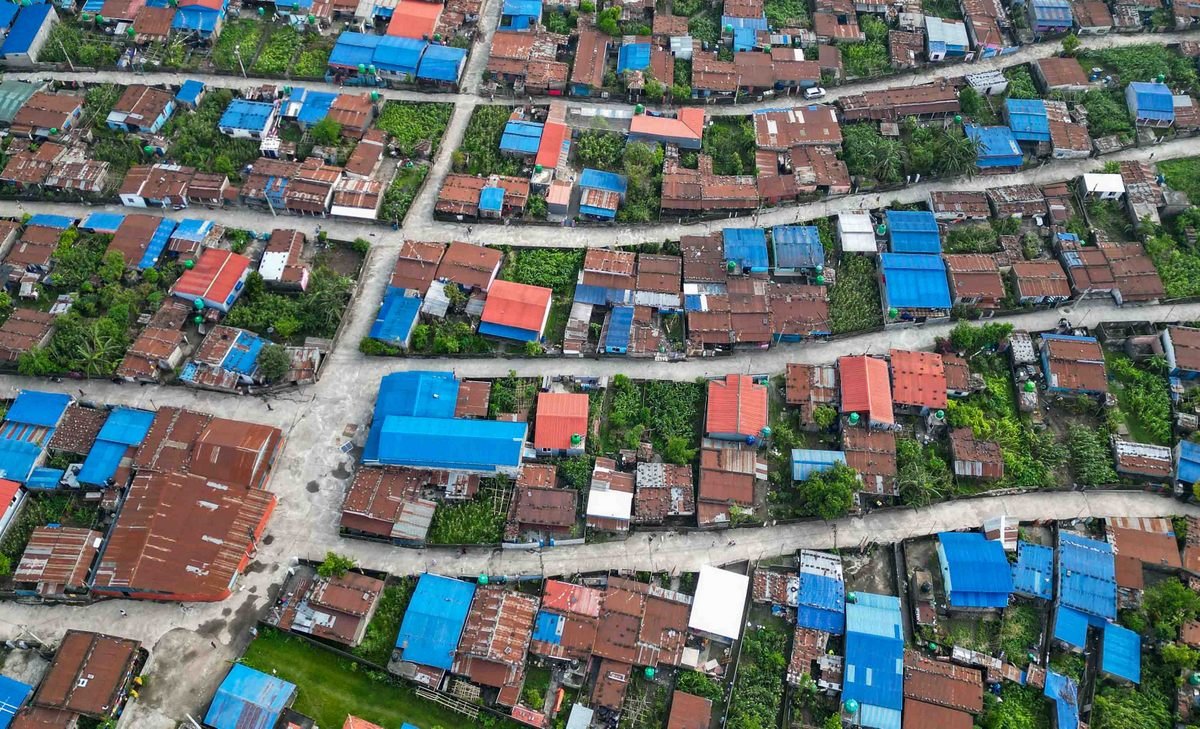
The latest study report mentioned that there were about 400 small and large houses and commercial structures belonging to landless people on the land acquired for the bus park, but during the update process, 575 people have submitted details. Ward Chairman of Pokhara-9, Dipendra Marshyani, informed that more may be added. According to him, the number of structures other than those belonging to the landless is still not confirmed. It is said that there are more than a hundred such structures.
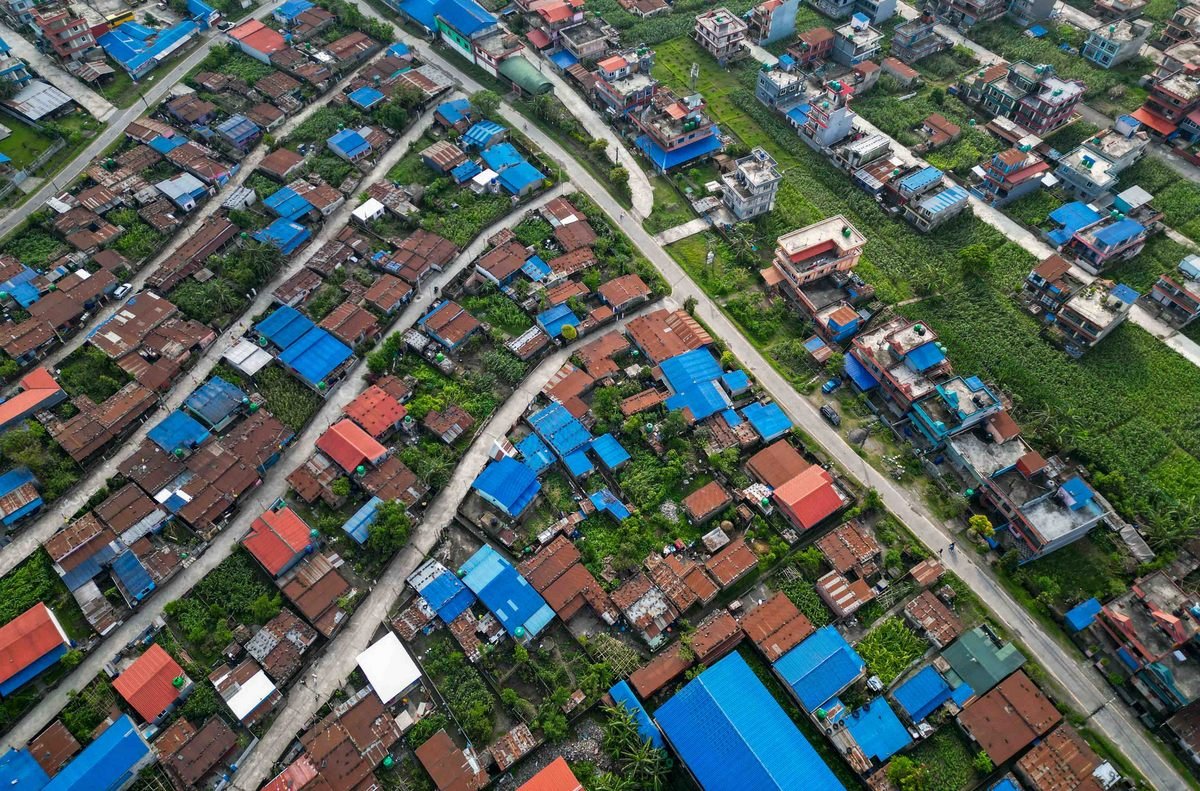
The committee has suggested dividing the land into four blocks and proceeding with the construction work after the land is cleared. The proposal is to start the parking and terminal work immediately on the vacant and less disputed land in the first phase, and in the second phase, to manage the settlement and build a digital terminal. It has also been suggested to the metropolitan city to fill potholes, remove handcarts, repair toilets, and install CCTV cameras in the short term.
Pokhara Metropolitan City Mayor Dhanraj Acharya said that the process is in the final stage as all parties have cooperated in building the bus park. The metropolitan city has given a 15-day deadline to landowners with land ownership certificates to remove their structures. ‘We have moved forward significantly with the construction of the bus park. Discussions and cooperation are ongoing with all stakeholders,’ said Mayor Acharya. ‘We have taken into account the legitimate demands of the landless people living there. Everyone has said that the bus park should be built and they are ready to cooperate. The metropolitan city is facilitating.’
Mayor Acharya informed that the landless people of Pokhara had formed a struggle committee after the metropolitan city's 35-day notice. At the request of the metropolitan city, they transformed the committee into a facilitation committee and started negotiations.
He further stated that the landowners with certificates would also be investigated and their cases resolved. ‘We are forming a judicial investigation committee to address some grievances in the grand campaign of bus park construction,’ he said. ‘I expect constructive cooperation, facilitation, and a positive role in the relocation process from all stakeholders and residents of all five areas to make this national pride project successful.’
Acharya said that the work will now proceed without obstruction. ‘All political parties and stakeholders are unanimous in the need to build an international standard bus park in Pokhara. We are in the final stage of bus park construction,’ he said. ‘It is my belief that there should be no obstruction now. We will accelerate Pokhara's development with a common consensus.’
_G4Maw93jat.jpg)
- How was the wrongdoing done? Who is involved?
According to the committee's report, Pokhara's wealthy Juthelal Shrestha had grabbed up to 5 plots. Another plot was given in the name of his unmarried daughter, Sacchi Gorkhali. Later, in 2064 BS, Juthelal arranged documents claiming it was given as dowry. An additional plot was given in the name of his daughter-in-law, Shobha Shrestha. The report shows that all these individuals lived together in their own house in Nagudhungga, Pokhara.
Those with concrete houses and ample property in Pokhara's main urban area later entered the bus park claiming to be homeless. The report mentions that Krishna Kumar Shrestha, an employee of the Prithvi Highway Bus Entrepreneurs Committee, took a plot by becoming landless in 2044 BS. The report notes that he has a concrete house in New Bazaar, Pokhara, and ample land elsewhere.
Vishnumaya Pannachan, an affluent hotel businesswoman from Mahendrapul, also appears to have encroached on land by building a temporary structure in the bus park. After that, those who committed wrongdoing are subject to the 15-year condition. Hansamaya Poudel, who received land on Bhadra 21, 2044 BS, sold it to Laxmidevi Palikhe for Rs 40,000 and transferred the name on Mangsir 12, 2060 BS.
Thaman Singh Magar, who received land on Bhadra 17, 2044 BS, also transferred the land to his wife Dilmaya's name by resignation and sold it on Push 10, 2060 BS. Although there is no official proof, on Mangsir 10, 2060 BS, Gamamaya Gurung arranged a recommendation in the names of Jhuk Kumari and Durgadatta Subedi and sold the land on Falgun 18, 2062 BS. Laxman Hamal Thakuri, who received land on Bhadra 32, 2044 BS, transferred the land to Laxmi Dhwajoo's name on Push 7, 2060 BS.
The rule was that the bus park land would only be given to those displaced during the airport expansion in 2033 BS. However, in 2044 BS, land was arbitrarily distributed to individuals not on the list. Kaure Gurung, who was not on the 2033 BS registry, was given land through a recommendation on Ashwin 25, 2044 BS. Nandlal Maharjan was also not displaced during the airport construction. Doing business, he managed to occupy the Pokhara bus park land on Baishakh 16, 2044 BS, through his influence.
A gang was also active here that would acquire land after the death of the landowner by creating fake kinship certificates or gift deeds. Ratnadevi Thakaali, who acquired land in 2044 BS, died in 2049 BS. Subsequently, Som Bahadur Joshi brought the land under his name based on a fake kinship certificate, claiming to be an adopted son without marriage registration or official records.
Kaliprasad Adhikari died on Ashwin 24, 2046 BS. His brother Shatrudhan Adhikari, in collusion with the then Chief, created a fake recommendation stating that his elder brother was alive even after his death, got the land transferred to his name, and sold it. Not only individuals, but the bus park land was also distributed to business houses and government agencies. Two plots were given to Kalyani Bhari as alternative plots when a road was opened towards the Prithvi Narayan Shah statue. Another approximately 1 ropani of land was rented out for 10 years in 2034 BS and was transferred by resignation to Pancharatna Petrol Pump after the term expired in 2044 BS, according to reports.
Apart from the landless, some organizations have also encroached on the bus park land. The land that fell within the bus park at that time now appears to be part of the road. Valuable land in Prithvi Chowk, owned by the Pokhara Valley Town Development Committee, in front of the Bus Park and Transportation Management Office, has been illegally occupied by nine organizations. These organizations have been operating offices and renting out shutters for commercial purposes by encroaching on government land for years.
Bus Park Encroachment: What Happened When?
- Land acquisition of 205 ropanis - 2032
- Policy decision to fragment land - 2033
- Land rented to Pancharatna Petrol Pump - 2034
- Settlement of landless begins - 2036
- Widespread land distribution - 2044
- Buying and selling spree after 15-year condition - 2060
This specific news has been automatically translated by AI. As a result, there may be some inaccuracies or language errors.


_Hd6sr8PGgB.jpg)