Nepal Oil Corporation's Amlekhgunj Depot Sees Doubled Petrol Imports


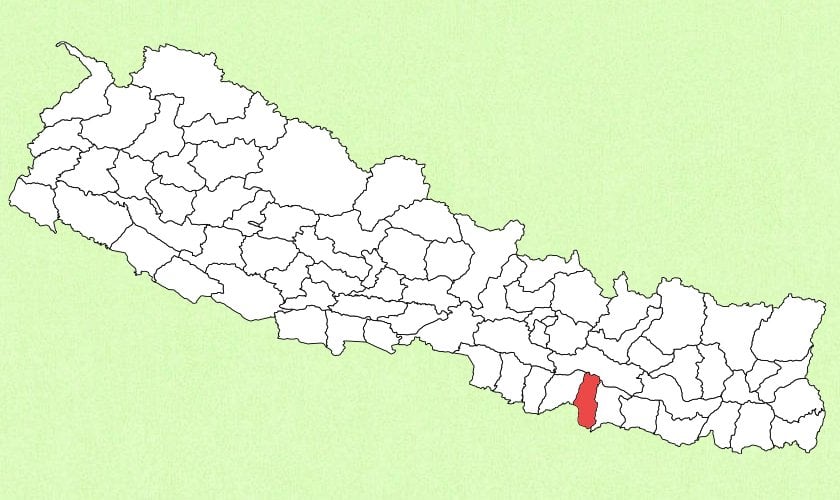
Bara. Nepal Oil Corporation's Amlekhgunj depot has seen a twofold increase in petrol imports. Compared to last year, petrol imports have doubled in the current fiscal year. The volume has also increased since petrol started being imported through the pipeline.
Last fiscal year, 184,000 kiloliters of petrol were imported, while in the current fiscal year, 400,000 kiloliters of petrol have been imported, according to the Corporation's regional depot Amlekhgunj.
However, there has only been a slight increase in diesel. In the current fiscal year, 915,613 kiloliters of diesel have been imported, compared to 900,000 kiloliters imported last fiscal year, the Corporation stated.
Petrol has been imported through the pipeline since February of last year. Diesel has been imported through the pipeline since 2076 BS.
"Earlier, petrol was imported only for the local market by tankers, but now it is loaded from here and transported for major cities across the country," said Amlekhgunj Depot Chief Ashok Sah, "Compared to last year, the import and sales distribution of oil is in a good condition."

Petrol is distributed and sold from the Amlekhgunj depot to government and private pumps in 20 districts across the country, including Thankot, Pokhara, Bhairahawa, Biratnagar, Janakpur, and Birgunj.
Regional Depot Chief Sah stated that 125 to 150 tankers of petrol and 200 to 250 tankers of diesel are loaded daily for government pumps.
For private pumps, about 150 tankers of petroleum products are loaded daily.
Petroleum products are imported through the pipeline from Motihari in India to Amlekhgunj. The distance from Amlekhgunj to Motihari is 70 kilometers. It takes 4 days for the oil to reach the Amlekhgunj depot after being released from Motihari.
The Corporation stated that the Amlekhgunj depot has a storage capacity to supply petrol for 4 to 5 days and diesel for 6 to 7 days.
"Our highest sales are at the Thankot depot," said Chief Sah, "The storage capacity is 17,747 kiloliters of petrol and 25,843 kiloliters of diesel."
The Corporation tends to reduce imports slightly when international oil prices rise.
Petroleum products are imported through the pipeline from Motihari in India to Amlekhgunj. The distance from Amlekhgunj to Motihari is 70 kilometers. It takes 4 days for the oil to reach the Amlekhgunj depot after being released from Motihari.
Earlier, petrol was imported from Barauni in India via tankers. Currently, those tankers have been managed for domestic transportation, and the pipeline is fully operational.
"We have been supplying oil to the market smoothly. There is no situation of shortage. We have sufficient storage," said Regional Depot Chief Sah, "Compared to last year, the import and sales distribution of oil is in a good condition."
Since the import of fuel through the pipeline began, illegal theft, smuggling, road accidents, and environmental pollution have decreased, and additional expenses have also been cut, the Corporation stated.
The saving of 3 rupees per liter in transportation costs has saved the state more than 1 billion rupees annually in transportation fares.
Fuel Consumption Decreased
In recent times, fuel consumption has started to decrease, according to the Regional Depot Office Amlekhgunj.
Depot Chief Sah stated that previously, an average of 5,000 kiloliters of diesel and 2,000 kiloliters of petrol were sold daily from the Amlekhgunj depot alone, but now an average of 3,500 kiloliters of diesel and about 1,000 to 1,500 kiloliters of petrol are being sold daily.

"In normal times, 5,000 kiloliters of diesel and 2,000 kiloliters of petrol were sold daily from the Amlekhgunj depot, but now it has decreased," he said, "Due to the increasing tension between America and Iran, as fuel prices have skyrocketed, the consumption of all types of fuel has decreased."
Similarly, the sale of kerosene has also decreased sharply, the Corporation stated. Kerosene is mainly consumed by construction entrepreneurs. In recent times, construction projects have also been directly and indirectly affected by the increase in fuel prices.
This specific news has been automatically translated by AI. As a result, there may be some inaccuracies or language errors.