Coalition Government Preparations Among Republican Supporters
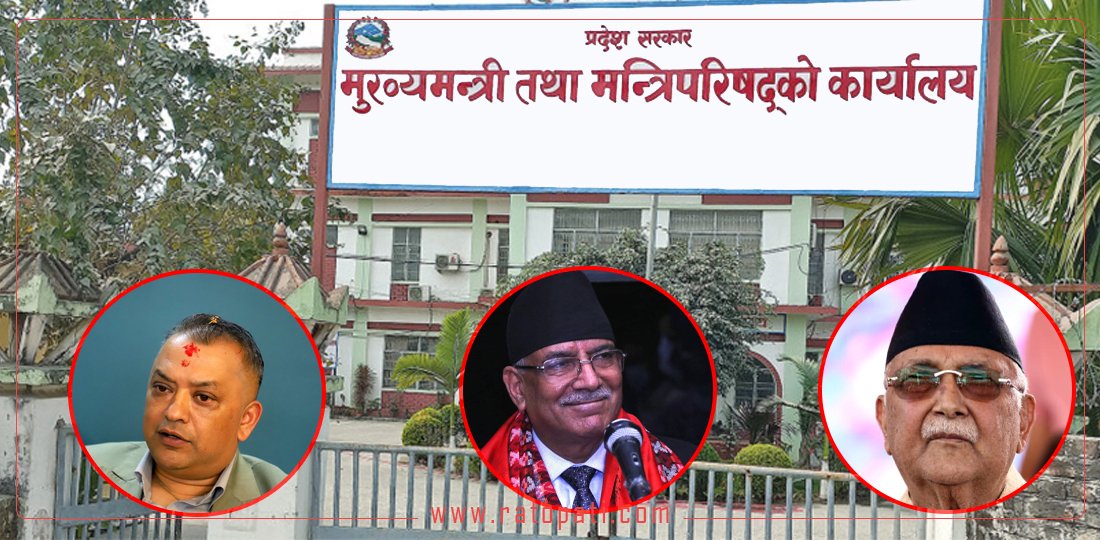
Kathmandu. Nepali Congress and CPN (UML) have given indications of including the opposition Communist Party of Nepal (CPN) in the provincial governments. This is happening at a time when Congress and UML are preparing to change governments in six provinces in June as per the previous agreement, and work is underway to form a coalition government among republican supporters. Discussions have been held on various modalities for this, but no concrete agreement has been reached yet.
These two parties, which lost power at the federal level last year in August due to the Genji movement, suffered a humiliating defeat in the elections held in February. Meanwhile, the CPN, which went into the elections by uniting 25 leftist factions, also could not achieve good results.
While the Rastriya Swatantra Party (RSP) is leading the federal government with nearly two-thirds, 182 seats, in the House of Representatives elections, the old three major parties have been pushed to the opposition. Local level and provincial assembly elections are due next year. Therefore, discussions have been held between the old three parties regarding cooperation in provincial power.
Leaders have stated that discussions are underway to include the CPN and Madhesi parties in the provincial governments, as it is necessary for the forces that supported the constitution to unite for the protection of democracy and federal democratic republic. CPN leader Rajendra Shrestha claimed that informal discussions are ongoing with Congress and UML regarding joining the provincial government, but no conclusion has been reached.
Shrestha clarified that the party has decided that forces supporting the constitution should unite and discussions are ongoing accordingly. "The party has not made any decision regarding forming a power equation in the provinces. Currently, the main responsibility is to protect the federal democratic republic, federalism, and the constitution," he said. "To save the system and inclusive democracy, cooperation or a front can be formed among the parties in the opposition."
Shrestha added that if the situation demands, power cooperation in the provinces can also happen while forming fronts or cooperating.
CPN Chairman Pushpa Kamal Dahal 'Prachanda' had claimed that proposals have come from both Congress and UML to participate in the provincial government. Speaking at a press conference in Birendranagar, Karnali Province, on Jestha 3, Prachanda had said, "Proposals have been coming from the Congress side and the CPN (UML) side, asking us to form provincial governments together. They are still coming."
However, he claimed that he refused because in the current situation, sending Congress out and forming a government only with UML, or sending UML out and forming a government with Congress, would be a wrong policy.
According to the 7-point agreement reached between Congress and UML on Jestha 17, 2081, Congress is currently leading the governments in Bagmati, Gandaki, and Sudurpashchim. As per that agreement, although the Madhesh government was to be led by the Janamat Party, due to political developments there, Congress got the opportunity to lead the government.
However, UML has not participated in the Madhesh government. Similarly, UML is leading the governments in Koshi, Lumbini, and Karnali provinces.
As per the agreement to lead the government on a rotational basis, discussions are ongoing between the two parties to form governments where UML will lead in provinces previously led by Congress, and Congress will lead in provinces previously led by UML. However, leaders have stated that no concrete agreement has been reached.
To discuss the change of government, Congress Vice President Bishwaprakash Sharma and Joint Secretary Uday Shumsher Rana went to meet UML Chairman KP Oli in Gundu on Baishakh 29. Prior to that, UML Vice Chairman Vishnu Poudel and General Secretary Shankar Pokharel had held informal talks with Sharma and Rana.
It is understood that discussions have taken place between UML Chairman Oli and Congress President Gagan Thapa regarding changes in provincial governments and cooperation among constitution-supporting forces. Congress Joint Secretary Rana stated that an agreement has been reached between the two sides to maintain the coalition in the provinces. UML Vice Chairman Vishnu Poudel also admitted that continuous discussions are being held with Congress leaders.
However, UML Chairman KP Oli appears to be in favor of including the CPN in the provincial government. In the secretariat meeting held on Jestha 4, Oli stated that giving leadership of Sudurpashchim Province to the CPN and moving forward would strengthen the coalition among the opposition parties. However, as the secretariat meeting is ongoing, no decision has been made on this matter.
UML Central Office Secretary Dr. Bhishma Raj Adhikari informed that various agendas were proposed in the meeting but no decision was made. "Various proposals have come as agendas. We are currently in discussions. The meeting on the 8th will make a decision," he said.
Meanwhile, continuous discussions are also being held between UML and CPN leaders regarding power cooperation. On Jestha 2, Prachanda met with former Congress Vice President Purna Bahadur Khadka.
According to another CPN leader, due to the internal disputes within Congress and UML, there is a fear of floor-crossing when changing governments, which is why the proposal to include the CPN in the government has come.
"Currently, both Congress and UML are facing intense disputes. At such a time, there is a possibility of floor-crossing from within the party when the government changes. If all three parties participate in the government, the risk of the coalition faltering will be reduced. It will send a good message when forces supporting the constitution come together," said the leader.
He also stated that the CPN does not have the situation to form a government by bypassing either Congress or UML. "There are problems in Bagmati and Gandaki. Even if UML and CPN unite, a government cannot be formed. In the case of Bagmati, the support of Hanespa, RPP, or Nemkipa is needed to form a government. It doesn't seem like they will participate. In Gandaki too, a government cannot be formed by uniting the leftists," the leader said. "Currently, there are problems within all three parties."
He clarified that a government cannot be formed simply by making a decision from the center. He said, "Some friends from Congress and UML have brought proposals, but forming a government is not that easy."
The meeting of the CPN's coordination committee held on Jestha 15 decided to move forward with a common understanding among republican and patriotic forces.
The decision stated, "A common understanding will be established among the forces supporting Nepal's constitution, federal democratic republic, and patriotic forces with the objective of protecting and strengthening national independence and democracy, and a strong role will be played from both the street and parliamentary fronts."
Although Prachanda did not bring up the proposal for power cooperation in the provinces, he briefed the meeting that talks were ongoing with Congress and UML.
According to Prachanda's secretariat, no direct discussions have taken place at the top level regarding participation in the provincial government. However, provincial chief ministers and party leaders have put forward proposals for cooperation. The secretariat stated that Coordinator Prachanda has given a clear message that they will not participate unless an all-party government is formed.
The secretariat source said, "We can consider forming a small and effective government with all-party participation. He has said that a coalition cannot be formed with UML or Congress. It will send a good message when forces supporting the constitution come together."
Meanwhile, Sudurpashchim Province's joint in-charge Khagraj Bhatta stated that no concrete decision has been made as top leaders are still in discussions regarding participation in the provincial government. Bhatta clarified that if it happens in all provinces, his party will join the government, otherwise, it will not participate anywhere.
"If we participate in the provincial power equation, we will do so in all seven provinces. Cooperation with Congress and UML in only one province will not happen. Discussions are ongoing with the three major parties, but no decision has been made yet," he said.
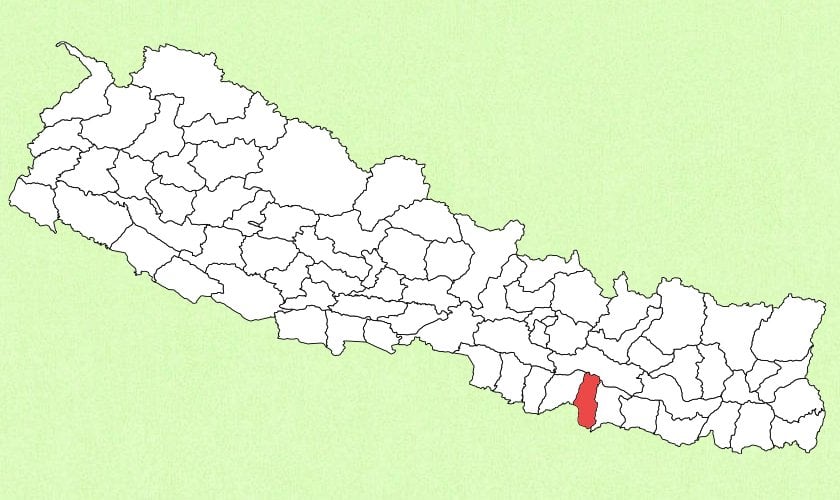
The CPN, formed after the merger of the former CPN (Maoist Centre), CPN (Unified Socialist), Nepal Socialist Party, Nagarik Unmukti Party, etc., is now the largest party in Sudurpashchim with 22 seats. In Madhesh Province, there is a coalition government of CPN, JSP Nepal, and Congress.
After the last election, who has how many seats in which province?
Koshi Province Assembly:
UML 40, Congress 29, CPN 17, RPP 5, and JSP Nepal has 1 seat.
Madhesh Province Assembly:
UML 24, Congress 22, JSP Nepal 18, CPN 15, Janamat Party 12, Lospa 8, Nepal Federal Socialist Party and RPP have one seat each.
Bagmati Province Assembly:
Congress 37, CPN 28, UML 27, RPP 13, Nemkipa 2, and Hamro Nepali Party has 2 seats.
Gandaki Province Assembly:
Congress 27, UML 22, CPN 8, and RPP has 2 seats.
Lumbini Province Assembly:
UML 29, Congress 27, CPN 13, RPP 4, JSP Nepal 3, Janamat Party 3, JSP 2, Rajmo and Independent have one seat each.
Karnali Province Assembly:
Congress 14, CPN 14, UML 10, RPP and Independent have one seat each.
Sudurpashchim Province Assembly:
CPN 22, Congress 18, UML 11, and RPP has 1 seat.
This specific news has been automatically translated by AI. As a result, there may be some inaccuracies or language errors.