Rajendra Malla Discusses Economy, Policy, and Private Sector Challenges


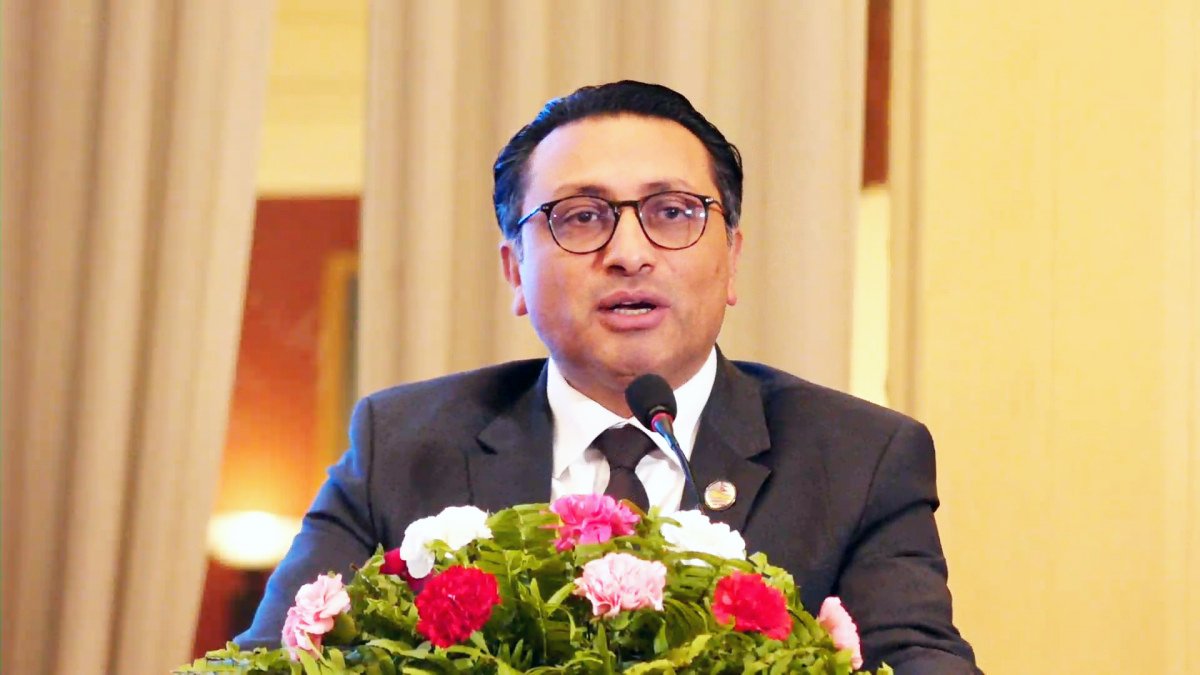
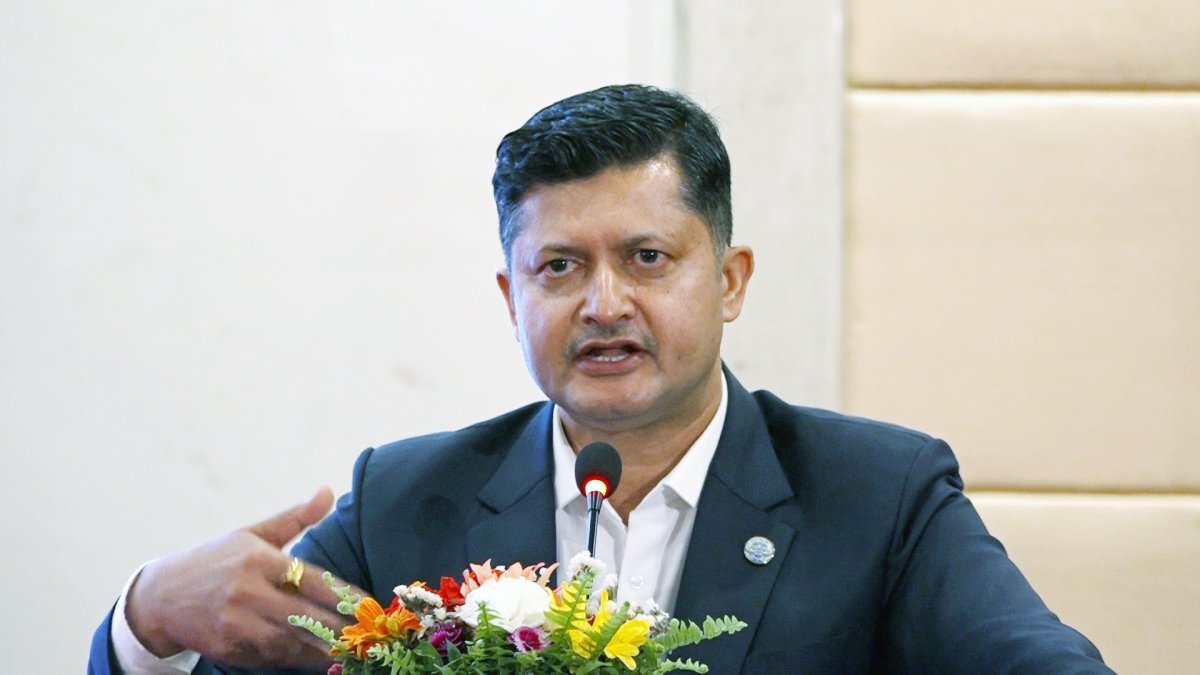
Kathmandu. Rajendra Malla is a person active in industry and business for a long time. Malla, who is also the former president of the Nepal Chamber of Commerce, is considered an expert on Nepal's economy.
This is an edited excerpt of the conversation held in Rato Pati's 'Business Talk' focused on the policy and program brought by the government, the budget for the upcoming fiscal year, the declining morale of the private sector, and the possibilities of economic improvement (detailed video can be watched and listened to):
How are you spending your time after stepping down from the leadership of the Chamber of Commerce?
Currently, I am focused on my own industry and business. I am also active in the programs of the Chamber of Commerce. The work required when I was president is less now. However, I continue to urge the government through the Chamber's forum on how Nepal's economy can be led towards a positive and sustainable path. I am continuously working to resolve the problems of the private sector.
How do you assess the state of the economy and the morale of the private sector after the formation of the new government?
As the saying goes, 'a good sapling shows its leaves early,' the new government appears to be trying to establish good governance. The government is adopting some new methods and technologies to bring stability to the country, which we should welcome. However, some work has been done in haste in the name of 'fast track.' The trend of arresting and imprisoning businessmen has lowered the morale of industrialists and businessmen.
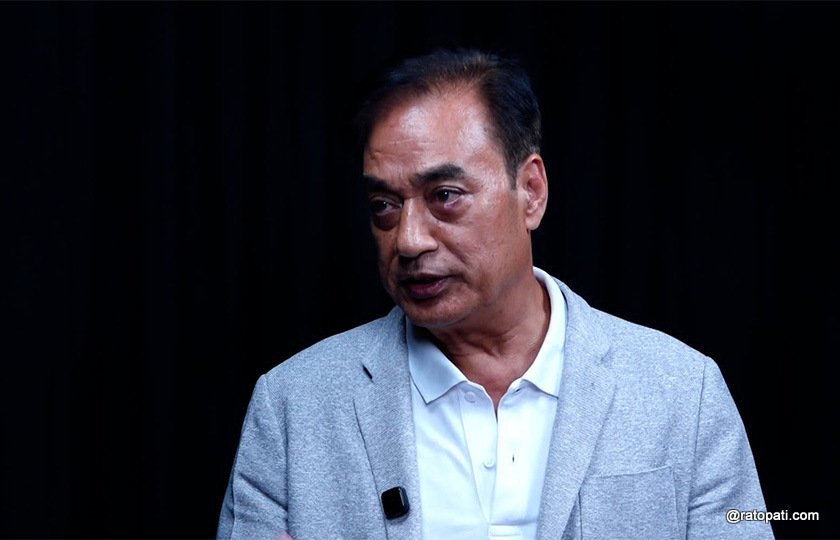
We do business within the laws and regulations of the country. When working, mistakes can happen. If a mistake is made, the method should be to impose a financial penalty. The private sector is terrified by the tendency to imprison first and then listen. The Finance Minister, Dr. Swarnim Wagle, is intellectual. He understands international practices.
Therefore, a system of imposing financial penalties for mistakes, in line with international practices, should be implemented. We have given the same suggestion to the government.
How has the private sector received the policy and program presented by the government in parliament?
The policy and program are a mirror of the government's economic commitment. The policy and program brought by the government are positive. Agriculture, information technology (IT), energy, and good governance have been prioritized. We believe these areas will give some momentum to the country. If the issues included in the policy and program are implemented, positive results will come. The private sector is generally satisfied with this policy and program.
The policy and program aim to achieve 7% economic growth in fiscal year 2083/84 BS, how realistic is this?
The government has put forward an ambitious goal of achieving an average economic growth of 7% over the next decade through its policy and program for fiscal year 2083/84 BS. In an economy that has been struggling with an average growth of only 4% for three decades, the government, with near two-thirds support, has made good governance, digitalization, and investment expansion the basis for economic transformation. However, it is a bit too ambitious.
Currently, our economic growth rate is around 3 to 4 percent. All economic indicators are in a state of contraction. Industries and businesses are not flourishing. Capital expenditure is not happening, while the burden of current expenditure and public debt repayment is increasing. The revenue collection target is also not being met. In such a situation, achieving a 7% economic growth rate at once appears very ambitious. Looking at past history, Nepal's average economic growth rate has been only 4 to 4.5 percent. Only around 2017 did it reach around 8 percent.
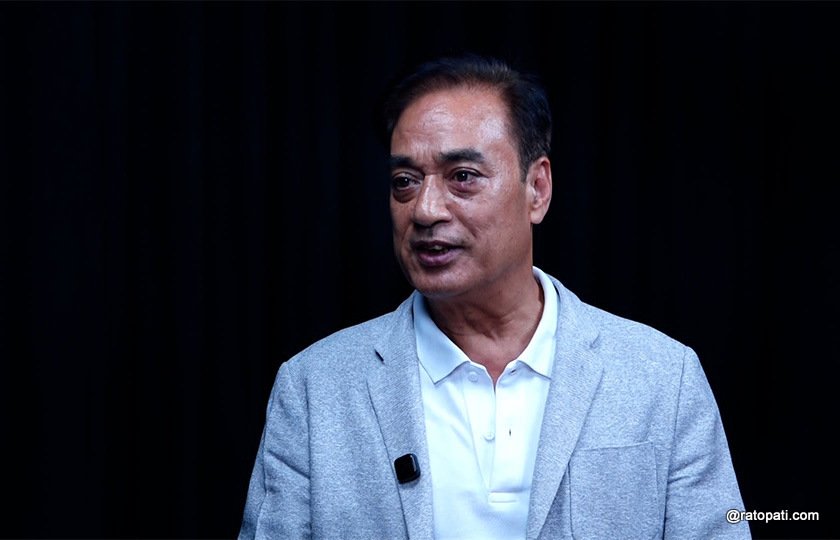
Achieving a 7% growth rate at once in the current situation is challenging. There is an old problem of making the budget large and then reducing it later due to a lack of resources. Now the budget should be small, realistic, and implementable. Achieving that target seems challenging amidst slow private investment, a weak industrial base, and declining revenue growth.
What are the expectations of the private sector from the government during the upcoming budget formulation?
Our main expectation is policy stability. The government should bring a budget with a long-term vision of 5 or 10 years. The budget should be in coordination with the 16th Five-Year Plan prepared by the National Planning Commission. The central bank should bring a monetary policy that supports it.
In the past, the economy could not gain momentum because the government's economic policy and the central bank's monetary policy were different. Now, there must be complete coordination between these three bodies: the National Planning Commission, the Ministry of Finance, and the Nepal Rastra Bank.
Similarly, the budget should be production-oriented rather than distribution-oriented. Instead of scattering the budget among 10 fragmented projects, 5 national pride projects should be given adequate budget and completed on time. The trend of funding current expenditures with internal and external loans should be stopped, and such loans should only be invested in large infrastructure projects that yield returns.
What steps should the upcoming budget take regarding the tax system and revenue policy?
The government should not increase the tax rate. It should expand the tax base. In Nepal, still only about 40 percent of citizens are within the tax net. Not just in cities. Large businesses are also happening in villages and at border crossings, but billing is not common there.
If a PAN card is made mandatory when obtaining citizenship or a national identity card, the tax base will automatically increase. Currently, we have many types of taxes such as corporate tax, customs duty, excise duty, and VAT. This makes the production cost and consumer price of goods very expensive. The expensive tax system is also not attracting foreign direct investment. Therefore, reducing the tax rate and widening the base is the best option.
What needs to be done to attract foreign investment to Nepal and simplify the business registration process?
In our country, the process from company registration to tax payment is very cumbersome. A foreign investor has to carry files and run to dozens of ministries and departments. To end this, a one-door system must be fully implemented.
In recent times, the information technology (IT) sector has shown great potential in Nepal. Data shows that services worth about 140 billion rupees were exported from this sector around 2023. Attractive policies should be brought to attract large multinational companies like Google and Microsoft to Nepal. They should be allowed to easily take their earned dividends back to their countries. IT is a sector where more foreign currency can be earned with less investment than in hydropower. The government should announce special exemptions and concessions for this sector.
The government has adopted a policy of strictness at customs and mandating Maximum Retail Price (MRP) on goods. Why is there opposition from businessmen?
Strictness at customs is very necessary to stop illegal trade and smuggling at the border. Currently, goods brought by evading customs are harming honest businessmen. The state's revenue is also lost. However, the same rule cannot be applied to all goods regarding MRP. For example, the price of perishable goods like vegetables and fruits varies from morning to evening. How is it possible to sell such items by sticking MRP on them? A small grocery store has thousands of items; it is impractical to stick stickers on all of them.
MRP can be applied to large packaged goods like TVs, refrigerators, and cars. But small and retail businessmen should not be harassed by imposing impractical rules. The government should set prices and monitor them, but it should not intimidate by making impossible rules.
There are also accusations that some businessmen take undue advantage by colluding with state power. How can this negative perception of the private sector be improved?
Not all people in society are the same. In the private sector too, a few individuals, countable on fingers, might have acted with wrong intentions. Those who make mistakes should be strictly punished according to the law. The Chamber of Commerce never defends wrongdoing. But it is wrong to accuse the entire private sector as if they are fishing in troubled waters because of the mistakes of a few individuals.
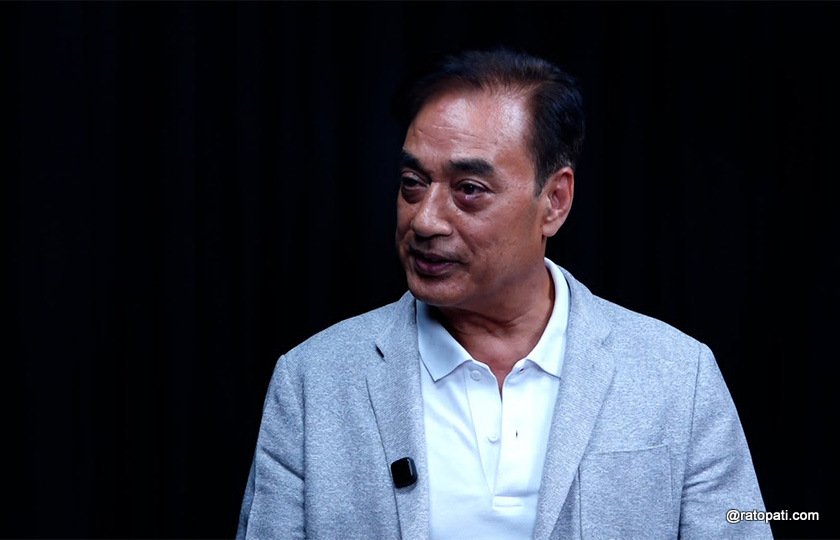
To make the private sector transparent, private limited companies should now be encouraged to convert into public limited companies. For example, in banks and insurance companies, there is a provision for 51% founders' shares and 49% public shares. This ensures that profits are distributed to the general public.
If a policy is brought to take other large business houses and industries into public companies and offer shares to the general public, transparency will increase, and the accusation of crony capitalism will automatically disappear.
What has been the contribution of the private sector so far in establishing good governance and prosperity in the country? What remains to be done?
The main responsibility for establishing good governance and streamlining service delivery lies more with the government than with the private sector. The main job of the private sector is to do business within the country's laws and discipline. It is to earn money and pay taxes to the government. If anyone misbehaves in this, there are existing laws and regulations to take action.
The government should provide an environment for businessmen like us, who have established themselves by climbing step-by-step, to work spontaneously. The state should discourage the tendency to reach the top overnight by taking a lift or engaging in manipulation.
Our main problem is the lack of consistency between words and actions. During the past governments, even if good policies came, it was an open secret that manipulation happened internally because the intentions were not clean. As far as good governance is concerned, it is a matter related to government service delivery. When we import goods from abroad, sometimes the computer hangs at customs, or due to excuses like 'no staff,' goods are held up at customs for months.
When goods are held up like this, businessmen incur losses of fifty thousand to lakhs of rupees daily. This increases the cost of doing business. This is not something the private sector can fix. It is in the hands of the government.
Therefore, the government must work by setting a time-bound action plan for its service delivery. If it is clearly stated within a certain time how much work will be done and why certain work cannot be done, only then good governance will be established. The tendency to keep things pending is the root of bad governance. This needs to be ended.
How can the remittances sent by Nepalis abroad be invested in productive sectors?
Currently, Nepali youth abroad are sending billions of rupees annually as remittances. However, most of that money is spent only on consumption. The government should create an environment where at least 10 percent of the remittances are invested in large productive and profitable projects such as hydropower, infrastructure development, and data centers.
If such projects are built in a Public-Private Partnership (PPP) model and the youth abroad are made shareholders, then when they return to Nepal, they will have both capital and returns in their hands.
There is also a debate that the government itself should operate industries and businesses. What is your opinion on this?
The government should not run industries and businesses. The government's job is to make policies and regulations, monitor, and play the role of a guardian. Looking at history, the Janakpur Cigarette Factory, Gorakhkali Rubber Industry, and Tobacco Factory, all run by the government, became dilapidated and closed down. But similar industries run by the private sector have reached great heights today.
Therefore, the government should not do business. It should facilitate the private sector to do business. It should provide policy stability, ensure investment security, and offer hassle-free services. The country's economy will leap forward on its own. The government needs to consider this and formulate the upcoming budget and policies.
Video/Photo: Manoj Khadka/Rato Pati
This specific news has been automatically translated by AI. As a result, there may be some inaccuracies or language errors.