NC Leader Angdembe Criticizes Government for Institutional Vacancies in Transitional Justice Bodies


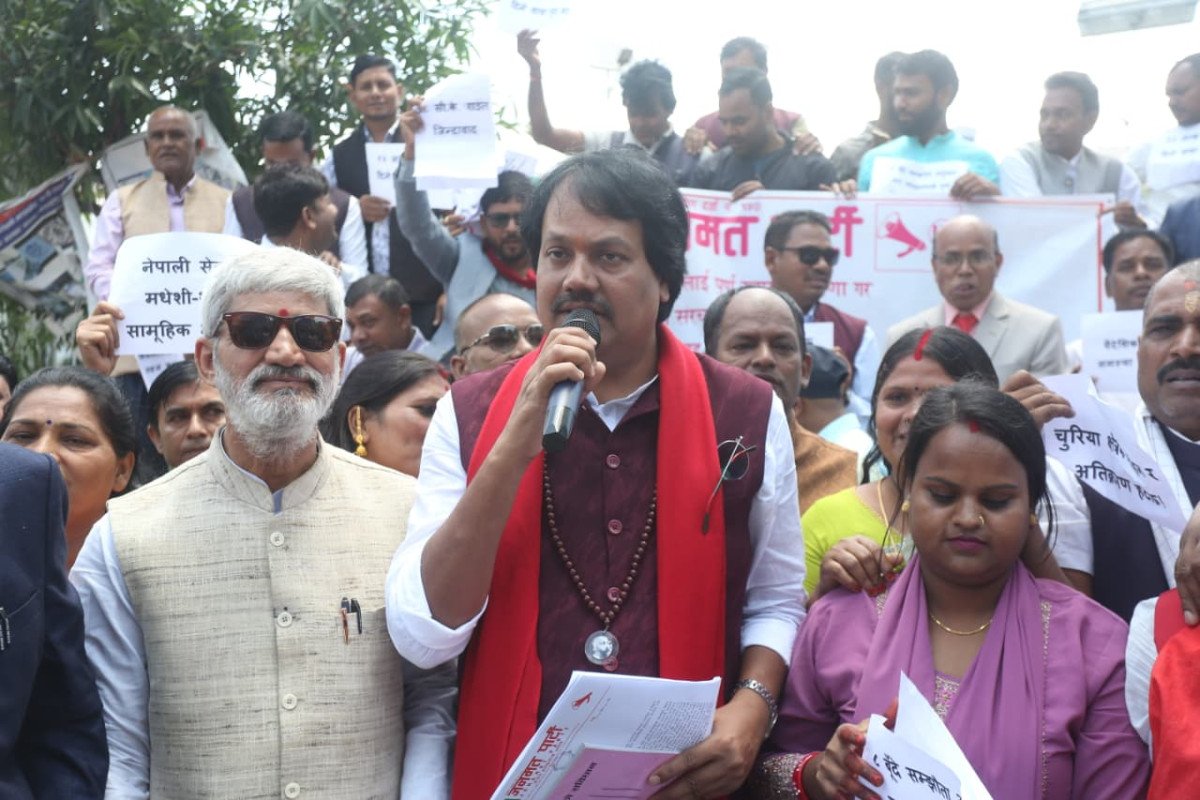
Kathmandu. Nepali Congress Parliamentary Party leader Bhishma Raj Angdembe has stated that the government has created 'institutional emptiness' by dismissing officials in various sensitive bodies. Speaking in the House of Representatives, leader Angdembe said that the vacancy in the Truth and Reconciliation Commission and the Commission of Investigation on Enforced Disappeared Persons has further complicated the transitional justice process.
Angdembe said that the government has adopted a strategy of emptying all institutions, accusing it of political partisanship, and that no sensitive institution is exempt, and the government has shown no interest in completing them. 'The conflict victims' wait for justice and their long struggle have been prolonged,' said Angdembe. 'In such a situation, it is the government's primary responsibility to make the TRC and the Commission of Disappeared Persons immediately active by appointing capable and impartial individuals.'
He mentioned that it is ironic that victims have not received justice even after two decades since the Comprehensive Peace Accord, and that the international community is also deeply concerned about this issue. He informed the House that Bernard Duhaime, a Special Rapporteur of the United Nations, is scheduled to visit Nepal in June to understand the status of transitional justice.
Leader Angdembe, speaking about legal complexities, claimed that the third amendment to the TRC Act in 2024 has not resolved all weaknesses. 'There are still many legal loopholes to make it compatible with the Supreme Court's verdict, the Comprehensive Peace Accord, and international standards,' he said. 'I draw the government's serious attention to rectify those weaknesses by amending the Act for the fourth time even before appointing new officials.'
This specific news has been automatically translated by AI. As a result, there may be some inaccuracies or language errors.