Acting Chief Justice's Order Sparks Conflict Between Judiciary and Parliament


Kathmandu. A conflict between the judiciary and parliament appears imminent after Acting Chief Justice Sapana Pradhan Malla ordered the registration of a petition filed against Supreme Court Justice Dr. Manoj Sharma, who was recommended for Chief Justice by the Constitutional Council, and to set a date for its hearing, a petition that had been rejected by the Supreme Court administration. The written order from Acting Chief Justice Malla states, 'It appears that obstructing a petition that has arrived for registration in the court according to the legal procedures and processes prescribed by law is an obstruction to the path of obtaining justice and a behavior and effort that increases distrust in the public's faith in the courts.'
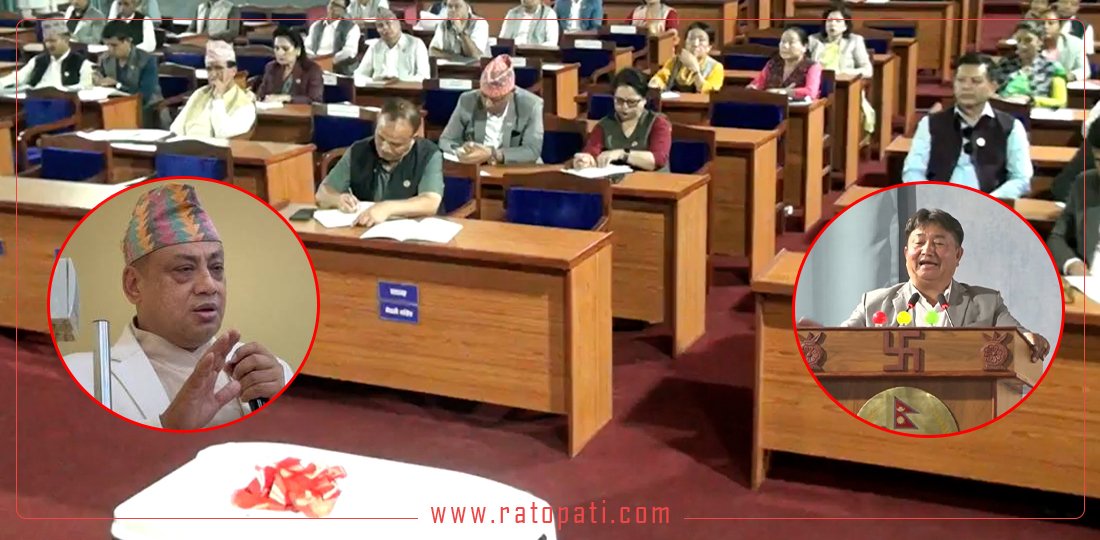
Following news of the order in the media, MPs from the ruling Rastriya Swatantra Party (RSP) in the House of Representatives meeting in Singha Durbar raised objections. RSP MPs with legal backgrounds, Yagyamani Neupane and Samiksha Baskota, raised objections.

Speaking in parliament, MP Neupane stated that the principle of 'conflict of interest' was attracted to Acting Chief Justice Malla's order. 'Today, the principle of conflict of interest is attracted somewhere, and orders are being issued from the chambers of honorable justices in haste. I say this not to question the judicial process carried out by the court, but in the context of administrative processes and lack of process, we can speak on matters concerning the judiciary.'
MP Neupane stated that it was unclear under which article of the constitution the order was issued and whether it was a single, joint, full, or larger bench. 'An order titled 'Order of the Right Honorable Acting Chief Justice Ms. Sapana Pradhan Malla' has been widely reported in the media,' said MP Neupane. 'It is not clear whether this order is from a joint bench, a single bench, a larger bench, a full bench, or a bench guided by which article of the constitution.'
He stated that the Supreme Court was showing activity elsewhere instead of where it should be showing activity. 'Where should the court's activism be? There are over 27,000 pending cases in the Supreme Court, where is the judicial activism? There are over 8,000 cases pending for more than 5 years, no activism is seen there. Over 3,000 writ petitions and criminal and civil cases have not been executed.'
RSP MP Samiksha Baskota said that the judiciary had forgotten the 'theory of separation of powers'. 'Today, I have to show this constitution and say, we have to question whether the judiciary has forgotten the theory of separation of powers,' said MP Neupane.
Baskota stated that while the 'theory of separation of powers' works as a 'check and balance' between the executive, legislature, and judiciary, the judiciary was engaged in an intention to seize power. She also stated that it would not be able to deliver justice.
She challenged, asking how just it is for the Acting Chief Justice to call a delegation and order the registration of rejected petitions? She said, 'How just is it for the Acting Chief Justice to call a delegation and order the registration of rejected petitions? We must discuss this.'
She also objected to Acting Chief Justice Malla's statement at the Law Day program, saying, 'The fight is still on.' 'Who is the fight with? She is a justice. If she had said the fight with the government, with the state is still on, I want to recall that day when I was a law student and was explaining this field for the first time, there was party interference in the court, and I want to explain to my 'comrade' in their own language that if justices want to do politics, they should take off their robes and come, we are ready,' said Baskota.

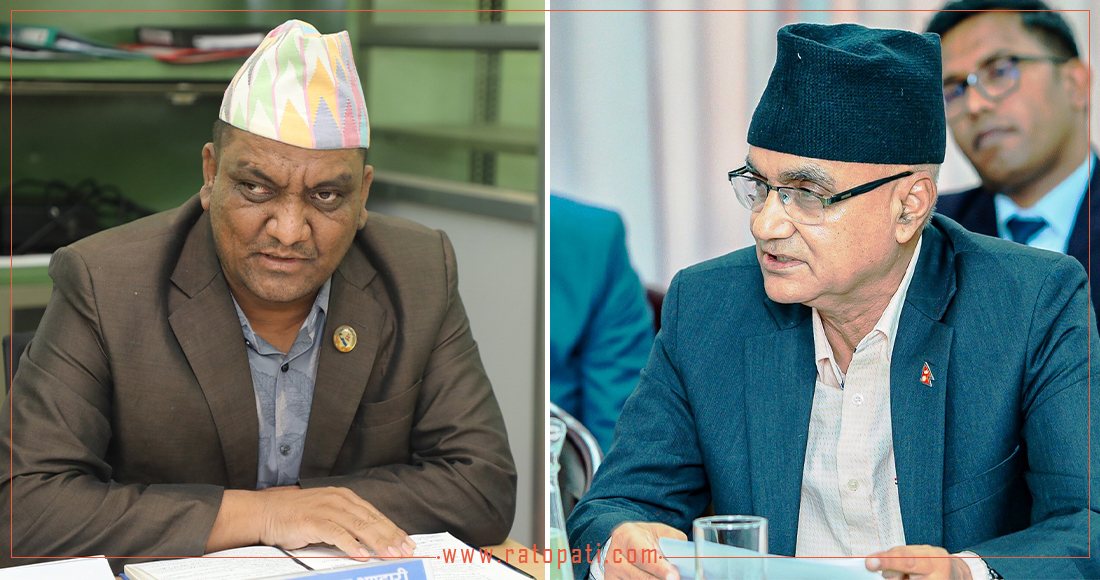
CPN-UML MP Ain Mahar opposed the statements made by RSP MPs Neupane and Baskota. He also demanded that their statements be expunged from the record. 'Rule 21 (c) of the House of Representatives Regulations stipulates that discussions should not be held on matters prohibited from debate by Article 105 of the Constitution. Similarly, Article 105 of the Constitution prohibits debate, stating that matters that would adversely affect the adjudication of any case pending in any court of Nepal, and judicial acts performed by judges in the course of their duties, shall not be discussed in any session of the Federal Parliament. It is clearly stipulated that such matters shall not be discussed in any session of the Federal Parliament. However, repeatedly in this house, in this parliament, statements are being made that are insulting to the actions of judges, insulting to the court, and that undermine the principle of separation of powers. I demand that they be removed,' he said.
The Constitutional Council, in its meeting on May 7, had recommended Supreme Court Justice Dr. Manoj Sharma, ranked fourth in seniority, for the position of Chief Justice. Following this, the first-ranked Acting Chief Justice Malla, second-ranked Justice Kumar Regmi, and third-ranked Justice Hari Phuyal are dissatisfied.
After that decision, made amidst the written dissent of two members of the Constitutional Council, the Supreme Court issued an interim order to stop the demolition of settlements by the Civil Servants Trade Union and student organizations in universities. This clearly indicates a conflict between the government and the judiciary.
Nepal Bar Association President Prof. Dr. Vijay Prasad Mishra claimed that the legislature is prohibited from speaking about judges. He stated that this would not benefit anyone. 'Executive interference in the judiciary is increasing. The constitution prohibits speaking about judges in the legislature,' President Prof. Dr. Mishra told RatoPati. 'Discussions on this matter are starting amidst chaos. This situation will not benefit anyone.'
This specific news has been automatically translated by AI. As a result, there may be some inaccuracies or language errors.