CPN-UML Central Secretariat Meeting to Discuss Work Division and Election Review

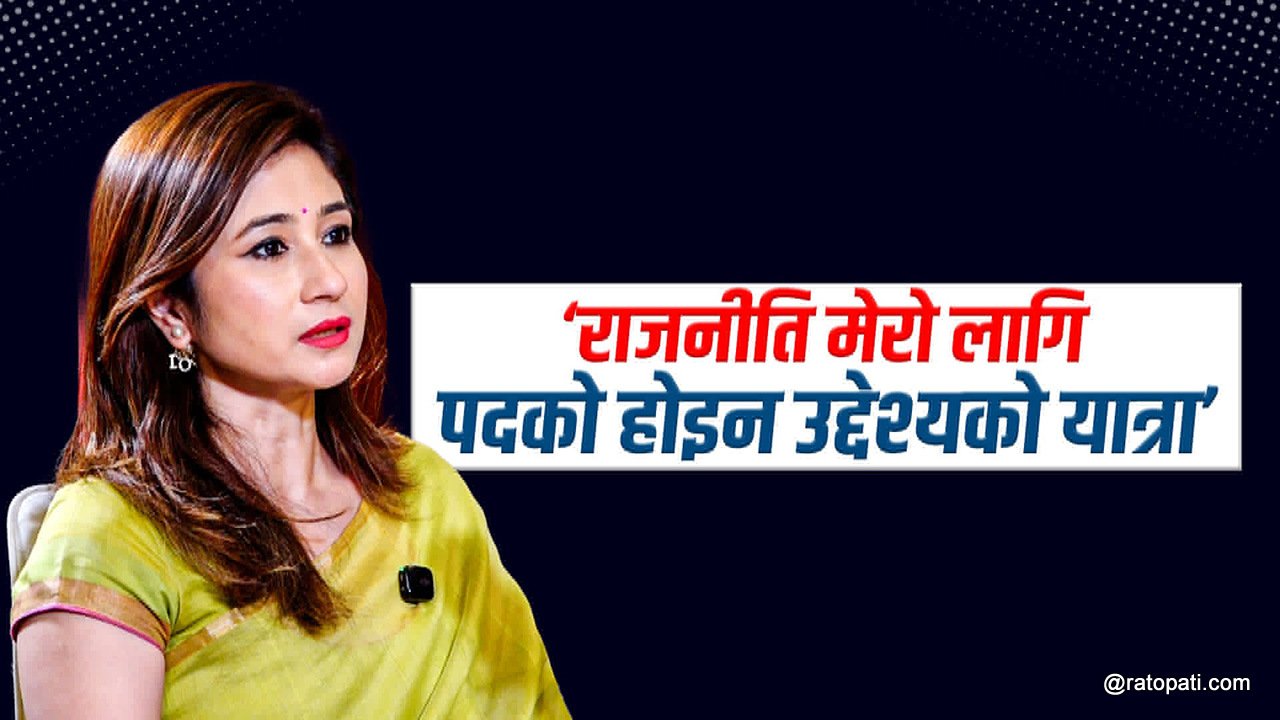
Kathmandu. The CPN-UML Central Secretariat meeting is being held today after a long time. This meeting is said to discuss everything from the work division of leaders to the election review.
After the election on Falgun 21, there is pressure on UML Chairman KP Sharma Oli to step down from leadership. A signature campaign has been launched demanding a special general convention for party restructuring. In such a situation, will Chairman Oli easily step down from leadership? Will this issue be raised in the secretariat? Redpatra has asked UML Secretary Padma Aryal.
Here is the conversation between Phanindra Nepal of Redpatra and Secretary Aryal:
- The CPN-UML Central Secretariat meeting is being held. What are the agendas of the meeting that is being held after a long time?
Our party's meeting should have been held earlier. Circumstances did not permit. We felt it might be too hasty to hold it immediately after the election, and hasty discussions sometimes do not lead to the right place, so it was not held within a week or ten days. Then, in the meantime, the Chairman's father passed away, and the Chairman was in grief. We thought it should be held after the Chairman came out of grief, but then the current government arrested the Chairman. A situation arose where he had to be in custody for 12-13 days.
After that, he had health problems and needed surgery, and he is still recovering. I don't think he can sit for a long time in the upcoming meeting either. He cannot sit for a long time as we can in the meeting.
Therefore, the meeting has been organized to start the meeting that has not been held for a long time, to plan the immediate tasks, and to start work at the lower levels, and I think the meeting will conclude in that manner.
- CPN-UML has been delayed in reviewing the election and dividing the work of leaders. How will the leaders' work be divided through this meeting?
The General Secretary has done the homework on this matter. With the intention of focusing more on geography for all central members as provincial in-charges, some suggestions have been sought from colleagues in districts with more than one central member (for those below the level of office bearers).
Since the standing committee and politburo have not been formed, preparations are being made to create a geography-focused action plan for central members. Therefore, work division will be finalized first. The need of the hour is for experienced, well-regarded by the public, and credible people to go to all geographical areas. Now, while saying that, we also have areas of work outside of geography. There are many important responsibilities to be fulfilled at the central level. Therefore, I understand that the leadership level will be managed in both ways, some at the top and some below.
- The election results have shown CPN-UML to be very weak. The need for party reform is also being raised from within. While other parties have already started preparing for 084, is CPN-UML making any plans?
First, we need to find out the reasons for the losses in the last election. This involves presenting everyone's analysis, integrating them, and reaching a conclusion. The conclusion reached in this way will be a common conclusion. This meeting will not be sufficient for that.
- Personally, you must have also done an analysis. Based on your analysis, what do you think is the reason for CPN-UML suffering such heavy losses in the election?
It can be said to be my private matter and my analysis. I believe it is more appropriate to do institutional analysis rather than personal analysis. As for institutional matters, the analysis is yet to be done, and I don't think a single meeting will accomplish it. Because it requires a lot of time. Currently, the party chairman is not in a condition to sit for a long time. Therefore, I think these issues will be discussed in the party's central committee meeting after he recovers somewhat, and a conclusion will be reached.
As far as we can see, there are two or three things. While reviewing, we must also look inward. Did we fail somewhere? Were our policies problematic? Were our programs problematic? Were our styles problematic? This is also one aspect. We need to look into that as well. While looking, we don't have a problem with policy. The style we adopted to implement the policy in practice has many flaws. The practices related to work style, and the catalysts for implementing the policy, their styles and behaviors are also important.
- If CPN-UML's policies are not problematic, then leadership and work style appear to be two problems. Does this mean the leadership has failed?
When discussing leadership and work style, we should not consider only the top leadership. We have local leadership. Don't we have leadership in our subordinate committees? When talking about the election, the local committees have the most responsibility and duty. The local committees are the ones based on the public and voters in the geography. Therefore, we also need to discuss the role of local committees. Were they able to play a role that allowed them to fulfill their responsibilities? We also need to see whether the local leaders and leaders deputed from the center were able to fulfill that role. After that, we, who are at the top, need to discuss what problems we at the top have.
When going down, talking only about the lower level, and coming up, talking only about the upper level, the top blaming the bottom, and the bottom blaming the top, this will not lead us to the right place and the right conclusion.
- But the main leadership must take responsibility, isn't that right?
The responsible main leadership must, but we should not conclude that all these circumstances are created solely because of one main leader. We need to investigate what issues are connected to us and to the lower levels, and everyone must correct themselves. This is the time for all of us to correct ourselves wherever there are problems.
- Demands for a special general convention, including a signature campaign, have been raised, stating that the leadership has failed and the party needs transformation. Will this issue be discussed?
Colleagues leading the people's organizations had brought up the issue of signatures. It was a very adverse time then. As soon as the party received information, it sat down with the colleagues and discussed that the party has procedures and bylaws. Anything new to be done in the party must be done according to the party's procedures and bylaws. Therefore, the party has already stopped it, saying that the current time is not appropriate, and you should not do this.
- Has the signature campaign been stopped?
Yes, it was stopped immediately. It is still stopped. As for the issues related to the statute general convention or special general convention, someone might have expressed their personal opinion sporadically. Institutionally, in all the secretariat meetings held so far, no leader has formally raised that issue. Therefore, it is not about what someone says outside. In such a vast ocean, it is impossible to respond to every speaker. Running a party is done by a procedure. We operate by a system. Now, if the issue enters the party meeting from somewhere, the party meeting will discuss it and reach a conclusion.
- There is also suspicion that the Chairman is postponing the meeting because he understands that the party officials are preparing to raise this issue?
I don't think the meeting has been postponed based on the information about what is happening outside. Because even now, I don't think he can sit for two hours like us. His wound is still not healing well. Therefore, the delay is due to health adversity. Now, once the meeting enters, the subject of the meeting and the discussion will naturally arise, but the issue has not yet entered the meeting. I don't think it is appropriate to discuss an issue that has not been raised yet.
- Vice Chairman Bishnu Poudel and Shankar Pokharel have said that transformation has become necessary. This seems to change the equation of your 19-member secretariat?
Transformation is not just one issue. Policy transformation, leadership transformation, work style transformation, behavioral transformation, transformation of our strategies, these are various things. Therefore, transformation should not be interpreted as simply removing a key leader. Where do we see weaknesses? After we review, based on the review reports, what weaknesses are seen, what needs to be corrected, and then we will present the agenda.
- Considering the Chairman's age and health condition, and all other reasons, it would be good for the UML members if he easily paved the way and handed over leadership to the new generation. What do you say about this analysis?
I think I have already spoken on this matter. What I said was that the discussions happening around the UML party in connection with the election are a matter of concern for the party. However, until the issue is formally raised in the party, there is no need to comment or form an opinion based on what someone said. When the issue enters the party committee, I will also express my views.
- It is also said that no leader has the status or courage to raise such issues in the party committee or to tell Chairman Oli about this. If things continue like this, the party might face an explosion someday?
I don't think it has reached the point of explosion. I repeat, when the formal meeting is held, let the issues be raised in the formal meeting, and then we will discuss them and reach a conclusion. I assure you that we are capable of resolving our internal problems and will do so.
- Does this mean that UML's leadership should not move away from Oli yet?
There is a method and process for changing our leadership. It is not about what someone said now. Therefore, let the meeting be held. From the meeting, we will decide how to manage and advance our party's internal life. It is not a matter for discussion outside.
- Shouldn't the concerns and questions raised by the cadres and the public towards a party like UML be addressed?
I have already said that.
- I mean, the responsibility to raise the issue lies with you officials, right?
Okay, the first thing is that it is related to the election, but a review is not just a review of the election results. It will also be a review of what came before. Therefore, let the meeting be held, let us discuss in the meeting. We will point out our weaknesses. We will say, 'We failed here, this was the weakness,' and then we will also make a plan on what needs to be done to remove that weakness. So, don't be too hasty. Let us discuss our matters.
- The government has now presented its policy and program. You also opposed the policy and program and obstructed the parliament. Since the majority government has the upper hand, the program was passed. Why did you oppose it?
We submitted amendments related to the policy and program. Where and what can be added, on issues of public concern, national concern. We presented our views through amendments and through the party's spokesperson regarding the policy and program.
Regarding the opposition, it is not against our book. We have given suggestions to the policy and program. The policy and program belong to the government. Although the President presented it, the program is the government's. When it comes to the government, who has the primary responsibility? The Prime Minister. And our practice is that since the policy and program are of the government, the Prime Minister has the responsibility to sit in the discussion, explain the political and policy issues that arise, express his commitment, and clarify the questions raised by the MPs. We have been doing the same in the past. It is the same today. Where does the government originate? It originates from parliament. The government or the Prime Minister is formed from parliament. The government also survives on the confidence of parliament. Therefore, should the institution that gave birth to it be accountable to it? Should it be responsible? This is a policy question as well as a practical question. Our constitution does not state that the executive is independent. It clearly states accountability to the legislature. There is a rule for conducting parliament. What program is more important than the government's policy and program for the Prime Minister? What are the government's priorities for the year? If the policy and program, which guide the government's journey for a year, do not capture the Prime Minister's attention and are not a priority, then the question arises: what is his priority? Our question is also this. But his refusal is not breaking the past tradition. It is a problem of disrespecting parliament, disrespecting the sovereign parliament, disrespecting the institution that gave birth to him, it is his problem, not ours. After our issue, the Speaker also said that he would bring it up when it was his turn to respond.
- The Prime Minister broke parliamentary tradition and norms in the policy and program. Will this have any effect?
It certainly will. Look at the history of the world. If you look at the history of countries with parliamentary practice, the executive is always accountable to the legislature. Secondly, look at our past. None of our former Prime Ministers have ever responded to the policy and program. All Prime Ministers have responded to the policy and program. Apart from that, they have also informed parliament about matters of national importance by requesting time themselves.
Thirdly, if the Prime Minister elected by parliament is not accountable to parliament, what kind of democracy is this? Therefore, in the name of breaking the old, traditions cannot be broken. In the name of breaking the old, democratic values and norms cannot be nullified. In the name of breaking the old, one cannot flee from his responsibilities. So, it's not that it doesn't make any difference, it makes a serious difference. Possibly, the National Independent Party and the honorable Prime Minister Balen Shah, who leads the government of that party, if he insists, will teach him something, and possibly he will come around in the future.
- The Janji movement, election results, and government formation have all happened. Old parties have been sidelined, and new parties have emerged. In this situation, the call for communist unity has begun. Has the unity process progressed?
We have also practiced unity in the past. All I can say is that haste does not yield good results. We have done it in the past, but we could not sustain it. It caused great damage. Therefore, I am not against the unity of the leftists. But currently, there is no review, and no action plan has been made. And to talk about unity all at once is impractical and inconsistent.
Rather, it can be said that we should go for functional unity. That discussion is also ongoing. Functional unity is also necessary, but on what basis should party unity be based? It should be based on policy, ideology, and principles. Therefore, it takes some time to do so. I don't think it will happen immediately.
- But looking at the leaders' work style, it seems they will unite in haste and regret it at leisure?
That's why I said we must learn from the past. Therefore, it will be done thoughtfully; I don't see it happening as much as is rumored outside. Unity can be achieved thoughtfully, by maturing the circumstances.
This specific news has been automatically translated by AI. As a result, there may be some inaccuracies or language errors.