Paras Khadka Discusses Nepali Cricket Performance and Future


Kathmandu. One of the most influential players in Nepali cricket is Paras Khadka. He has played a significant role in making Nepali cricket known at the international level. His leadership was extremely crucial in Nepal's historic ODI status attainment in 2018. Former national team captain Khadka has won the hearts of millions of Nepali supporters due to his excellent batting, leadership skills, and discipline in his playing career.
Not only as a cricketer, but he is also active in the development of Nepali cricket as the Secretary of the Cricket Association of Nepal (CAN). He is working towards improving the domestic cricket structure, producing young players, and strengthening Nepal's presence at the international level. Paras Khadka is a source of inspiration for Nepali youth. He has taken Nepali cricket to new heights through continuous struggle even in difficult circumstances.
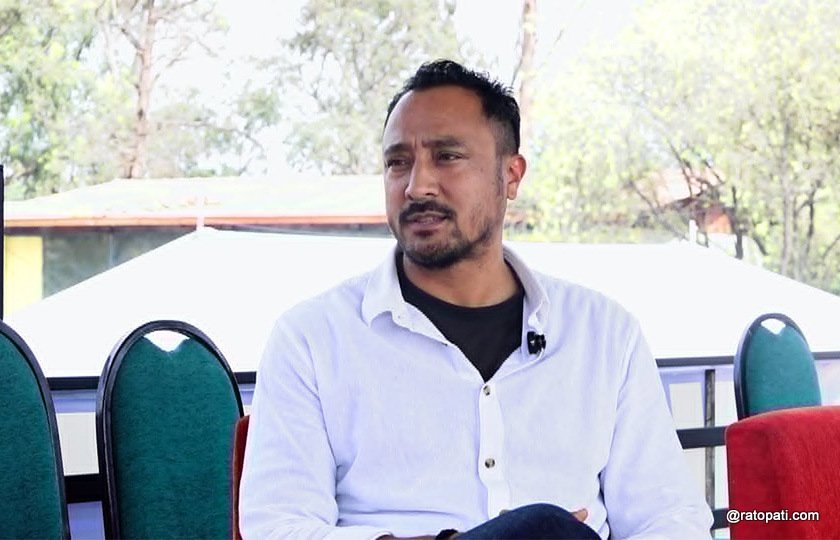
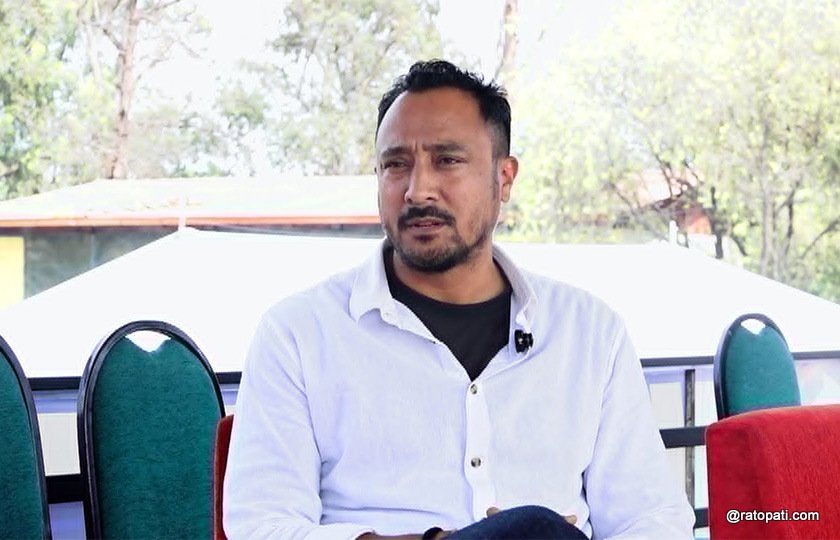
Paras Khadka also has a significant contribution to cricket becoming one of the most popular sports in Nepal today. A conversation was held with Paras Khadka, Secretary of the Cricket Association of Nepal (CAN), in RatoPati's 'Warpar' regarding various issues including the ongoing Cricket World Cup League-2 series, the poor performance of Nepali players, concerns about losing ODI status, disputes within the Cricket Association, and the issue of financial opacity within the association. The following is the edited excerpt of the interview (detailed video can be watched and listened to):
Why has Nepal's performance in the ongoing Cricket World Cup League-2 series been so dismal?
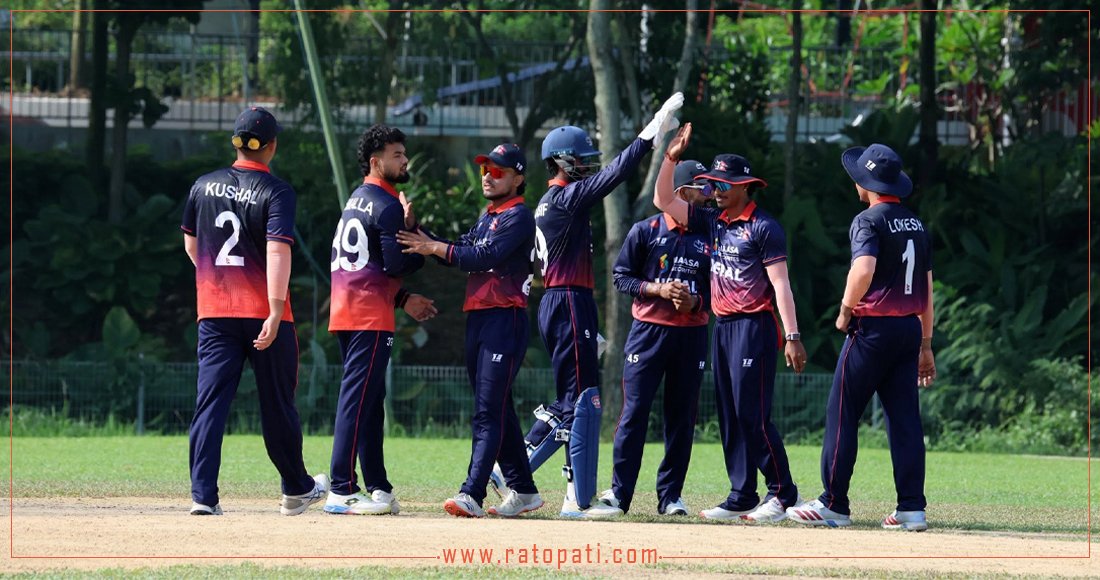
League-2 is a very important tournament for Nepali cricket. Currently, competition is underway between Nepal, America, and Scotland. Nepal has lost some matches by very narrow margins. However, the history of Nepali cricket itself is one of struggling until the last ball and the last wicket. We are in a challenging situation now, but hope remains. There are still 11 ODI matches left. We are confident that the team will perform well. There is no need to be disappointed yet. Nepali cricket is not just a game now, it has also become a medium to connect the country.
Concerns about losing ODI status have increased due to the current poor performance. What do you say?
It is natural to be concerned as Nepal is currently in seventh place. Fans, districts, provinces, and most importantly, the players themselves are worried. We struggled a lot to get ODI status in 2018. Many emotions are attached to that journey.
However, worrying alone is not enough now. The team needs support. Cricket development is not just about results; it also depends on the domestic structure, player production, and a safe environment. We are trying to build that foundation.
What I want to know is whether the ODI status will be saved or not with the current performance?
Ultimately, the team must win. That is the reality of cricket. Discussions are currently underway at the ICC about increasing the number of ODI nations. Possibly, more teams might be able to retain their status. But we should not rely solely on that. Nepal is among the top cricket-supporting nations in the world. Our future depends on the players, supporters, and the structure.
Batting weakness has been an old problem in Nepali cricket. Why hasn't it improved?
Every team has weaknesses. Team A has been performing consistently well. This means the bench strength has become good. As competition increases, players work harder. There is criticism on social media, but that is a result of expectations. We are working on improving the structure. Looking at the statistics, Nepali batting has improved compared to before, but we have missed opportunities at crucial moments.
Why are spectators coming to the stadium in fewer numbers?
Previously, many people used to enter the stadium for free. Now the infrastructure has been organized. Floodlights and seats have been built. A ticketing system has been implemented. Earlier, international matches were infrequent, so there was a lot of enthusiasm. Now, matches are happening continuously. Also, people can watch on mobile and TV. To bring today's generation to the stadium, not just the game, but good facilities, entertainment, and experience are also necessary. We need to focus on that in the future.
What is your message to the spectators who are not coming to the stadium?
I want to thank everyone who loves Nepali cricket. The players are playing with their heart and soul on the field. The applause and support of the spectators energize the players. The ticket price has now been reduced to 200 rupees. If you can come to the stadium and support us, please do. But even if you cannot come to the stadium, we are grateful to all the fans who support cricket from within the country and abroad.
Where has the renovation dispute of TU Cricket Ground reached now?
This is an old issue. Discussions about the agreement with TU are ongoing in various stages. Coordination with the government is good now. We have completed the necessary procedures. Discussions are now underway regarding the operational modality and legal aspects.
This ground is not just the property of one institution; it is an emotional asset connected to Nepali cricket. We are confident that the government, ministries, and concerned bodies will find a solution soon.
Are you also trying to bring it under CAN's ownership, given your good relationship with the Sports Minister?
Every government has supported Nepali cricket. Now a youth minister has come, so it is natural to have high expectations. But this is not a matter of personal relationships. We are working institutionally. Discussions are ongoing on a model where CAN is given the right to operate through an agreement between the National Sports Council, the government, and TU, according to legal procedures.
What is the news about you becoming the Member Secretary of the National Sports Council?
My life has been spent in cricket. Even now, my duty and કર્મ (karma) is Nepali cricket. For the next 17 months, my focus will be on strengthening the Cricket Association. I have no intention of leaving cricket to take another position. Wherever I am, I want to work for Nepali cricket.
Why are disputes increasing within CAN now? There have also been many reports of financial opacity.
Internal disagreements occur in any organization. The issue of financial transparency has been raised after the NPL. We have conducted all processes legally. We have asked those who want to see the accounts to come and see them at the office. However, it seems some people are trying to create disputes in a planned manner. As cricket grows, so do vested interests. We want to move forward by including everyone.
Was there no financial irregularity in the NPL?
We are confident in all the work we have done. Two committees have already conducted investigations. Clearance has also been received from the Commission for Investigation of Abuse of Authority. We are not running away from responsibility. Criticism is allowed, but no one has the right to ruin cricket.
Is it easier to work off-field in leadership or on-field as a player?
The role on the field was much easier. There was a single goal – to play well and win. Now, in administration, there are many desires, pressures, and responsibilities. I am not a magician; I cannot change everything overnight. But I have not given up. I am learning and moving forward in this new role.
What is your opinion about the current government?
The current government needs time. No change happens overnight. There is youth leadership. Policy reforms are needed in areas like sports, education, and technology. If the government creates an environment for sports to progress independently and systematically, Nepali cricket and sports in general can benefit greatly. We are coordinating for that.
Video/Photo: Manoj Khadka/RatoPati
This specific news has been automatically translated by AI. As a result, there may be some inaccuracies or language errors.