Nepalgunj Transforms with Wider Roads and Enhanced Greenery

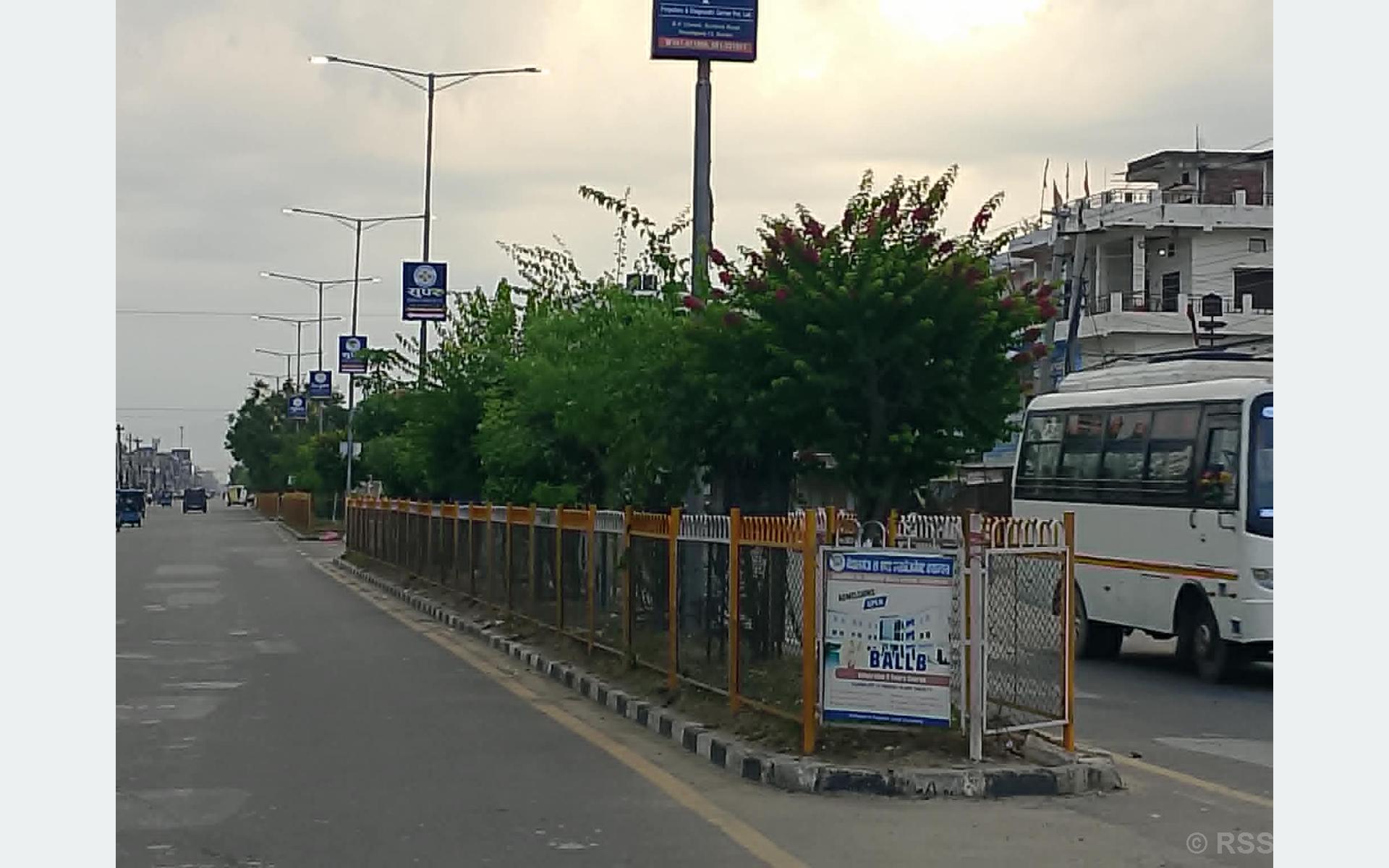
Nepalgunj. In recent years, the form of Nepalgunj has changed significantly. Wider roads, various types of plants planted along the roadsides have increased the city's beauty along with promoting its greenery.
Narrow and dusty roads have been blacktopped, and greenery has enhanced the beauty of the city. Red Gulmohar and Begambeli have brightened the beauty of Nepalgunj. 'Clean Nepalgunj, Green Nepalgunj' Chairman Vinod Karna is delighted with the addition of greenery along with infrastructure development.
He says that further expansion of greenery is still needed. Gulmohar and Begambeli planted in areas like Surkhet Road, New Road, Bhanu Chowk, and Ganesh Man Chowk have not only increased the city's shine but also helped in conserving water sources and maintaining environmental balance.
Nepalgunj Sub-Metropolitan City Chief Prashant Bishwokarma states that programs for promoting greenery and environmental conservation are being conducted in Nepalgunj, which is known for its extreme heat. "We are working with an action plan to manage the 'heat wave'. Along with this, we have also continued the programs for promoting greenery," he said. A policy has been implemented here making it mandatory to plant saplings during house construction.
The Sub-Metropolitan City has focused on park management as the city's greenery helps reduce the effects of climate change, produce oxygen, and control pollution. So far, about 15,000 citrus plants and about three thousand plants like Rakshavriksha and Neem have been planted.
Green activist Hemantraj Kafle said that the place of trees and plants that were previously disorganized in Nepalgunj has now been taken by organized greenery. He believes that the plants here have compensated for the lost mango orchards and ponds.
Records show that after Prime Minister Jung Bahadur Rana regained Banke, Bardia, Kailali, and Kanchanpur from the then British-India, he established Nepalgunj on the model of Hazratganj in Lucknow. When he assigned Subba Siddhiman Rajbhandari to establish the settlement, houses were built on both sides of a 108-foot wide road south of the present Triveni Chowk, according to records.
The present Tribhuvan Chowk was initially called 'Chowk Bazaar'. The city of Nepalgunj was expanded by constructing houses with shops and markets in areas like the East-West line and Eidgah Road from this chowk. Tribhuvan Chowk here is known as the main center of the city.
This specific news has been automatically translated by AI. As a result, there may be some inaccuracies or language errors.
_iL3K2wYemS.jpg)