
Former National Assembly Secretary Rajendra Phuyal Discusses Parliamentary Accountability and Prime Minister's Role

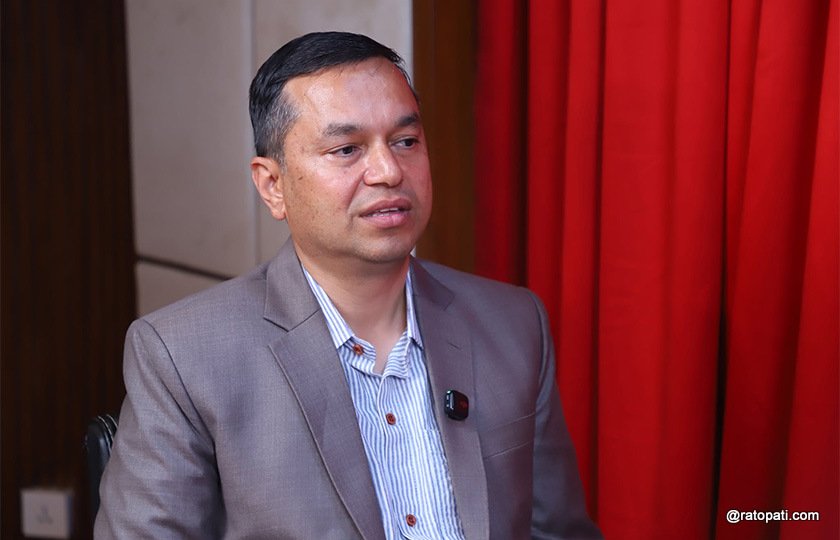
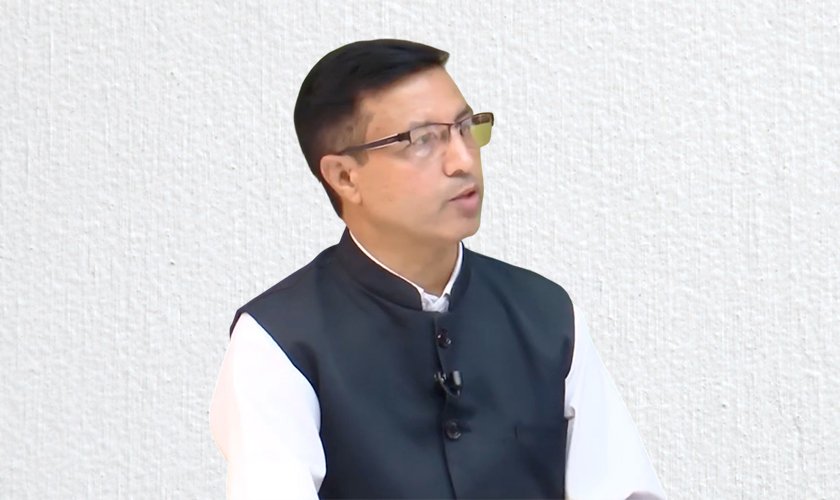
Kathmandu. Rajendra Phuyal, who efficiently handled the responsibility of National Assembly Secretary at a young age, has a long experience in journalism. While reporting on parliament, he even wrote a book titled 'Constituent Assembly: From Election to Dissolution'. Books edited by him, including 'Two Years of National Assembly' and 'Committee System', have been published.
Currently, Prime Minister Balen Shah is being sought in the parliament. He is also being criticized for his indecent act of walking out midway while the President was reading the government's policy and program. Similarly, the opposition parties obstructed the parliament over the issue of the Prime Minister not being present to answer the questions raised during the discussion on the policy and program.
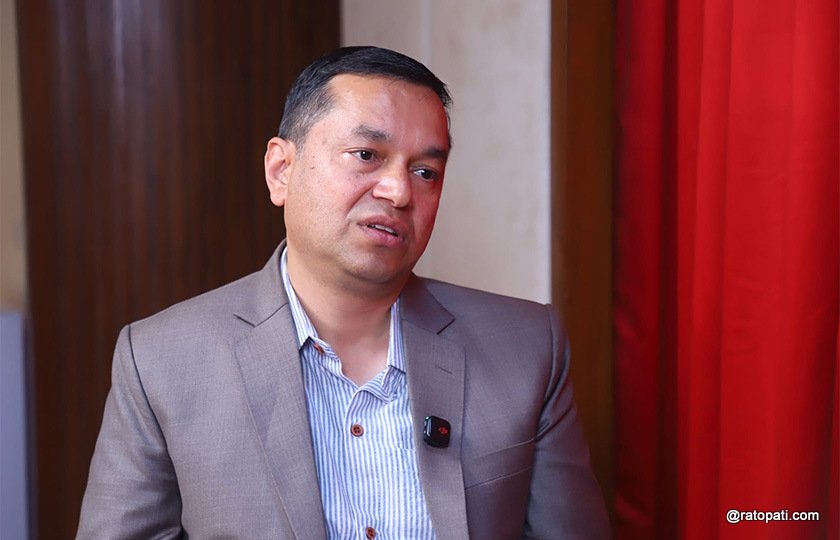
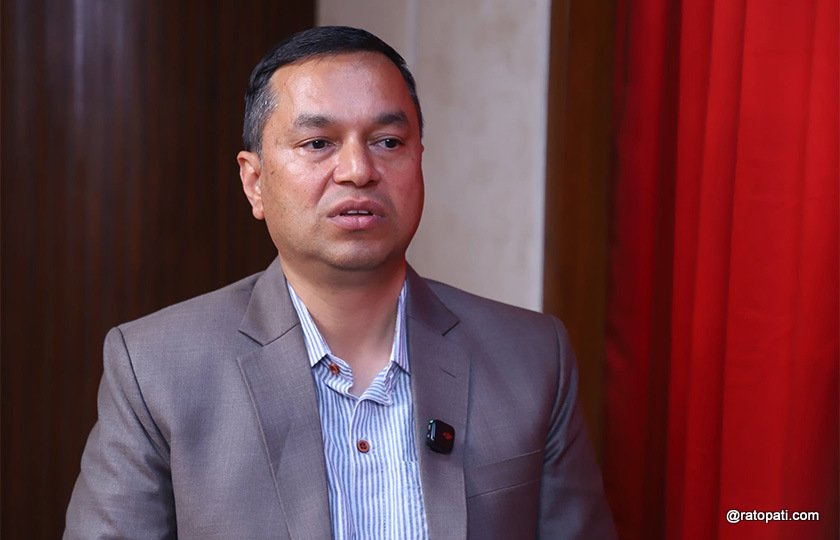
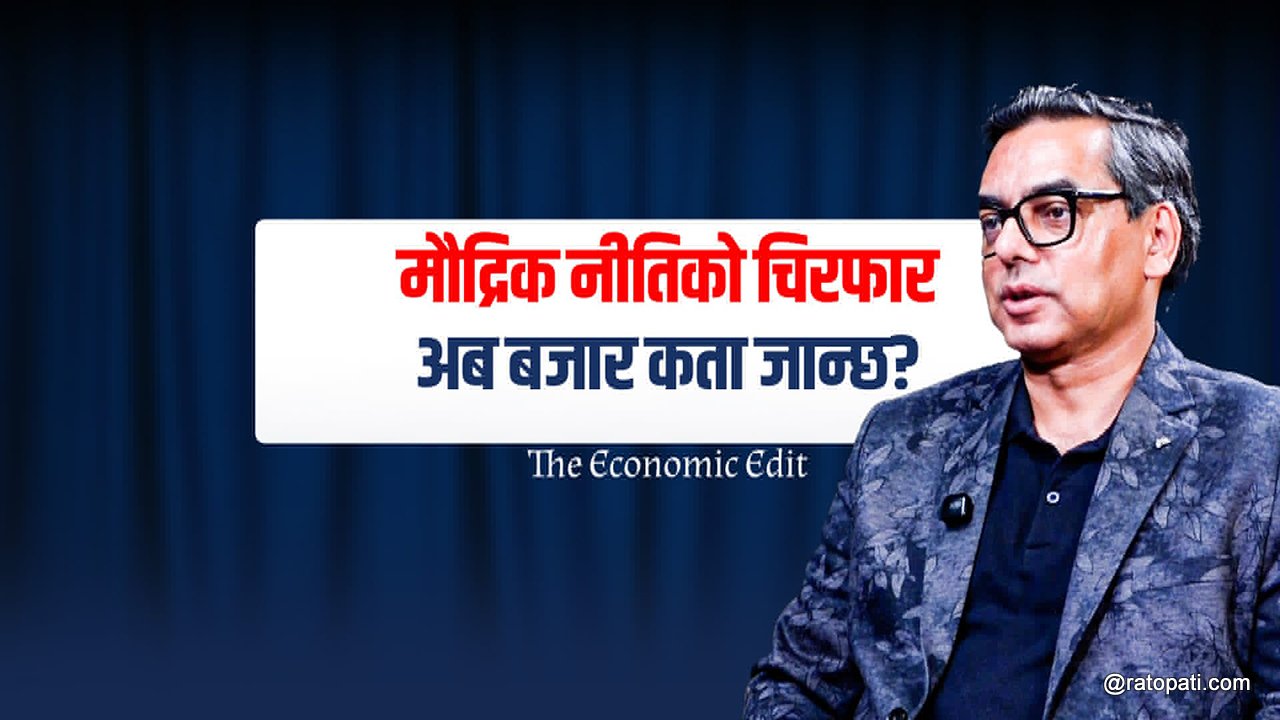
A conversation with Phuyal, an expert in parliamentary affairs with deep knowledge of parliamentary matters, was held in Ratopati's 'Warpar' focusing on the Prime Minister's parliamentary responsibility, parliamentary deadlock, and various aspects of democratic practice. The edited excerpt of the interview is presented (detailed video can be watched and listened to).
Currently, there is a big controversy in the House of Representatives regarding the absence of Prime Minister Balen Shah. In our constitutional system and parliamentary tradition, how is the presence and accountability of the Prime Minister viewed? What is the constitutional essence of this?
Our constitution and the parliamentary practice it has adopted have made the government fully accountable to the parliament. The core essence of our system is that the Prime Minister and ministers must be accountable to the parliament collectively and individually. The government must answer to the public through parliament for every decision and action it takes.
Especially on important issues like the annual policy and program, which outlines the government's priorities and roadmap for the upcoming year, the Prime Minister's presence is considered almost mandatory. The Prime Minister himself must stand in parliament and clarify the country's direction and its 'orientation' under the mandate received from the people. This is not just a formality; it reflects the supremacy of parliament and respect for the public. Therefore, the expectation of the Prime Minister's presence at such a crucial juncture is natural and constitutionally correct.
The current leadership is young. A 36-year-old person is the Prime Minister of the country. The young leadership might be trying to work in a new style by breaking old and tedious traditions. Can't there be some flexibility on such matters by citing the executive head's busyness?
The parliamentary system is somewhat process-oriented and can sometimes seem tedious. However, in the name of reform, fundamental democratic values and norms should not be forgotten. It is true that our parliament has been criticized in the past for being very dull and process-oriented, with laws not being made for months. The young leadership, which has received a fresh mandate, can bring a roadmap to improve this, but for that, neglecting the established system is not good.
If the Prime Minister is busy or cannot attend for any special reason, they must inform the parliament of the reason in their capacity as Prime Minister. When other colleagues or ministers provide answers, they do not carry the same weight and constitutional dignity as the Prime Minister. We expect even more cultured, dignified, and effective political culture from the young leadership. Therefore, parliamentary dignity should not be overshadowed in the name of reform.
The policy and program presented by the President tend to be very long and tedious. Can't this be made shorter and more concise?
It is absolutely possible and should be done. The current policy and program seem to be a lot of 'copy-paste' from past issues. When ministries send points from old files and include them without proper editing, it becomes very long. In my opinion, the government's policy and program should be a clear roadmap of what the 'departure' points are for the upcoming year, what is new, and which old programs are being continued. This can be made concise to be completed within 15 minutes to half an hour.
The President is elderly, and considering her health, a two-to-three-hour reading does not seem fair. We must understand the value of time not only for the reader but also for the general public listening. Therefore, in the age of modern communication, making it qualitative and concise would be more beneficial.
The issue of the Prime Minister walking out midway while the President was presenting the policy and program also gained attention. Some have called it a breach of etiquette, how should this be viewed?
The Prime Minister's full presence is expected during the time the Head of State is presenting the government's policy and program. This is important from both the perspective of our social customs and political dignity. I don't think the Prime Minister intended to disrespect any institution, but such a scene does not send a positive message externally. We expect a cultured practice from the new generation. It is easy to break political culture, but it takes decades to build it. At this historical juncture, where old generations are being replaced, more dignified and effective political culture should be demonstrated. The Prime Minister needs to pay attention to such seemingly small but serious matters that convey significant messages.
The opposition is obstructing parliament protesting the Prime Minister's absence. Is parliamentary obstruction the right solution for this?
Raising questions in parliament is the right and duty of the opposition. However, parliamentary obstruction should not be taken as a permanent solution. On days when parliament is in session, the government's first priority should be parliament. If the Prime Minister has gone out after entrusting someone with responsibilities, the rules do not completely prevent it, but politically and ethically, questions arise. The opposition should show flexibility by registering its disagreement but allowing the process to move forward. Holding parliament hostage for a long time sends a negative message to the public. We all know how past parliaments were dissolved and ridiculed. Therefore, today's new forces must not repeat yesterday's mistakes and should make parliament dynamic in a new way.
There also seems to be some controversy regarding the parliament's agenda and the secretariat's role. Sometimes the Prime Minister's name appears, sometimes it's removed. How responsible is the secretariat in this?
Here, some immaturity has been observed from the parliament secretariat. If it was decided beforehand that the Prime Minister would not come and another minister would be assigned the responsibility, the agenda should have been prepared accordingly. Every step taken by the secretariat should facilitate parliament, not escalate conflict.
The secretariat must work by understanding the mindset of the ruling party and the opposition. Placing an agenda and removing it at the last moment raises suspicion. Therefore, the secretariat must proceed with great thought and consideration, presenting itself in a facilitating role.
Currently, some are accusing this government of moving towards authoritarianism and neglecting parliament. Is this due to the arrogance of majority?
I think this is a false narrative. The government is always in the majority in parliament, otherwise, the government would not exist. But having a majority does not mean neglecting parliament. If we look at Nepal's history, governments with a majority have been more unstable. The examples of 2048 BS, 2056 BS, and 2074 BS are before us. The main reason for instability is not the numbers but the lack of political culture. When parties fail to manage themselves internally, parliament suffers the consequences. Therefore, responsibility and political culture are more important than majority. The more the government takes parliament into confidence, the stronger it becomes. It is the government's duty to address the questions raised by parliament, and this increases the government's popularity.
Doesn't such a style of work by the Prime Minister increase conflict between the executive and the legislature?
These two bodies are not opponents but complements to each other. The executive should take the legislature as a 'check and balance'. The more effective parliament can be made, the better the government's delivery will be. Ministers and the Prime Minister must have work to stand and answer in parliament. If work has been done, there is no need to fear standing in parliament. If parliament gains momentum, the government will also be forced to run. Therefore, instead of increasing the distance between these two bodies, a culture of cooperation and dialogue should be developed.
How do you see the future of parliament in Nepal? Are we on the right track?
Our democracy and parliamentary system are in a phase of gradual development. The alternative to democracy is a more strengthened democracy. The arrival of the new generation and educated youth in parliament has generated some hope. We need to look at the government's work in day-to-day indicators.
I was talking about the conflict seen in parliament at the beginning.
Political conflict in parliament is natural; if there is no conflict, it is a stagnant society. But that conflict must be resolved through a procedural approach. If agendas do not get entry into parliament, they will spill onto the streets, leading to instability. Therefore, everyone must utilize parliament and make it vibrant and lively.
Detailed interview in video
This specific news has been automatically translated by AI. As a result, there may be some inaccuracies or language errors.

_Eqo5W0NMVM.jpg)