Bagmati Province Government Delays Budget Ceiling Allocation Amidst Ministry Restructuring


Makwanpur. Ministries of the Bagmati Province Government have not received ceilings for the upcoming fiscal year's budget. The deadline set by the annual project selection guideline for budget formulation has passed, yet the thematic ministries have not received budget ceilings. The 'Budget Formulation Guideline 2083' issued by the government, according to Schedule 7, stipulated that the Ministry of Economic Affairs and Planning should have sent budget ceilings and guidelines to all ministries and bodies by Chaitra 10. The Province's Ministry of Economic Affairs and Planning has still not sent the ceiling to the thematic ministries. Not only has the time set by the guideline passed, but even as Baisakh month is nearing its end, the ministries have not received information about the budget size. Whereas, the guideline has a provision that ministries should submit budget proposals by Baisakh 10.
Why is the government delaying the distribution of ceilings?
The provincial government has issued a project selection guideline to organize the budget program.
The provincial government has decided to reduce the 14 ministries to 8 and is preparing to provide ceilings accordingly. However, a decision has not been made regarding the district-level offices, which has caused problems in sending budget ceilings.
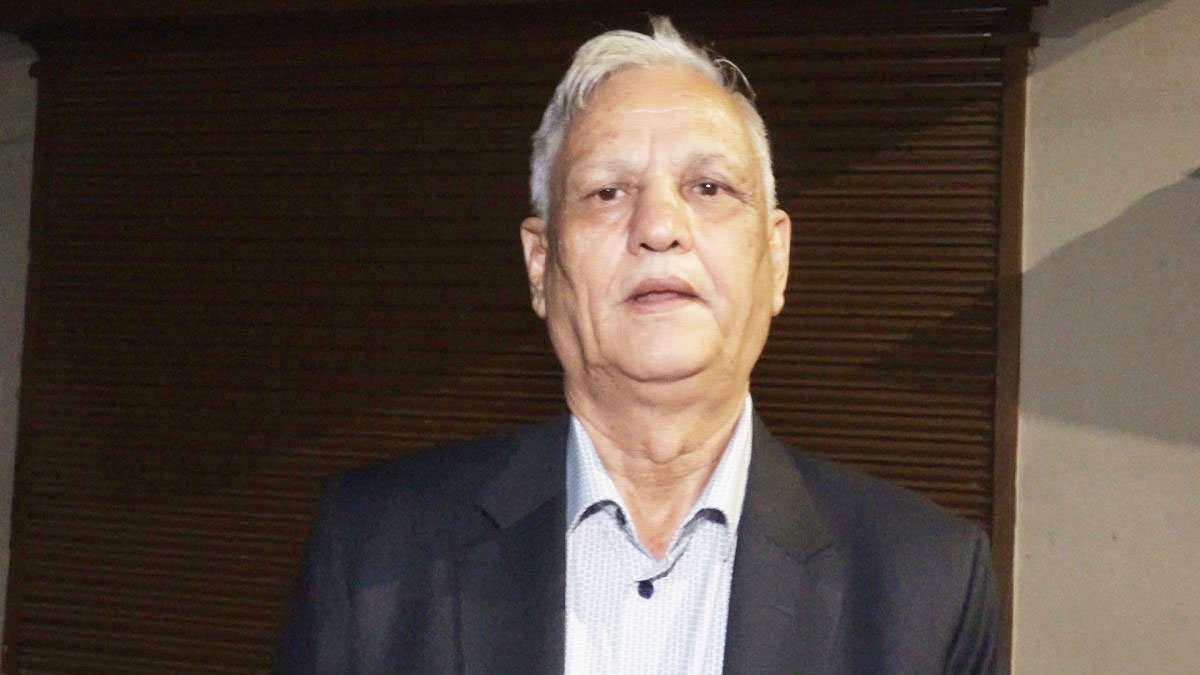
Minister of Economic Affairs and Planning Prabhat Tamang stated that the delay in setting the ceiling is due to the process of restructuring (merger) of ministries and offices. According to him, the number of ministries has decreased, and approximately 50 district-level offices are being merged, which has taken time to finalize the organizational and management (O&M) structure.
He stated that the provincial government is preparing to merge a large number of district-level offices to reduce administrative expenses and improve operational efficiency. He mentioned that about 50 provincial offices will be cut.
According to Minister Tamang, as the number of ministries has decreased, the subordinate offices also need to be reduced proportionally, hence a new organization and management (O&M) survey is being conducted.
The government's plan is to merge offices with similar functions and those operating in parallel, and send budget ceilings accordingly, according to Minister Tamang. Discussions are underway to combine the Infrastructure Development Office and the Urban Development Office, bring the Agriculture Development Office and the Animal Services Office under a single office, and manage tourism tasks with the Industry Office.
Minister Tamang clarified that the government is moving forward with the concept of one office per district by restructuring the 15 Division Forest Offices in the 13 districts of the province. Minister Tamang stated that the government is aware of the potential impact on the career development and service groups of employees when offices are merged.
He stated that the government is also discussing the abolition or reduction of various unnecessary boards, commissions, and directorates.
'Through administrative restructuring, by removing unnecessary structures and merging offices, we are experimenting whether we can reduce public expenditure by approximately 30 percent,' he said. 'When the government goes for reform, everything becomes new. A new O&M will be prepared without hindering the career development of employees. Immediately after that, all ministries and offices will receive budget ceilings along with expenditure headings.'
What is the provision in the Budget Formulation Guideline?
The government's guideline has set the following timeline to organize budget formulation. The 'Annual Project Proposal and Selection Guideline for Budget Formulation, 2083' issued by the provincial government, in Schedule-7 and Clause 12, has set the main timeline and work schedule for budget formulation.
According to this, the guideline mentions that the government will determine the preliminary limit of resources and expenditure by the end of Magh, determine the integrated resource estimate and budget limit by Chaitra 7, and send the budget ceiling and guidelines to the ministries by Chaitra 10 for budget formulation.
According to the guideline, ministries are required to submit budget proposals by Baisakh 10. Employees say that the delay in receiving the ceiling is now causing problems for the ministries in selecting plans and preparing budget proposals.
According to the annual budget formulation timeline, a statement with projected data of income and expenditure is to be sent to the Government of Nepal (Federal) by the end of Poush, a notice will be published to collect suggestions from the general public and stakeholders for the budget and program by the end of Falgun, the report of the Revenue Consultation Committee will be submitted by the end of Chaitra, and ministries and central bodies are required to submit budget proposals to the Ministry of Economic Affairs by Baisakh 10.
The guideline has a schedule for completing discussions and revisions on the budget and program between thematic ministries and the Ministry of Economic Affairs by the end of Jestha, presenting the principles and priorities of the appropriation bill in the Provincial Assembly, and for ministries to finalize the annual budget and program by Jestha 21.
The agenda includes the approval of the annual program by the Provincial Council of Ministers by the last week of Jestha, drafting the appropriation bill, finance bill, and medium-term expenditure framework, and presenting the budget to the parliament on Asar 1 after preparing the budget speech.
This specific news has been automatically translated by AI. As a result, there may be some inaccuracies or language errors.
_Lc2GX1hZa3.jpg)