Government Faces Setbacks as Court Halts Key Decisions

Kathmandu. The government led by senior leader of Rastriya Swatantra Party (RSP) Balendra Shah has faced one setback after another in its work and decisions.
The Shah-led government's decisions, including postponing the convened parliamentary session and amending various laws through ordinances, have been halted by the court, dealing a blow to the government.
The Supreme Court has issued a temporary interim order against the government's decisions to abolish the Free Student Union, disallow employee trade unions, and demolish squatter settlements, halting these decisions. Legal experts say that the court's initial halt on government decisions sends a message that the government's decisions are arbitrary.
This is not the first time the court has halted the government's actions during this administration. There are many instances where the court has halted decisions made by previous governments.
- Why does the court obstruct government work?
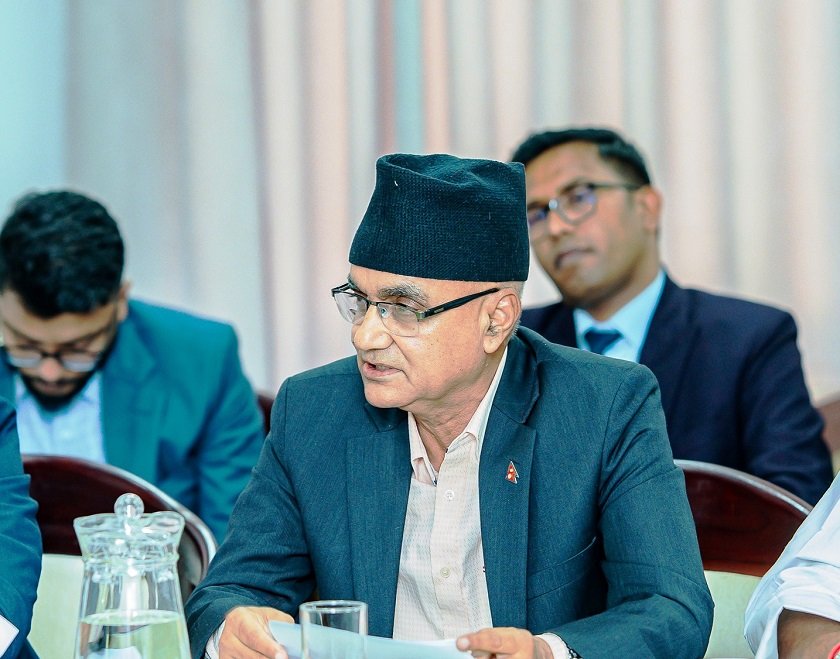
Prof. Dr. Bijayprasad Mishra, Executive Chairman of the Nepal Bar Association, states that the court corrects the government when its programs include elements of arbitrariness. He adds that the court's initial intervention in the government's work sends a message that the executive has acted illegally.
“The court's initial intervention in the government's work means that the executive has acted illegally,” Chairman Mishra told Ratopati. “When the government makes a decision, it may violate or deviate from the law. The court is established to enforce the law. The principle of separation of powers also states the same.”
Chairman Mishra says that this situation between the executive and judiciary arises when the executive always tries to implement its programs in its own way.
“In such a situation, the government may try to justify its actions and decisions in court,” Chairman Mishra said. “It is not just the current government, but previous governments have also said that their actions are always right, but the court interferes. They will say so in the future as well.”
However, Mishra stated that the court always looks at the law and issues orders accordingly, and the principle of separation of powers is envisioned for balance. “There is a saying that the court should not obstruct the work done by a two-thirds government, but no one can violate the law. The court controls it,” said Chairman Mishra.
- Employee Trade Union
The Shah-led government had initiated the process of abolishing employee trade unions through the 'Some Nepal Laws Amendment Ordinance, 2083'.
The ordinance, issued on April 20, 2083, amended the 'Civil Service Act, 2049' and abolished the provision of official trade unions for employees. The ordinance replaced the trade union provision with a system for hearing grievances of civil servants. Following the issuance of the ordinance, the Ministry of Federal Affairs and General Administration closed trade union offices on April 22, and the Department of Labor and Occupational Safety abolished trade unions on April 23.
Against the government's move, the central committee of the Nepal Civil Service Organization, including its chairman Bhawani Dahal, filed a writ in the Supreme Court, making the Office of the President, Shital Niwas, a defendant. The petitioners claimed that the ordinance and the notices issued based on it violated the freedom of association granted by Article 17 of the constitution and the right to form trade unions and engage in collective bargaining granted by Article 34.
In response to the writ, the Constitutional Bench of the Supreme Court issued a temporary interim order on Monday, halting the immediate implementation of the ordinance that abolishes trade unions for civil servants.

A majority opinion from Acting Chief Justice Sapana Pradhan Malla and Justices Kumar Regmi and Hariprasad Phuyal ordered not to implement Section 10 of the 'Some Nepal Laws Amendment Ordinance, 2083'. The other two judges on the Constitutional Bench, Binod Sharma and Saranga Subedi, expressed a different opinion, stating that an immediate interim order was not necessary.
The Constitutional Bench issued a show-cause order asking the respondents to submit a written response within 7 days, excluding the travel time, explaining why the order sought by the petitioners should not be issued. The majority judges' order stated that the provisions related to trade unions are linked to the constitutional guarantee of freedom of association and the right to form trade unions and engage in collective bargaining, and therefore, the ordinance should not be implemented immediately. The court will decide whether to issue an interim order or not after hearing both parties on May 6.
- Order not to abolish SWOVYUS
Not only employee unions, but the Supreme Court has also intervened in the government's decision to abolish SWOVYUS. The Shah-led government had decided to abolish student organizations through an ordinance. Deepak Dhami and eight other student organization leaders jointly filed a writ in the Supreme Court against this. In the writ, Justice Srikanth Paudel's single bench issued a temporary interim order on Monday not to abolish student organizations.
Student organization leaders argued that the right to join organizations based on ideology is a constitutional right and demanded an interim order to prevent the implementation of the government's decision to remove student organizations from universities. They filed the writ against the government, the Prime Minister's Office, and the Ministry of Home Affairs.
The Supreme Court issued an order to the respondents to submit a written response within 15 days explaining why the order sought by the petitioners should not be issued and summoned both parties for discussion on May 4.
- Order not to remove squatter settlements
The Balen-led government had started removing squatters from riverbanks by bulldozing squatter settlements. However, Gopal Ranpheli, senior advocate Dinesh Tripathi, and Majid Ansari, among others residing in squatter settlements, filed a writ in the Supreme Court against the government's decision.
In the writ, Justices Kumar Regmi and Nityananda Pandey's bench issued an interim order last Friday, seeking a response from the government and ordering not to remove squatters without management.
The order stated, “Considering the irreparable damage to the rights to education, health, and housing and the potential humanitarian crisis that may arise from displacing squatters and unmanaged residents from their places of residence without following due legal process for their management…”
During the hearing, the Supreme Court noted that the National Human Rights Commission had also pointed out that the basic needs of squatters were not met, and through the interim order, it has directed the government to take more effective measures to provide basic needs. The Supreme Court has ordered the government to fulfill the housing, education, health, and food needs of the displaced. In the squatter settlement case, the court has also asked to prioritize the case for a hearing within 15 days after the written response is submitted.
- Arrest of Oli-Lekhak and businessmen case
Not only that, but even though the Balen government arrested former Prime Minister KP Sharma Oli, former Home Minister Ramesh Lekhak, and some businessmen-entrepreneurs on various charges, most of them were released due to insufficient grounds to file a case against them. Some are fighting the case while out on bail.
The government had arrested Oli, Lekhak, Kathmandu Chief District Officer Chhavi Rizal, businessman Shekhar Golchha, provincial assembly member Rekha Sharma, Shankar Agarwal, and others. However, most of those arrested have now been released.
This specific news has been automatically translated by AI. As a result, there may be some inaccuracies or language errors.

_Ad1bIOhlCa.png)